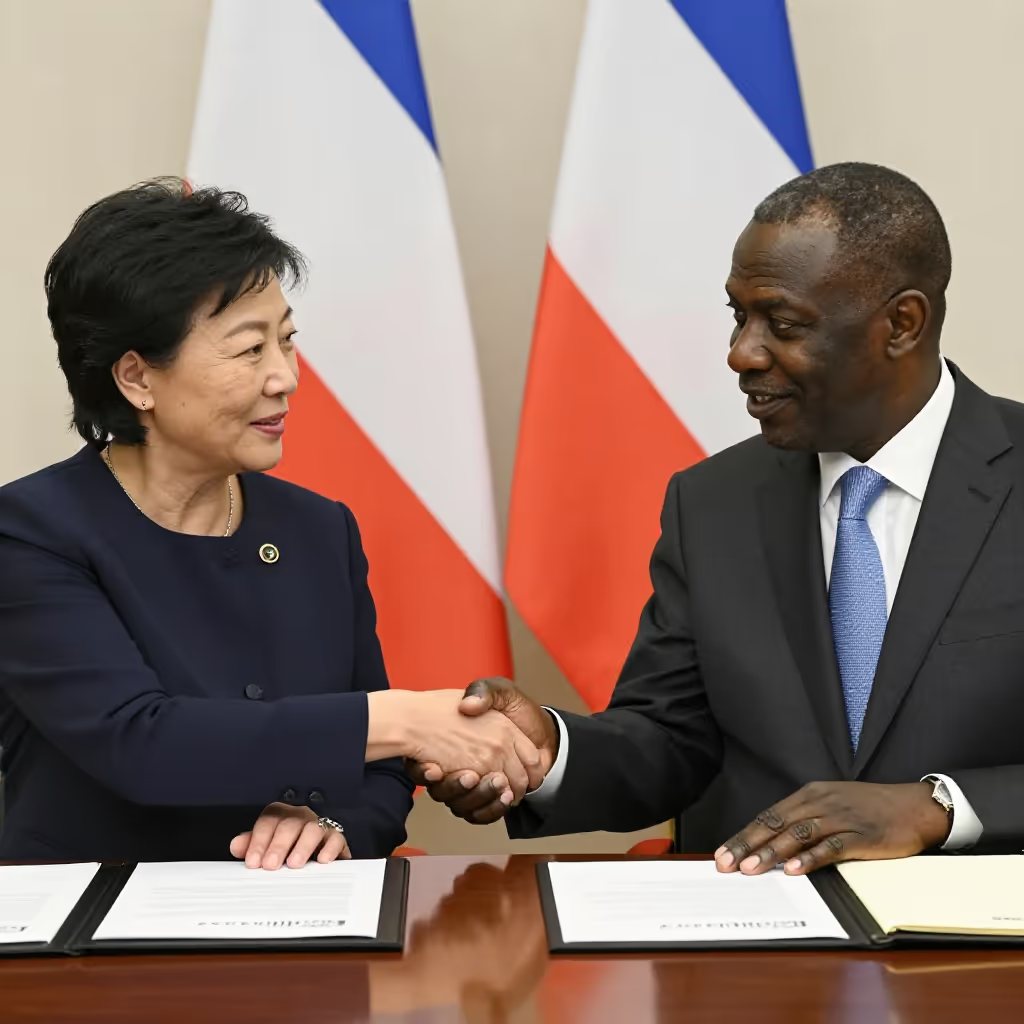
Concerning two sides, parties, or states; two-sided. Often used in the context of international relations and treaties.
example
Die beiden Länder unterzeichneten ein bilaterales Abkommen über den Handel.
The two countries signed a bilateral trade agreement.

Usage tips
Word structure
The word comes from Latin. The prefix 'bi-' means 'two', and 'lateral' refers to 'side'. So 'bilateral' literally means 'two-sided'.
EXAMPLE
Die bilateralen Verhandlungen zwischen den beiden Staaten waren erfolgreich.
The bilateral negotiations between the two states were successful.
Context clue
The context shows which meaning is intended. In a political or economic setting, 'bilateral' always means that two parties or states are involved. In medicine, it describes something that occurs on both sides of the body.
EXAMPLE
Die Minister trafen sich zu einem bilateralen Gespräch.
The ministers met for a bilateral discussion.
Register
'Bilateral' is a formal word and belongs to the specialist language of politics, economics, and medicine. It is rarely used in everyday speech.
EXAMPLE
In dem wissenschaftlichen Artikel wurde der bilaterale Handel analysiert.
The scientific article analyzed bilateral trade.
Typical collocations
In political and economic contexts, 'bilateral' is often combined with these nouns: bilateral relations, bilateral treaties, or bilateral talks.
EXAMPLE
Die bilateralen Beziehungen der beiden Länder haben sich verbessert.
The bilateral relations between the two countries have improved.
Medical usage
In medicine, 'bilateral' describes symptoms or features that are present on both sides of the body. For example, one speaks of bilateral hearing loss or bilateral swelling.
EXAMPLE
Der Patient leidet an einem bilateralen Hörverlust.
The patient suffers from bilateral hearing loss.
Compare with
near_synonym · confusable
bilateral vs gegenseitig
mutual
'gegenseitig' and 'bilateral' both have to do with two sides or two parties. 'gegenseitig' describes an action or feeling between people or groups, for example help or trust. 'bilateral' is used more formally, especially with states, parties, or treaties. It means that two sides are involved. The words can be confused because both express a relationship between two sides. For normal everyday actions, 'gegenseitig' fits; for political or official agreements, 'bilateral' is more appropriate.
bilateral
Die beiden Länder planen ein bilaterales Abkommen über den Handel.
The two countries are planning a bilateral trade agreement.
gegenseitig
Nach der Arbeit unterstützen sie sich gegenseitig mit den Kindern.
After work, they support each other with the children.