

blank
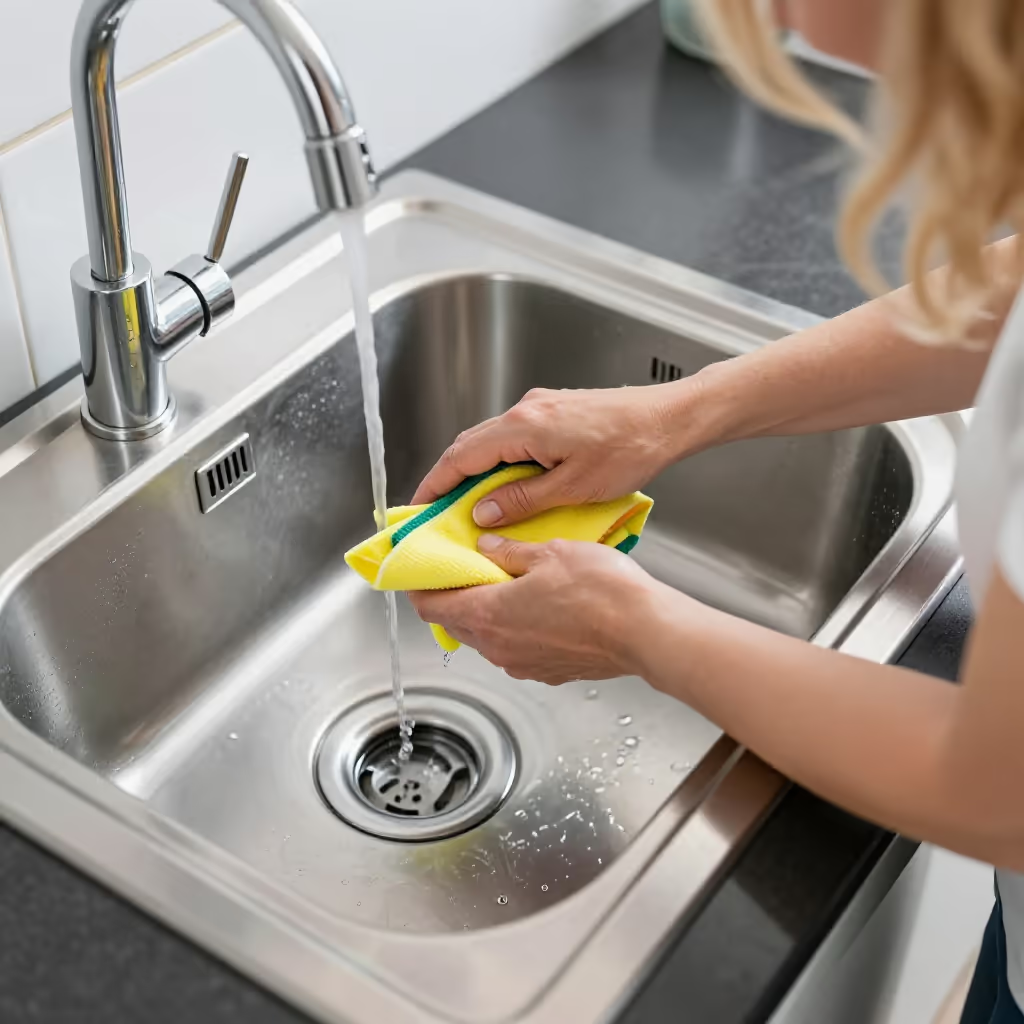
shiny
Shiny and clean, often as the result of polishing or cleaning.
EXAMPLE
Die Ritterrüstung war blank poliert.
The knight's armor was polished shiny.
shiny / bare / broke
Loading your saved state.
shiny
Shiny and clean, often as the result of polishing or cleaning.
Die Ritterrüstung war blank poliert.
The knight's armor was polished shiny.

bare
Uncovered, naked, or empty. It can refer to a surface or a person.
Er stand mit blankem Oberkörper in der Sonne.
He stood in the sun with a bare upper body.

broke
Colloquial for the state of having no money left.
Am Ende des Monats bin ich meistens komplett blank.
At the end of the month, I'm usually completely broke.

sheer
In a figurative sense, expresses something pure, unmixed, or obvious, often referring to feelings or states.
Beim Anblick der riesigen Welle spürte sie die blanke Angst.
At the sight of the huge wave, she felt sheer fear.
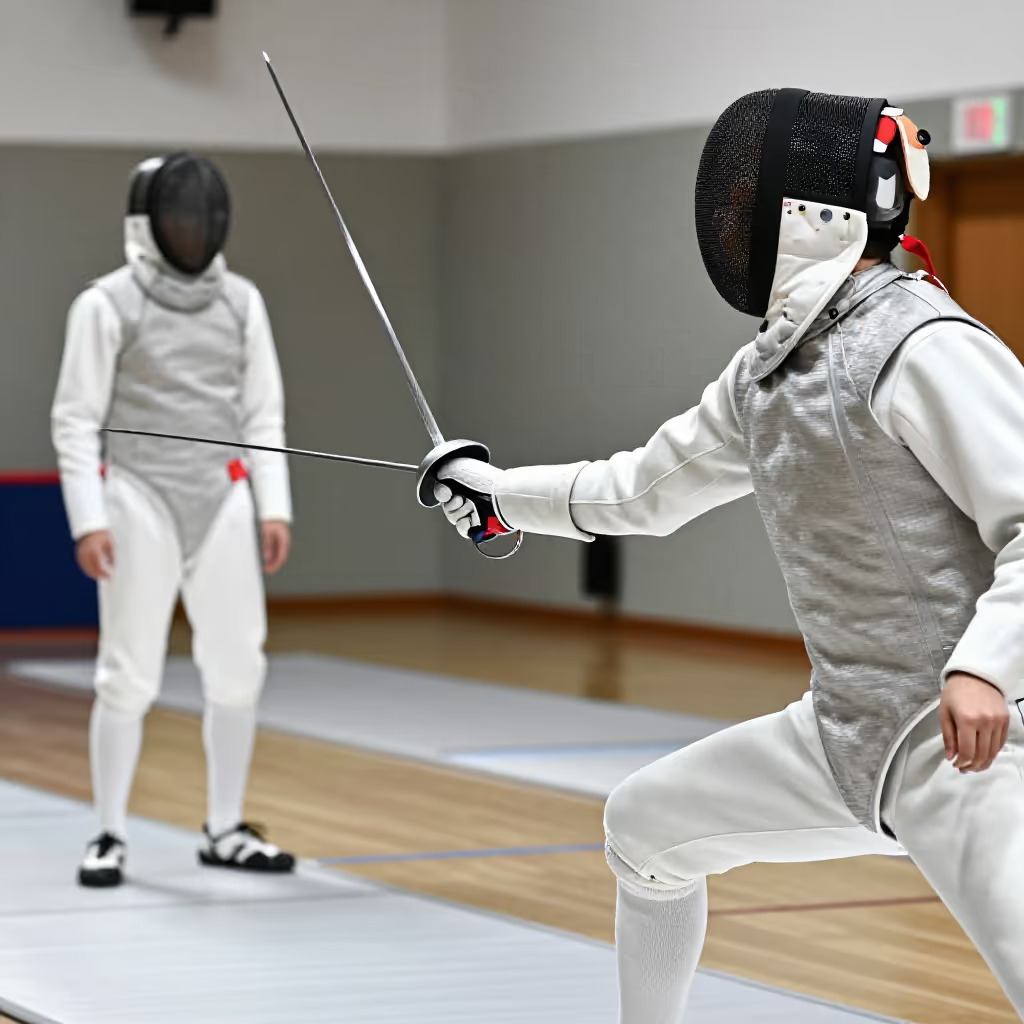
to draw one's weapon
To pull a weapon, especially a sword or rapier, out of its sheath in order to use it.
Im Duell zogen beide Kontrahenten blank.
In the duel, both opponents drew their weapons.
Careful: 'blank' usually means 'glänzend' (shiny) or 'sauber' (clean). It is a false friend of the English word 'blank', which often means 'leer' (empty), as in a blank page.
Nach dem Putzen war der Boden spiegelblank.
After cleaning, the floor was mirror-shiny.
The meaning of 'blank' depends heavily on the noun. In connection with concrete, physical objects, it usually means 'glänzend' (shiny). In connection with abstract nouns such as feelings, it expresses a pure, unfiltered intensity.
Der frisch polierte Löffel ist blank.
The freshly polished spoon is shiny.
In the meaning 'kein Geld haben' (to have no money), 'blank sein' (to be broke) is purely colloquial. It is typically used in informal conversations with friends.
Ich kann nicht ins Kino mitkommen, ich bin diesen Monat total blank.
I can't come to the movies; I'm totally broke this month.
In the figurative meaning, 'blank' is used almost only in fixed combinations with nouns that describe a strong state or feeling. Common examples are 'blanke Angst' (sheer fear), 'blanker Horror' (sheer horror), 'blanker Neid' (sheer envy), or 'blanker Unsinn' (utter nonsense).
Was du da erzählst, ist doch der blanke Unsinn!
What you're saying is utter nonsense!
The expression 'blank ziehen' (to draw one's weapon) is a fixed unit and means to draw a weapon, usually a sword. The verb 'ziehen' is conjugated, while 'blank' remains unchanged at the end of the clause.
Der Ritter zog blank und forderte seinen Gegner zum Kampf.
The knight drew his weapon and challenged his opponent to a fight.
pure / in
When referring to feelings, „rein“ and „blank“ can express that nothing else is involved. „Rein“ describes the feeling more matter-of-factly as unmixed. „Blank“ often presents it more intensely and immediately, so that fear, for example, stands out particularly clearly.

Als sie plötzlich die Flammen sah, empfand sie blanke Angst.
When she suddenly saw the flames, she felt sheer fear.
Als sie den Rauch bemerkte, empfand sie reine Angst.
When she noticed the smoke, she felt pure fear.