

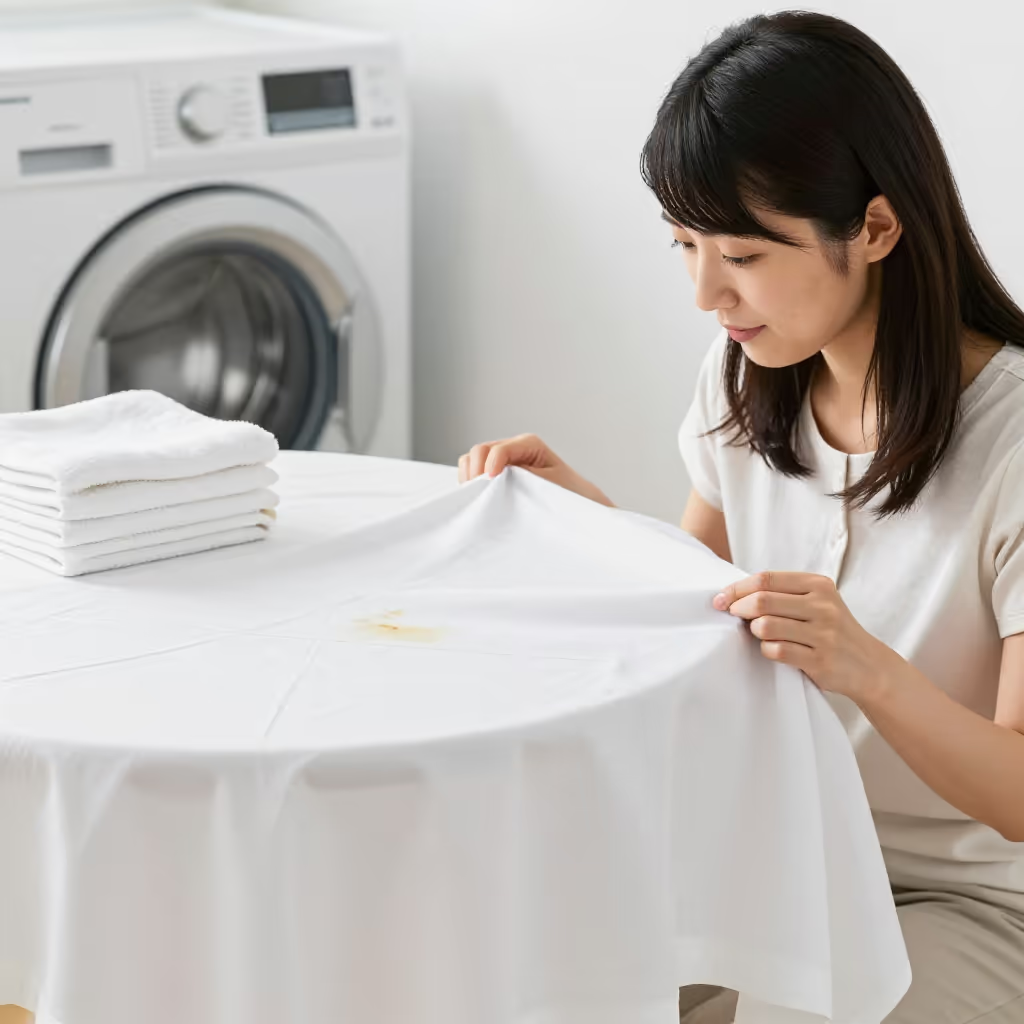
rein
clean
Clean, without dirt or stains.
EXAMPLE
Nach dem Putzen war die ganze Wohnung wieder rein.
After cleaning, the whole apartment was clean again.
pure / in
Loading your saved state.
clean
Clean, without dirt or stains.
Nach dem Putzen war die ganze Wohnung wieder rein.
After cleaning, the whole apartment was clean again.
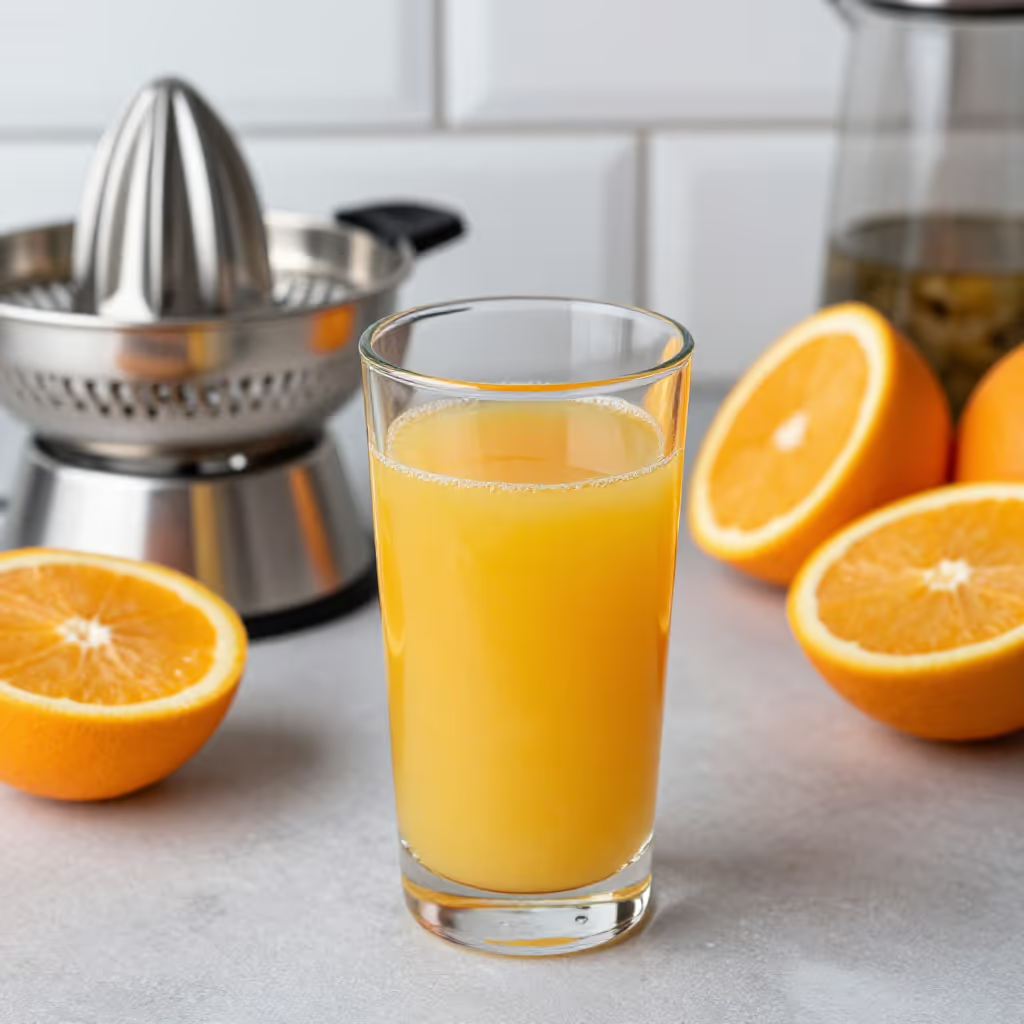
pure
Unmixed, without foreign components; pure.
Dieser Schal ist aus reiner Wolle.
This scarf is made of pure wool.

purely / mere
Used as an adverb to emphasize something; means 'only', 'merely', or 'exclusively'.
Dass wir uns getroffen haben, war reiner Zufall.
The fact that we met was pure coincidence.

in
Colloquial short form for 'herein' (in here) or 'hinein' (into); expresses movement into a room or place.
Komm schnell rein, es fängt an zu regnen!
Come in quickly, it's starting to rain!
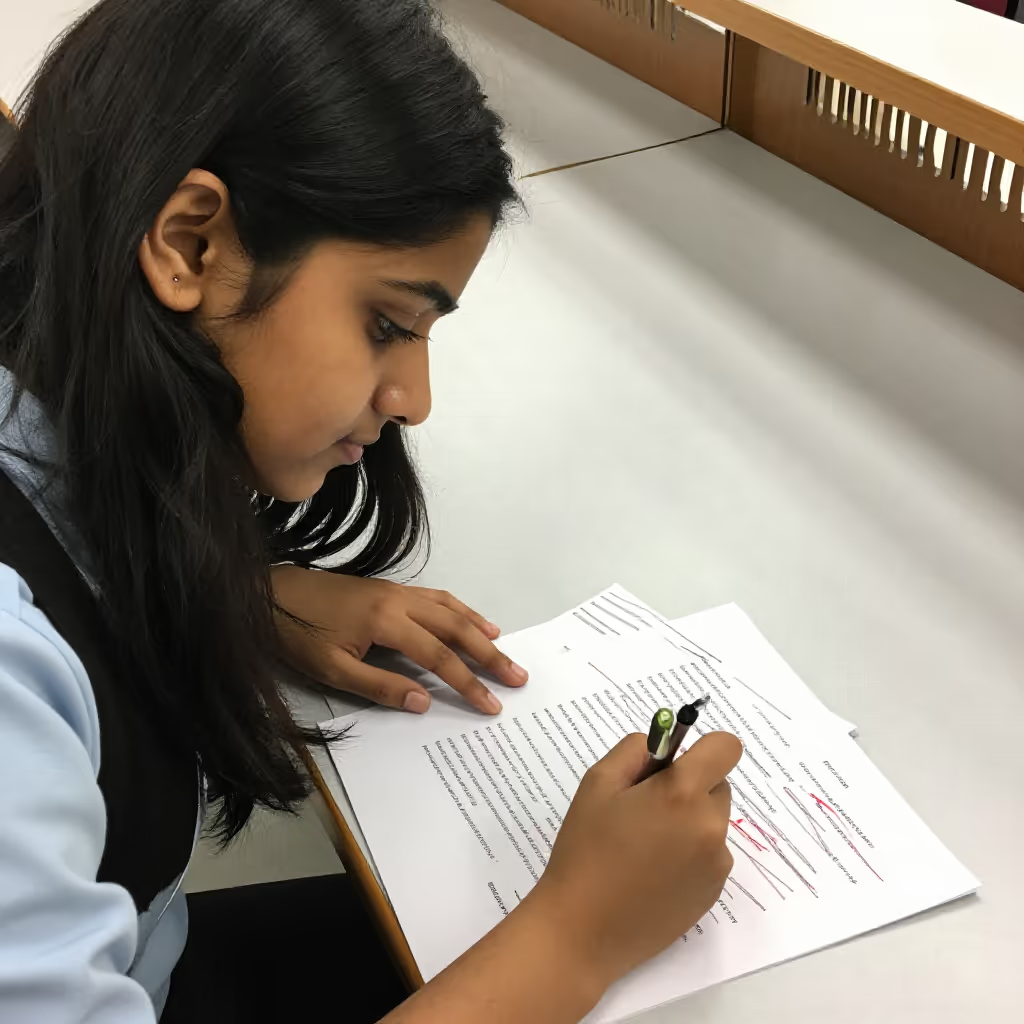
to write up neatly
To write out a text that previously existed only as a draft or with corrections in a clean and final form.
Ich muss meine Notizen vom Meeting noch ins Reine schreiben.
I still have to write up my notes from the meeting neatly.
The word 'rein' is very versatile. It can be an adjective ('reine Wäsche' = clean laundry), an emphasizing adverb ('reiner Zufall' = pure coincidence), or a colloquial particle for movement inward ('komm rein!' = come in!). You can recognize its function from the word order and the context.
Das ist reines Gold.
That is pure gold.
As a short form for 'herein' (in here) or 'hinein' (into), 'rein' is very common in spoken language. It behaves like a separable prefix and appears at the end of the sentence or alone as a command.
Darf ich kurz reinkommen?
May I come in for a moment?
As an adverb, 'rein' means something like 'only' or 'exclusively' and emphasizes a noun. It stands directly before the noun it intensifies. Typical expressions are 'reiner Zufall' (pure coincidence), 'reine Zeitverschwendung' (a complete waste of time), or 'aus reiner Freundlichkeit' (out of pure kindness).
Dass wir uns im Urlaub getroffen haben, war reiner Zufall.
The fact that we met on vacation was pure coincidence.
In the meaning 'unmixed' or 'pure', 'rein' often describes materials. Common combinations are 'reine Baumwolle' (pure cotton), 'reines Gold' (pure gold), or 'reiner Alkohol' (pure alcohol).
Der Pullover ist aus reiner Schurwolle.
The sweater is made of pure new wool.
The fixed expression 'etwas ins Reine schreiben' means to create a clean, error-free final version of a text. The object stands between 'ins' and 'Reine'.
Bis morgen muss ich meinen Aufsatz ins Reine schreiben.
I have to write up my essay neatly by tomorrow.
only
Nur can generally distinguish people, quantities, things, or reasons from other possibilities. Rein also means exclusively, but typically limits the statement to its basis or underlying reason. When there is just one reason, both are possible; rein places more emphasis on that basis.

Sie entschied sich rein aus praktischen Gründen für das kleinere Auto.
She chose the smaller car purely for practical reasons.
Sie entschied sich nur aus praktischen Gründen für das kleinere Auto.
She chose the smaller car only for practical reasons.