

pur
pure
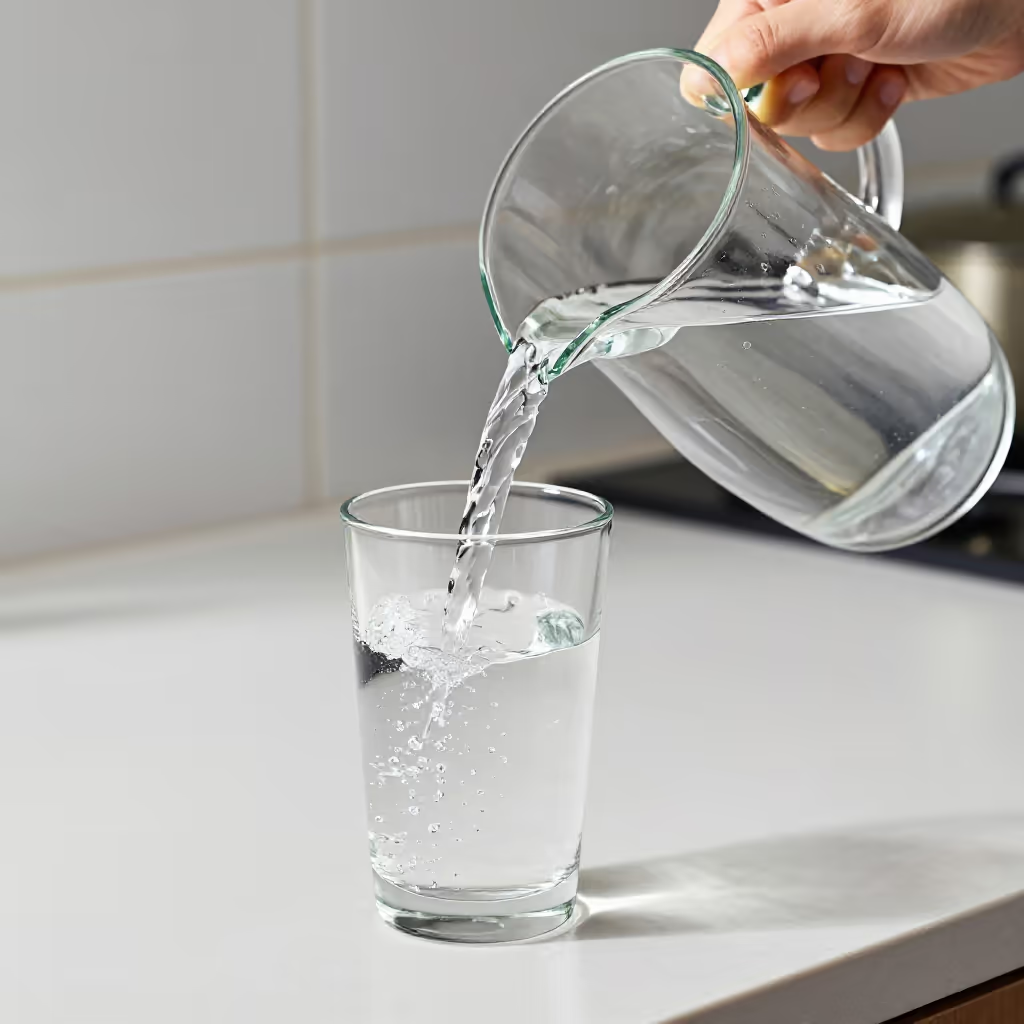
Pure, unmixed, or unadulterated. It describes something in its pure form, without additives.
EXAMPLE
Er trinkt seinen Whisky am liebsten pur.
He likes to drink his whisky neat.
pure
Loading your saved state.
pure
Pure, unmixed, or unadulterated. It describes something in its pure form, without additives.
Er trinkt seinen Whisky am liebsten pur.
He likes to drink his whisky neat.

sheer / pure
Used for emphasis and means 'nothing but' or 'pure.' It expresses that something consists exclusively of the aspect mentioned.
Die Wanderung war Anstrengung pur, hat sich aber gelohnt.
The hike was sheer exertion, but it was worth it.
Unlike most adjectives, 'pur' (pure) almost always stands unchanged after the noun it describes. It is not declined.
Ich trinke meinen Kaffee am liebsten schwarz und pur.
I like to drink my coffee black and pure.
If 'pur' (pure/neat) refers to a drink or food, it means 'unmixed.' If it refers to an experience or feeling, it means 'nothing but' and serves as emphasis.
Möchtest du den Saft pur oder mit Wasser verdünnt trinken?
Would you like to drink the juice pure or diluted with water?
For emotional emphasis, 'pur' (pure/sheer) is often combined with abstract nouns that describe a strong experience. Popular expressions are 'Adrenalin pur' (pure adrenaline), 'Natur pur' (pure nature), or 'Gänsehaut pur' (pure goosebumps).
Die Aussicht vom Berggipfel war einfach nur Natur pur.
The view from the mountain peak was simply pure nature.
only
Nur restricts a statement objectively to a single aspect. Pur also means that nothing else is present, but highlights this aspect as especially unmixed or strongly pronounced. Use nur for a neutral limitation and pur for intense emphasis.

Nach dem Sieg empfand sie Freude pur.
After the victory, she felt pure joy.
Nach dem Sieg empfand sie nur Freude.
After the victory, she felt only joy.