

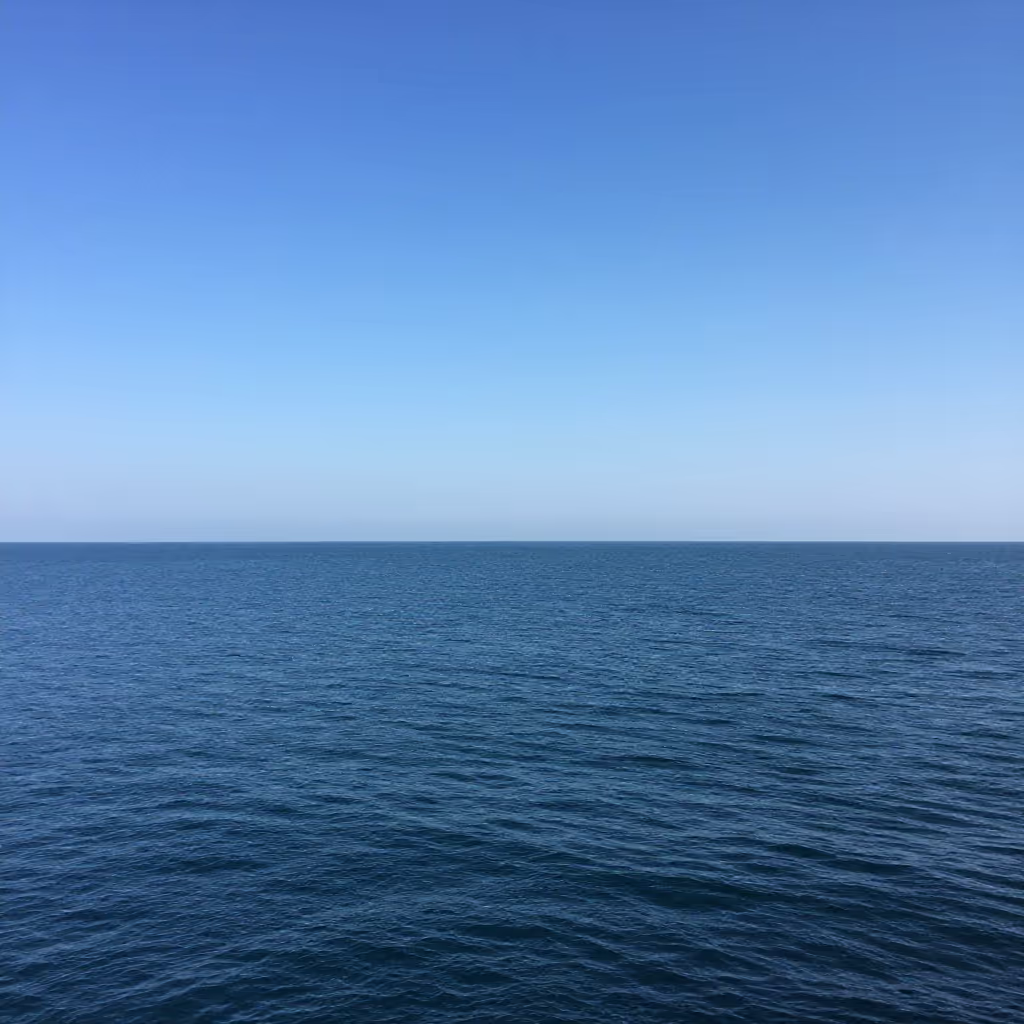
blau
blue
The color that corresponds to the sky on a clear day or the deep sea.
EXAMPLE
Der Himmel ist heute strahlend blau.
The sky is bright blue today.
blue
Loading your saved state.
blue
The color that corresponds to the sky on a clear day or the deep sea.
Der Himmel ist heute strahlend blau.
The sky is bright blue today.
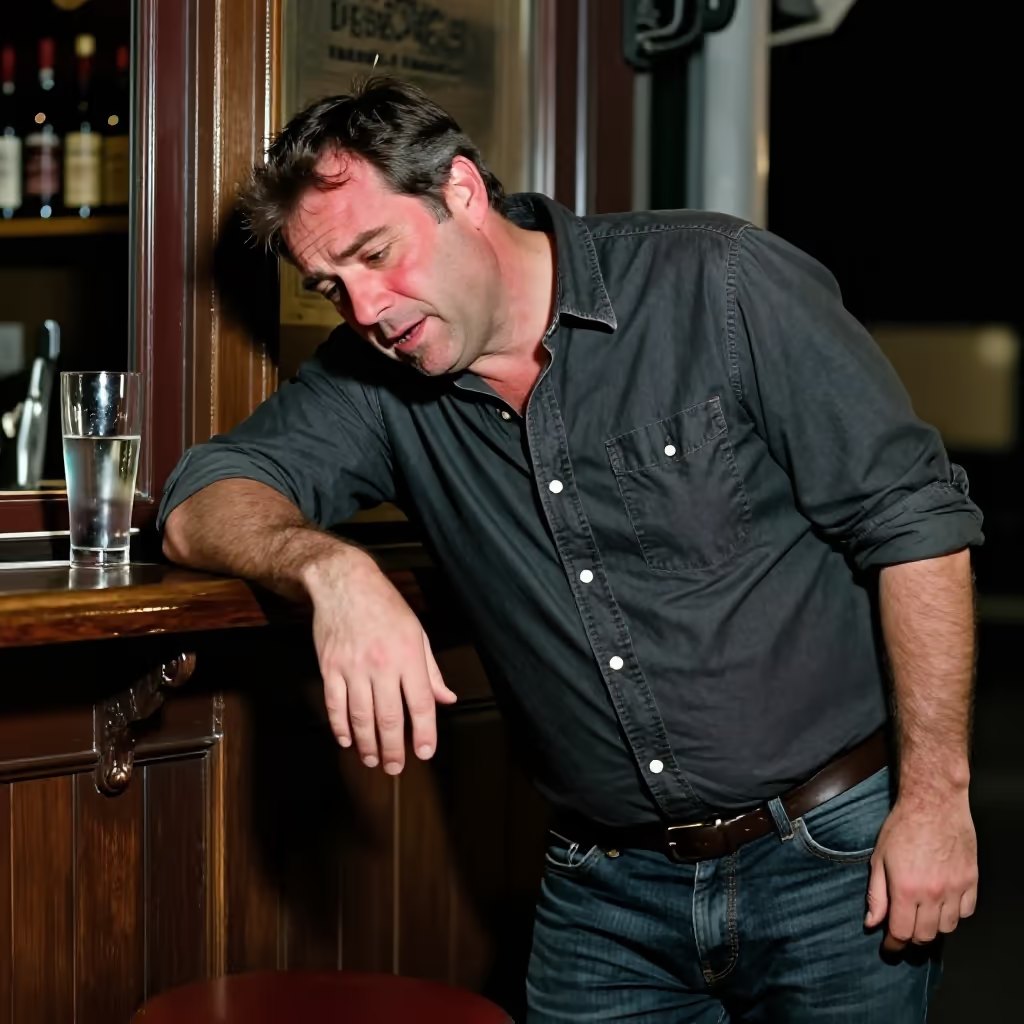
drunk
Colloquial for drunk; under the influence of alcohol.
Nach der Feier war er komplett blau und konnte kaum noch geradeaus gehen.
After the party, he was completely drunk and could barely walk straight anymore.

to skip work/school
Colloquial for an unexcused absence from school or work.
Er hat heute blau gemacht, um ins Schwimmbad zu gehen.
He skipped work today to go to the swimming pool.

to get off lightly
To come out of a dangerous or difficult situation with only minor damage or slight injuries.
Das Auto hat einen Totalschaden, aber der Fahrer ist zum Glück mit einem blauen Auge davongekommen.
The car was totaled, but fortunately the driver got off lightly.

into the blue
Without a specific destination or concrete plan.
Wir sind am Wochenende einfach ins Blaue gefahren und haben eine schöne kleine Stadt entdeckt.
At the weekend, we simply drove off into the blue and discovered a beautiful little town.
In English, 'blue' can also mean 'sad'. In German, 'blau' (blue) does not have this meaning. It refers either to the color or, colloquially, to someone being drunk.
Er war nach der Party ziemlich blau und fand den Weg nach Hause nicht mehr.
He was pretty drunk after the party and couldn't find his way home anymore.
The meaning 'betrunken' (drunk) for 'blau' (blue) is used only in colloquial language. In formal situations or written language, this expression is uncommon.
Sei vorsichtig, nach drei Bier ist er oft schon blau.
Be careful, after three beers he is often already drunk.
The expression 'blau machen' (to skip work/school) means not to go to work or school. The verb 'machen' (to do / to make) is conjugated, while 'blau' (blue) remains unchanged at the end of the clause.
Weil das Wetter so schön war, hat sie spontan blau gemacht.
Because the weather was so nice, she spontaneously skipped work.
In the idiom 'mit einem blauen Auge davonkommen' (to get off lightly), 'davonkommen' (to get away / to come out of it) is the conjugated separable verb. The person who has a lucky escape is the subject of the sentence.
Mein Fahrrad ist kaputt, aber ich bin mit einem blauen Auge davongekommen.
My bike is broken, but I got off lightly.
The expression 'ins Blaue' (into the blue) is often used with verbs of movement or planning, e.g. 'fahren' (to drive / travel), 'reden' (to talk), or 'planen' (to plan). It means that you do something without a fixed destination or concrete plan.
Wir haben keine genauen Urlaubspläne, wir fahren einfach ins Blaue.
We don't have any exact vacation plans; we're simply driving off into the blue.
drunk
Blau and betrunken can both say that someone is under the influence of alcohol. Blau is colloquial and mainly suited to informal conversations, while betrunken is more neutral. For a factual statement, betrunken is appropriate; among friends, blau can also work.

Nach der Feier war Tom ziemlich blau.
Tom was pretty drunk after the party.
Im Bericht stand, dass Tom nach der Feier betrunken war.
The report said that Tom was drunk after the party.