


der Blick
look
The act of seeing or the direction in which one is looking; the deliberate use of the eyes.
EXAMPLE
Sein Blick war starr auf den Bildschirm gerichtet.
His look was fixed on the screen.
look / view
Loading your saved state.
look
The act of seeing or the direction in which one is looking; the deliberate use of the eyes.
Sein Blick war starr auf den Bildschirm gerichtet.
His look was fixed on the screen.
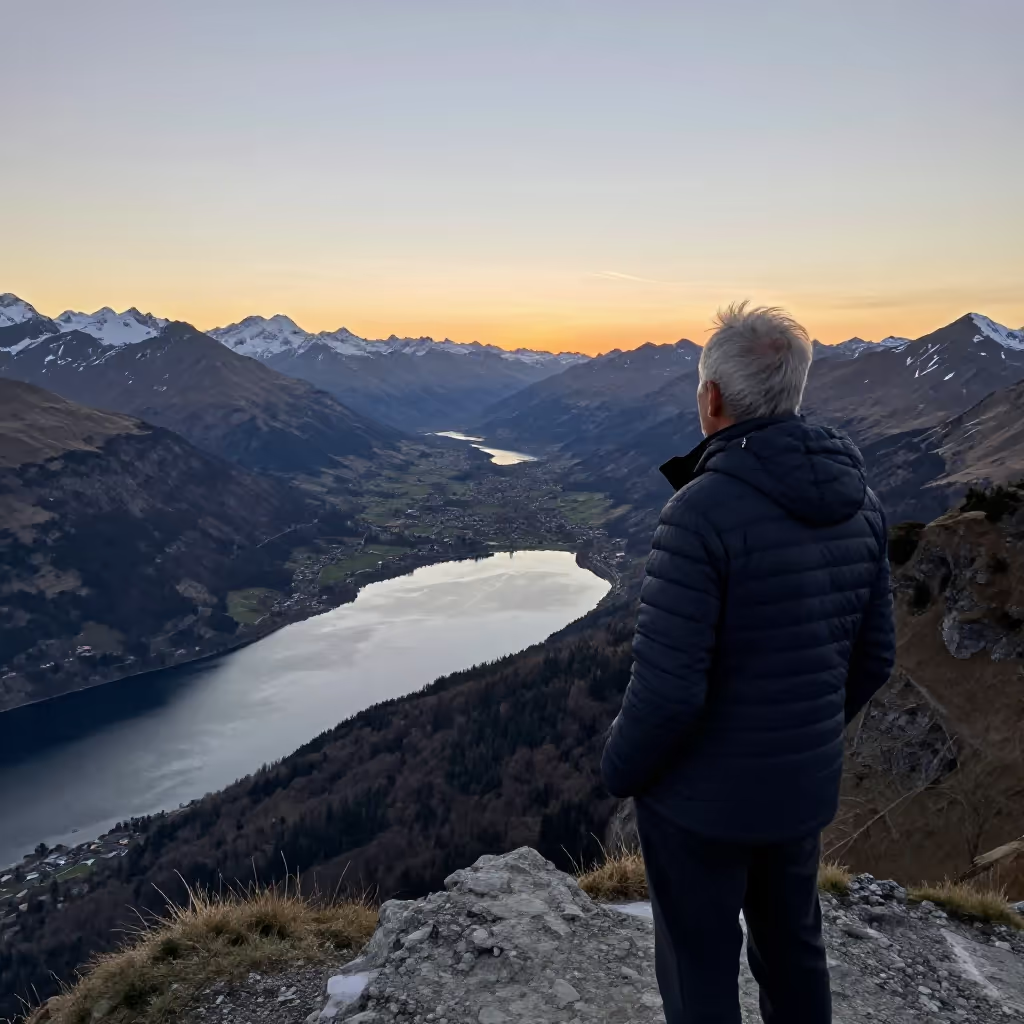
view
The view that you have from a particular point.
Von unserem Hotelzimmer hatten wir einen fantastischen Blick auf das Meer.
From our hotel room, we had a fantastic view of the sea.

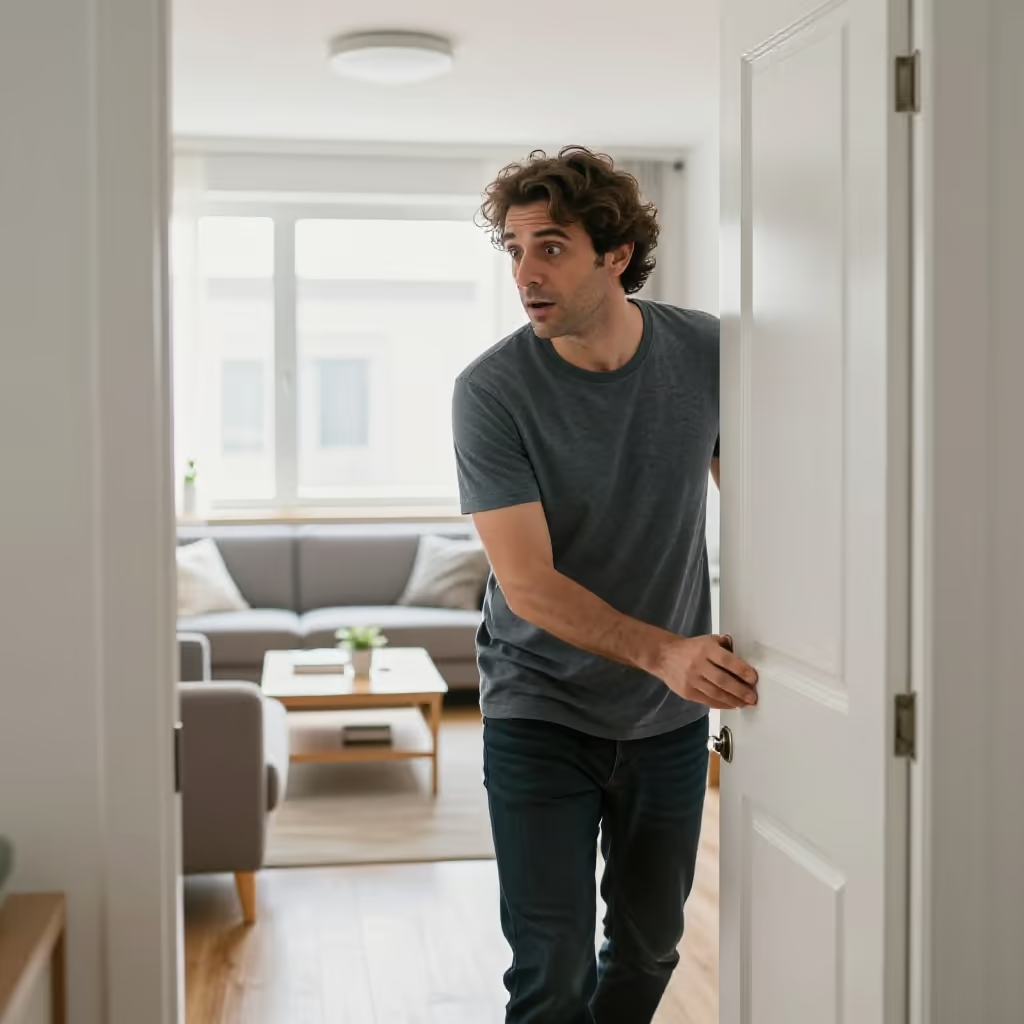
glance
A brief, fleeting look.
Ein kurzer Blick auf die Uhr verriet ihm, dass es schon spät war.
A quick glance at the clock told him that it was already late.
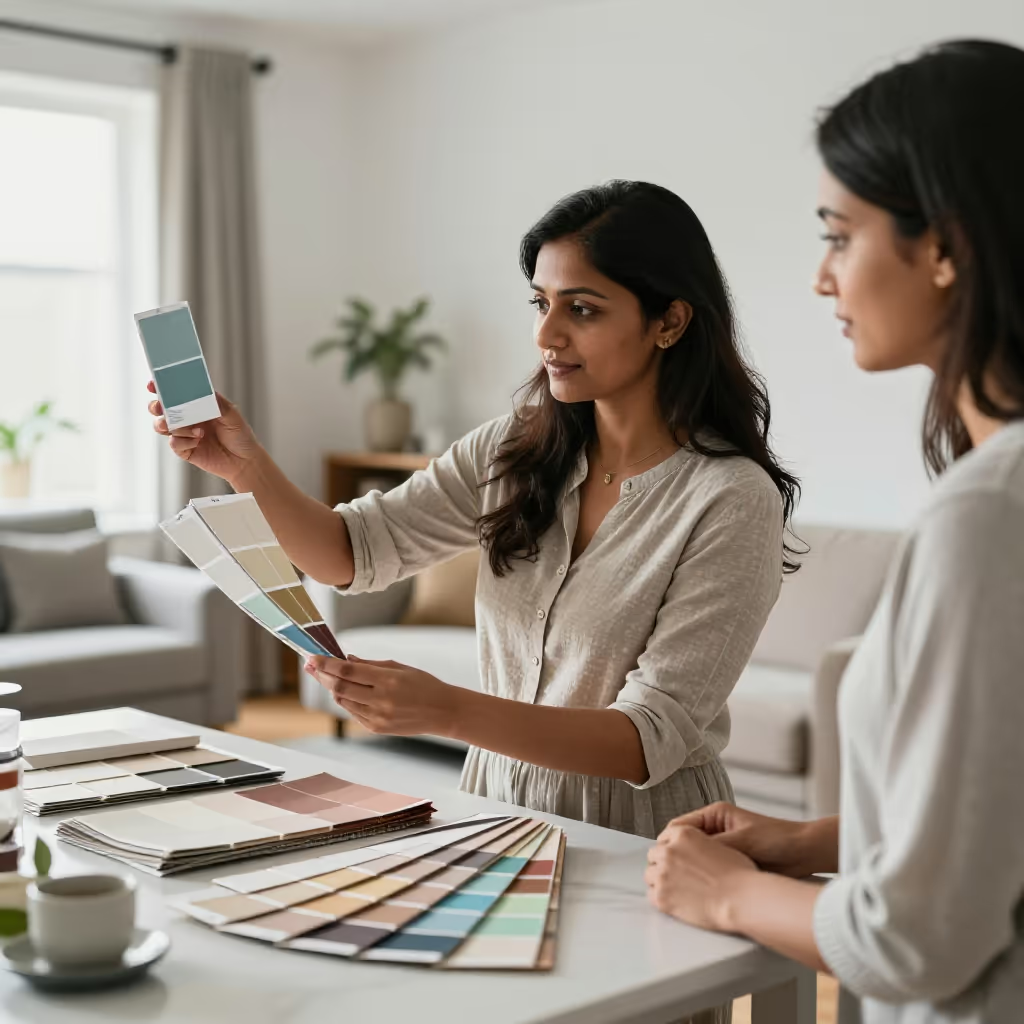
at first glance
Upon first, superficial viewing or getting to know something or someone.
Auf den ersten Blick schien die Wohnung perfekt zu sein.
At first glance, the apartment seemed to be perfect.
to have an eye for something
To have the ability to recognize, assess, or judge a particular thing well.
Als Fotografin hat sie einen besonderen Blick für interessante Motive.
As a photographer, she has a special eye for interesting subjects.

expression
The facial expression that reveals a particular emotion or mood.
Sie hatte einen besorgten Blick, als sie die Nachrichten hörte.
She had a worried expression when she heard the news.
'Der Blick' belongs to the word family of the verb 'blicken', which means 'to look' or 'to see'. The noun describes the action or the result of this verb.
Er blickte aus dem Fenster.
He looked out the window.
The verb helps distinguish the meaning. The expression 'einen Blick werfen' (to take a look) describes a brief action (seeing). The expression 'einen Blick haben' (to have a view) describes a state (view).
Kannst du mal einen Blick auf meinen Text werfen?
Can you take a look at my text?
When 'Blick' describes a view, it is often combined with positive adjectives such as 'fantastisch' (fantastic), 'herrlich' (magnificent), 'wunderschön' (beautiful), or 'atemberaubend' (breathtaking).
Vom Gipfel des Berges hatten wir eine atemberaubende Aussicht.
From the summit of the mountain, we had a breathtaking view.
The expression 'einen Blick auf etwas werfen' (to take a look at something) is a very common and useful phrase. It means to look at or check something briefly.
Ich werfe nur schnell einen Blick in meine E-Mails.
I'll just quickly take a look at my emails.
The fixed expression 'auf den ersten Blick' (at first glance) functions like an adverb. If it appears at the beginning of the sentence, the verb follows in position two.
Auf den ersten Blick wirkte er sehr sympathisch.
At first glance, he seemed very likable.
The idiom 'einen Blick für etwas haben' (to have an eye for something) means to have a special talent or feel for something. The thing one has a talent for comes after 'für' in the accusative.
Als Innenarchitektin hat sie einen guten Blick für Farben und Formen.
As an interior designer, she has a good eye for colors and shapes.
When 'Blick' means facial expression, it is often combined with an adjective that describes a feeling. Typical examples are 'ein besorgter Blick' (a worried look), 'ein leerer Blick' (a blank look), or 'ein fröhlicher Blick' (a cheerful look).
Mit einem skeptischen Blick las er den Brief.
He read the letter with a skeptical expression.
view / visibility
„Der Blick“ refers here to the specific view of a target. „Die Sicht“, by contrast, emphasizes whether the target can be seen clearly at all because of distance, weather, or obstacles. That is why, for example, one speaks of a beautiful Blick but clear or poor Sicht.
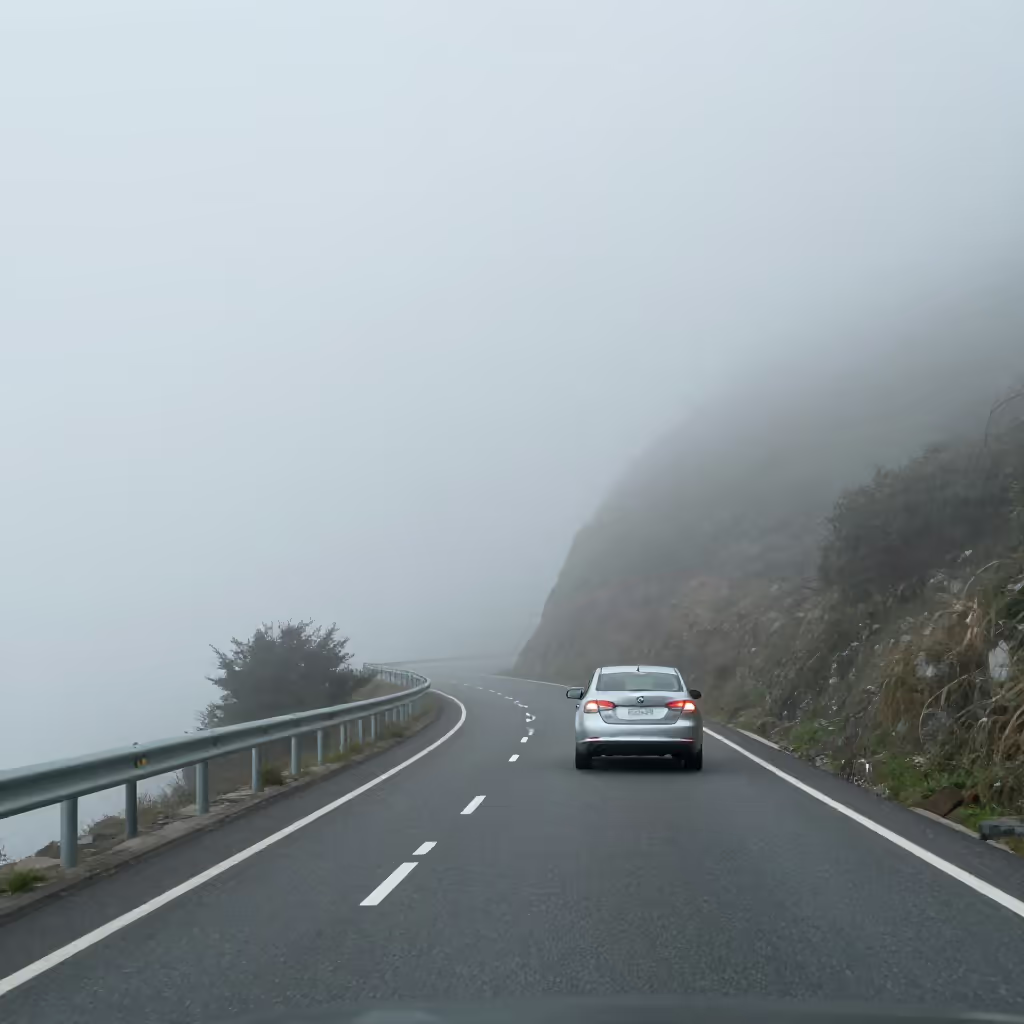
Vom Balkon haben wir einen schönen Blick auf den See.
From the balcony, we have a beautiful view of the lake.
Vom Balkon haben wir trotz des Nebels schlechte Sicht auf den See.
Despite the fog, we have poor visibility of the lake from the balcony.