

der Anblick
sight
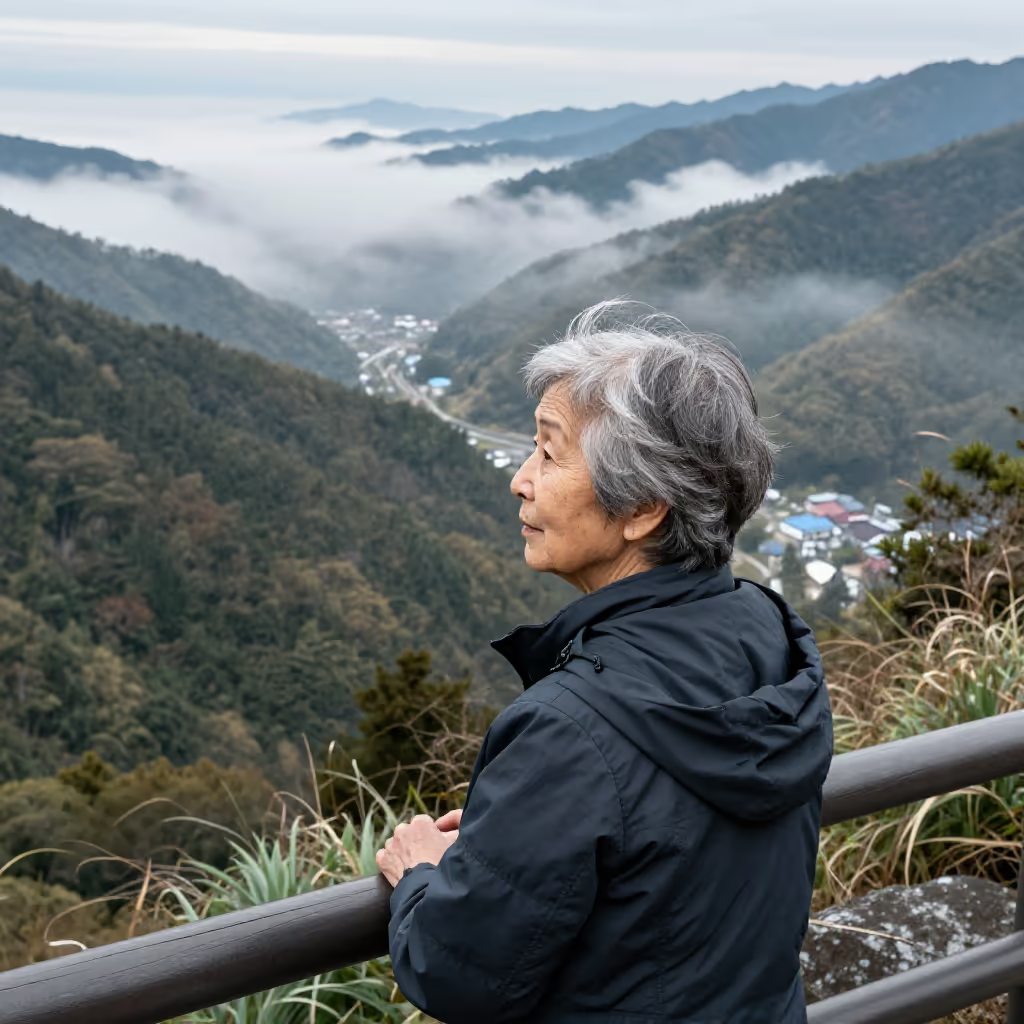
What one sees; the visual perception of a scene, person, or object.
EXAMPLE
Der Anblick des Sonnenuntergangs über dem Meer war wunderschön.
The sight of the sunset over the sea was beautiful.
sight
Loading your saved state.
sight
What one sees; the visual perception of a scene, person, or object.
Der Anblick des Sonnenuntergangs über dem Meer war wunderschön.
The sight of the sunset over the sea was beautiful.
sight
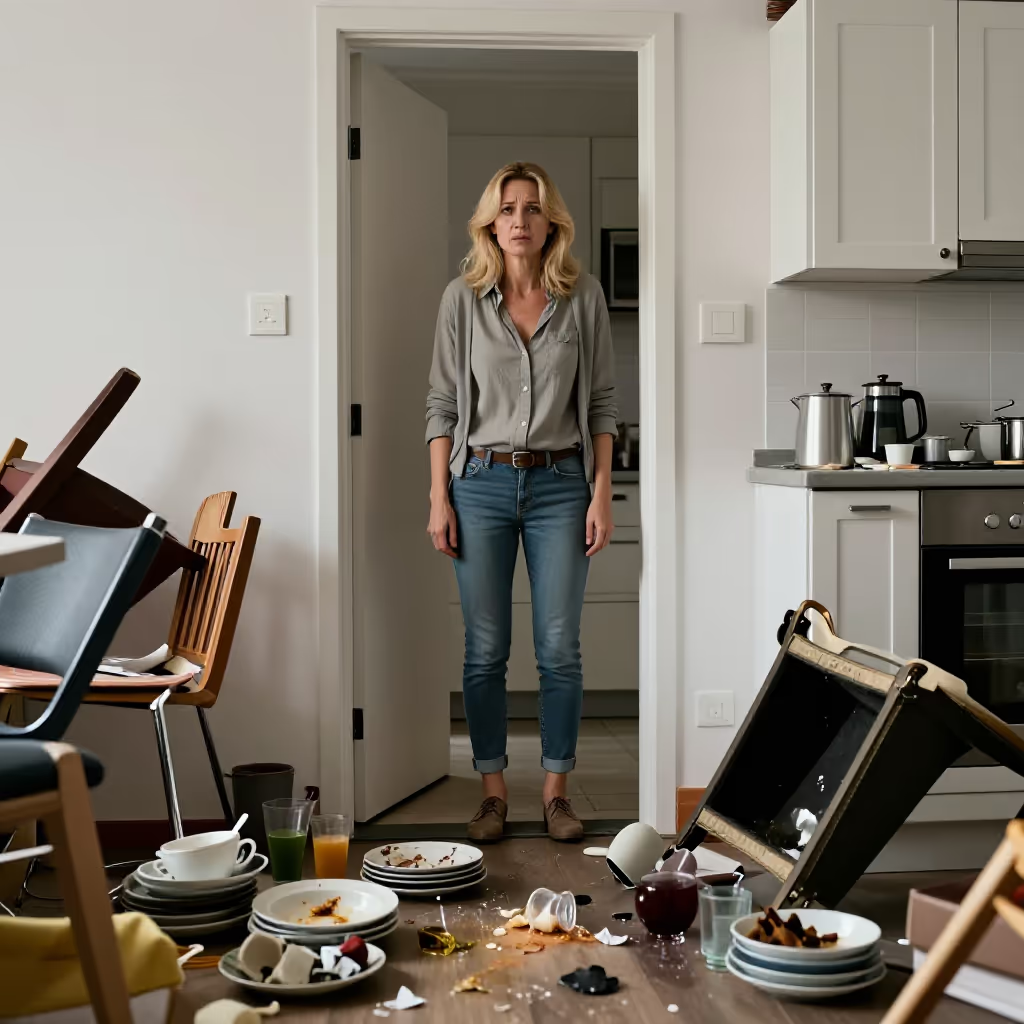
The visual impression or appearance that something or someone gives, often with an evaluative connotation.
Das verwüstete Zimmer bot einen schrecklichen Anblick.
The devastated room presented a terrible sight.
'Anblick' (sight) is made up of the prefix 'an-' and the noun 'der Blick' (look/view). It is what you perceive when you 'anblickt' (look at) something.
Der erste Blick auf die Stadt war beeindruckend, und auch der weitere Anblick enttäuschte nicht.
The first look at the city was impressive, and the further sight did not disappoint either.
The phrase 'beim Anblick von etwas' (at the sight of something) is very common. It means 'when someone saw something' and often introduces a reaction to what was seen.
Beim Anblick der riesigen Spinne schrie sie laut auf.
At the sight of the huge spider, she screamed loudly.
To describe an impression, 'Anblick' (sight) is almost always accompanied by an evaluative adjective. Typical examples are 'ein schöner/herrlicher Anblick' (a beautiful/magnificent sight) or 'ein furchtbarer/trauriger Anblick' (a terrible/sad sight).
Die Müllberge am Strand boten einen traurigen Anblick.
The piles of garbage on the beach presented a sad sight.
look / view
„Der Blick“ refers here to looking in a particular direction with one's eyes. „Der Anblick“, by contrast, is the visual impression made by a person, object, or scene. In other words, one directs their Blick at something, while its Anblick can have an effect.

Der Anblick des beleuchteten Schlosses beeindruckte sie.
The sight of the illuminated castle impressed her.
Sie richtete den Blick auf das beleuchtete Schloss.
She directed her gaze at the illuminated castle.