

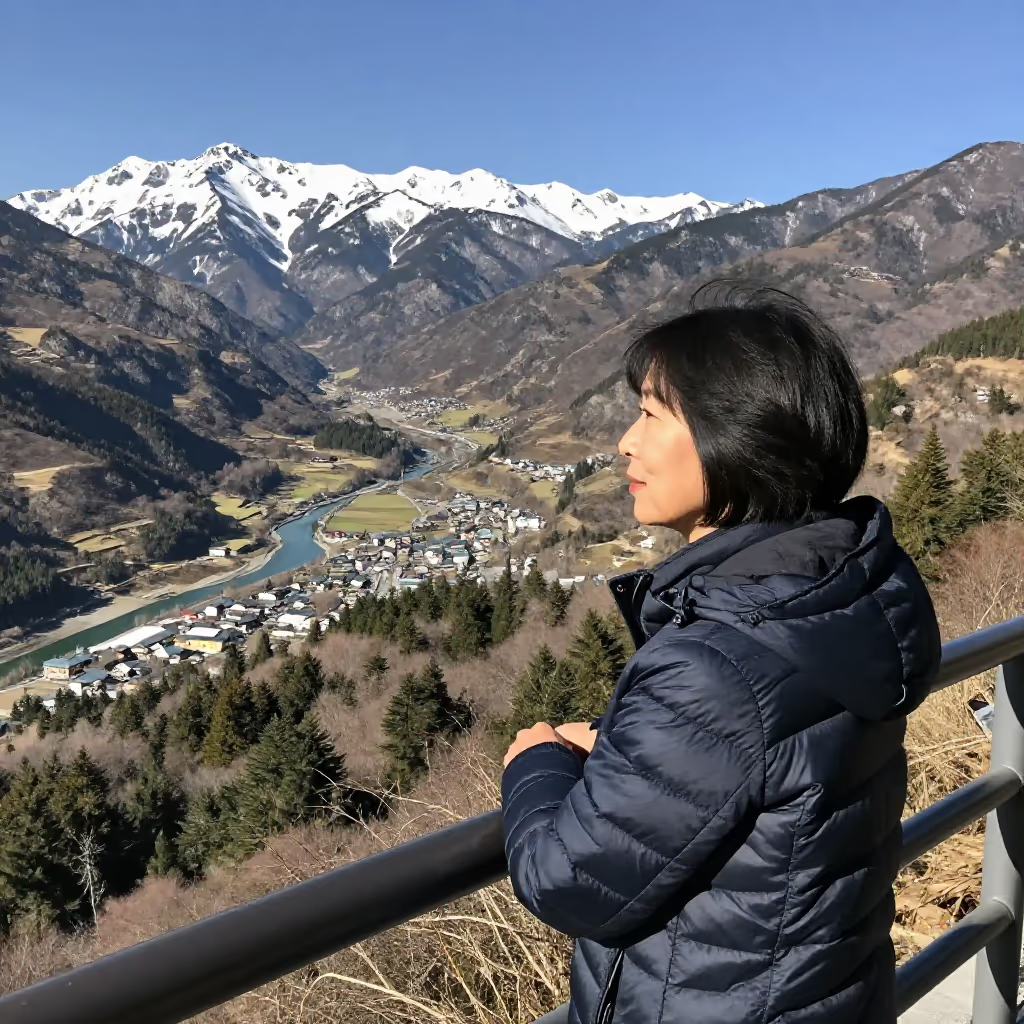
die Aussicht
view
The view that one has of the surroundings from a certain place.
EXAMPLE
Vom Turm hat man eine fantastische Aussicht über die ganze Stadt.
From the tower, you have a fantastic view over the whole city.
view / prospect
Loading your saved state.
view
The view that one has of the surroundings from a certain place.
Vom Turm hat man eine fantastische Aussicht über die ganze Stadt.
From the tower, you have a fantastic view over the whole city.

prospect
The chance or probability that something will happen in the future; an outlook or perspective.
Seine Aussichten auf eine Beförderung sind in diesem Jahr sehr gut.
His prospects for a promotion are very good this year.

to hold out the prospect
To promise or suggest something as a possibility for the future.
Der Arbeitgeber hat ihm eine Gehaltserhöhung in Aussicht gestellt.
The employer held out the prospect of a pay raise to him.
'Aussicht' (view/prospect) is composed of 'aus' (out) and 'Sicht' (sight/view). It literally means the view outward. This basic idea also transfers to the figurative meaning: a view into the future.
Die Sicht vom Gipfel war heute leider nicht gut.
Unfortunately, the visibility from the summit was not good today.
In both main meanings, 'Aussicht' (view/prospect) is almost always used with the preposition 'auf' (on/to/of) and the accusative. You have a view of a place or a prospect of a future event.
Vom Hotelzimmer hat man eine tolle Aussicht auf den Strand.
From the hotel room, you have a great view of the beach.
The meaning of 'Aussicht' (view/prospect) can be recognized from context. If it is about a place (mountain, tower, window), it means the view. If it is about the future (job, success, recovery), it means a chance or prospect.
Die Aussicht auf eine schnelle Genesung ist gering.
The prospect of a quick recovery is low.
The expression 'jemandem etwas in Aussicht stellen' (to hold out the prospect of something to someone) is a fixed expression. It means to suggest a future possibility to someone. The person is in the dative and the thing is in the accusative.
Meine Chefin hat mir eine neue, interessante Aufgabe in Aussicht gestellt.
My boss held out the prospect of a new, interesting task to me.
future
When referring to a person, Zukunft describes their long-term professional development as a whole. Aussicht refers more to the specific chance or likelihood that a particular desired event will happen, and it is often used with auf.

Mit dieser Ausbildung hat Nina gute Aussicht auf eine feste Stelle.
With this training, Nina has a good chance of getting a permanent position.
Mit dieser Ausbildung plant Nina ihre berufliche Zukunft.
Nina is planning her professional future with this training.