

blicken
to look
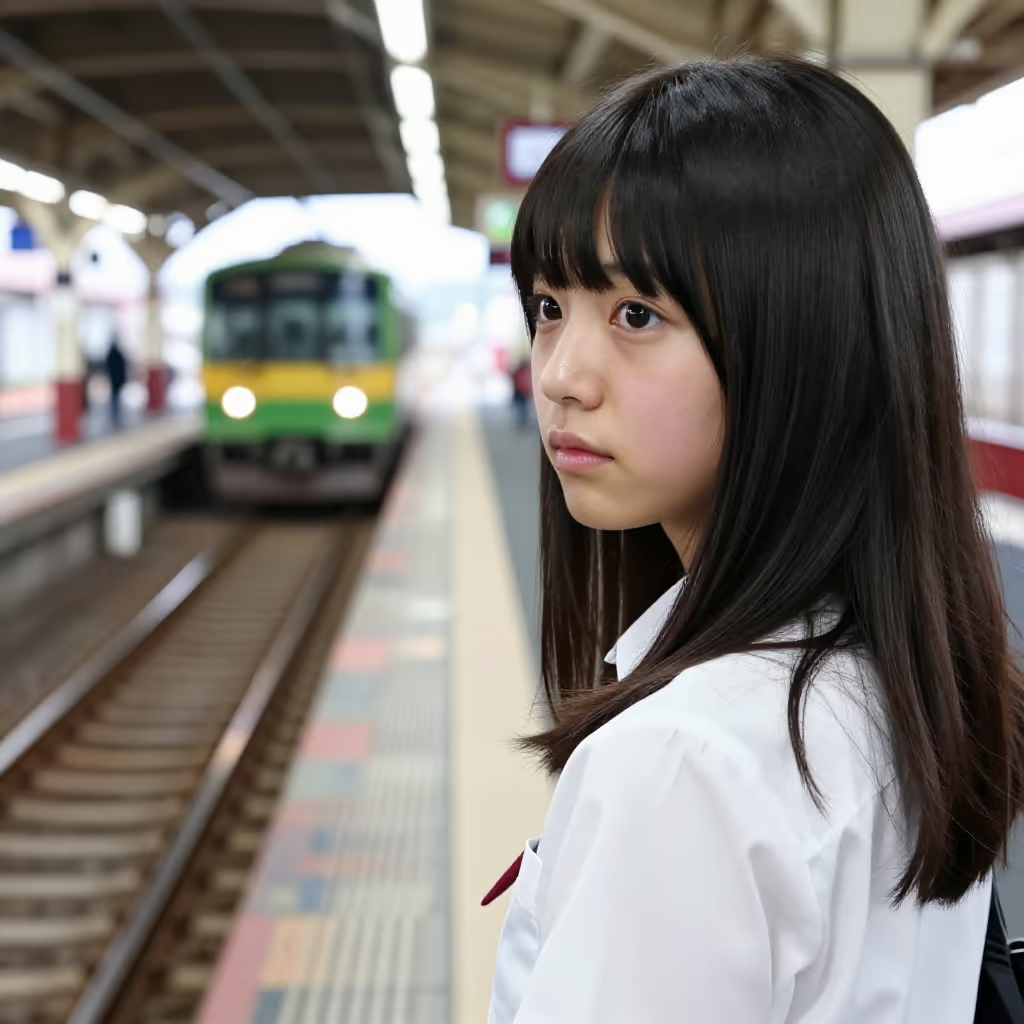
To consciously turn one's eyes in a particular direction in order to look at something; to gaze.
EXAMPLE
Sie blickte neugierig über die Schulter ihres Nachbarn.
She looked curiously over her neighbor's shoulder.
to look
Loading your saved state.
to look
To consciously turn one's eyes in a particular direction in order to look at something; to gaze.
Sie blickte neugierig über die Schulter ihres Nachbarn.
She looked curiously over her neighbor's shoulder.
to face
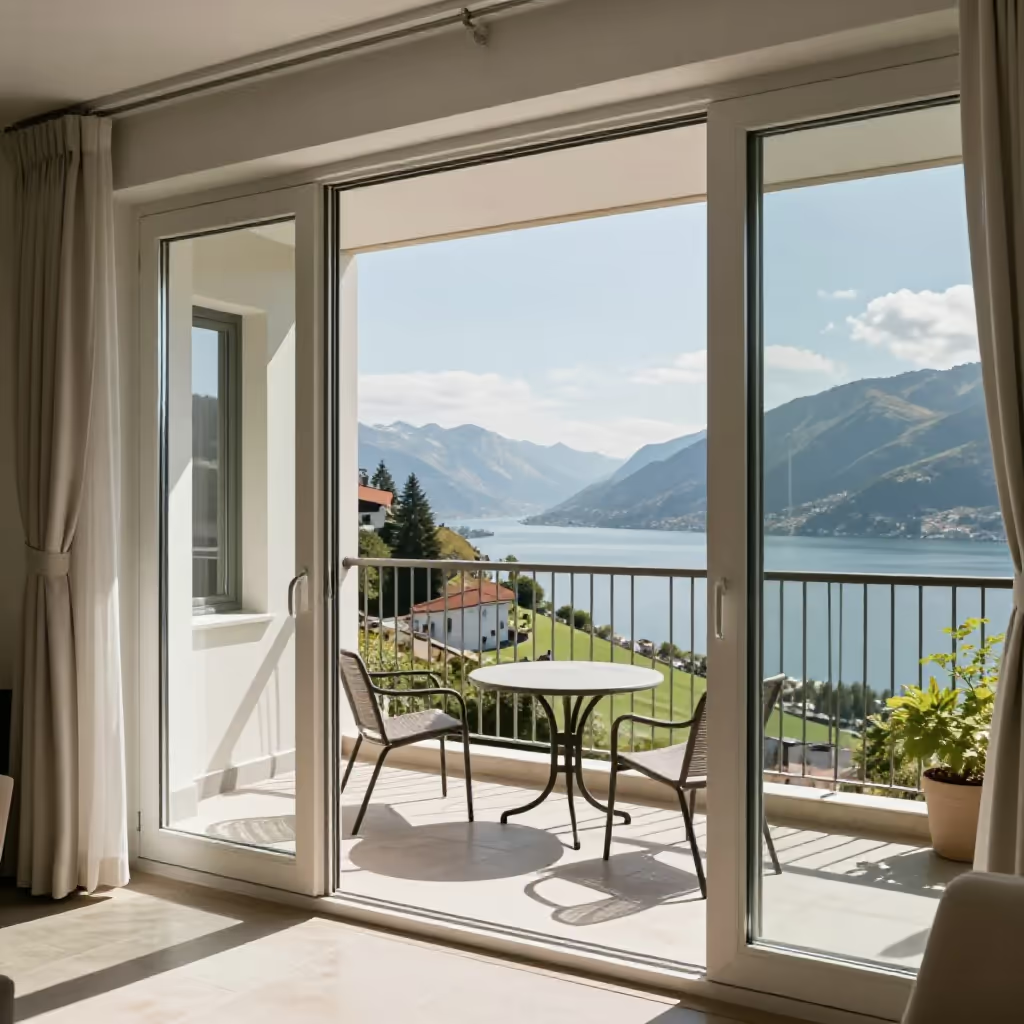
To have a particular view; to be oriented in a direction. Often used for windows, balconies, or buildings.
Unser Hotelzimmer blickt direkt auf den See.
Our hotel room faces directly onto the lake.

to show up
To show oneself or appear at a place, especially after having been absent for a long time.
Er hat sich nach dem Streit erst nach Wochen wieder bei uns blicken lassen.
After the argument, he only showed up at our place again weeks later.
The verb 'blicken' is often used in written language and can sound somewhat more formal or poetic. It describes a conscious and directed way of seeing.
Er blickte nachdenklich aus dem Fenster in den Regen.
He looked thoughtfully out the window into the rain.
'Blicken' is the verb belonging to the noun 'der Blick' (look/view). Both words describe the act of seeing or the view. If you know 'der Blick', you can easily figure out 'blicken'.
Ihr Blick war auf die offene Tür gerichtet.
Her gaze was directed at the open door.
'Blicken' is often combined with prepositions that indicate a direction. Typical phrases are 'auf etwas (Akk) blicken' (to look at something), 'in die Zukunft blicken' (to look into the future), or 'zurück blicken' (to look back).
Von diesem Berg blickt man weit über das Land.
From this mountain, you can look far out over the land.
In this meaning, the subject of the sentence is not a person, but a place such as a window, a balcony, or a room. It describes where the view from there goes.
Die Fenster unserer Wohnung blicken auf einen ruhigen Innenhof.
The windows of our apartment face a quiet courtyard.
The reflexive expression 'sich blicken lassen' means to show up at a place, often after a longer absence. The expression is used as a whole.
Er hat versprochen, sich auf meiner Geburtstagsparty blicken zu lassen.
He promised to show up at my birthday party.
to look / watch
Schauen and blicken can both refer to consciously directing your eyes at something. Blicken places more emphasis on the direction or the deliberate gaze and can sound more elevated. Schauen has a broader range of uses and is often more suitable when ordinary looking is meant.

Lea blickt konzentriert in Richtung des Bahnhofs.
Lea looks intently toward the station.
Lea schaut kurz aus dem Fenster.
Lea looks briefly out the window.