To direct the eyes at something in order to perceive it; to gaze. It is often used synonymously with 'sehen' (to see) or 'gucken' (to look), especially in southern Germany and Austria.
example
Schau mal, ein Regenbogen am Himmel!
Look, a rainbow in the sky!
Usage tips
Regional usage
The verb 'schauen' (to look) is understood throughout the German-speaking world, but it is much more common in everyday language in southern Germany, Austria, and Switzerland than in northern Germany.
EXAMPLE
Wir schauen oft am Wochenende bei unseren Großeltern vorbei.
We often stop by our grandparents' place on the weekend.
Typical prepositions
'Schauen' is often combined with prepositions that indicate a direction. Common examples are 'auf etwas schauen' (to look at something, accusative), 'in den Spiegel schauen' (to look in the mirror, accusative), or 'aus dem Fenster schauen' (to look out of the window, dative).
EXAMPLE
Er schaute lange auf das alte Foto.
He looked at the old photo for a long time.
Sentence structure with 'dass'
The construction 'schauen, dass ...' (to make sure that ...) introduces a subordinate clause. The verb of the subordinate clause comes at the end. It expresses that someone should take care of something or make sure of something.
EXAMPLE
Schau bitte, dass du den Zug nicht verpasst.
Please make sure you don't miss the train.
Fixed expression
'Mal schauen' (we'll see) is a very common colloquial expression. It expresses indecision or waiting to see what happens and can stand alone or introduce a subordinate clause.
EXAMPLE
„Gehen wir heute Abend ins Kino?“ – „Mal schauen, vielleicht.“
'Are we going to the movies tonight?' – 'We'll see, maybe.'
Typical collocations
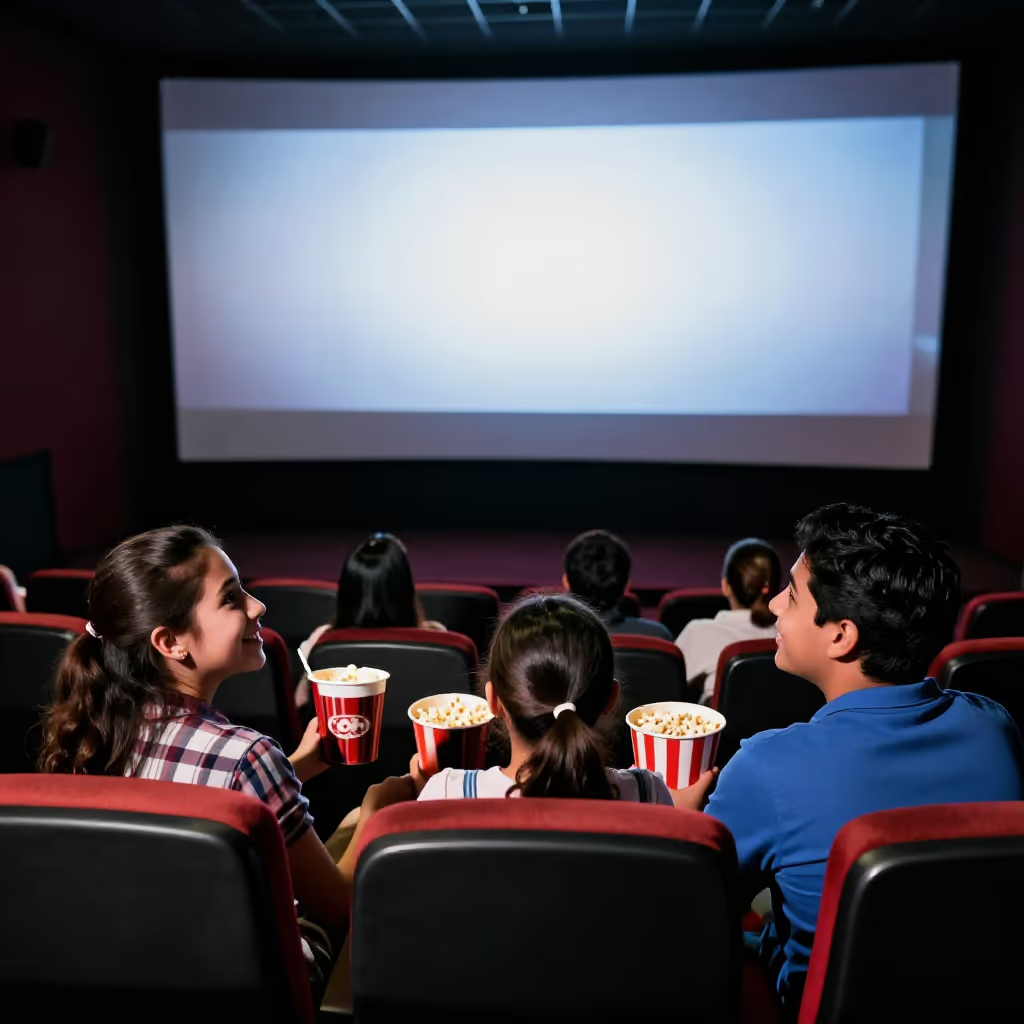
In the meaning 'sich etwas ansehen' (to watch something), 'schauen' is almost always combined with media content. Typical phrases are 'einen Film schauen' (to watch a film), 'eine Serie schauen' (to watch a series), or 'Fernsehen schauen' (to watch TV).
EXAMPLE
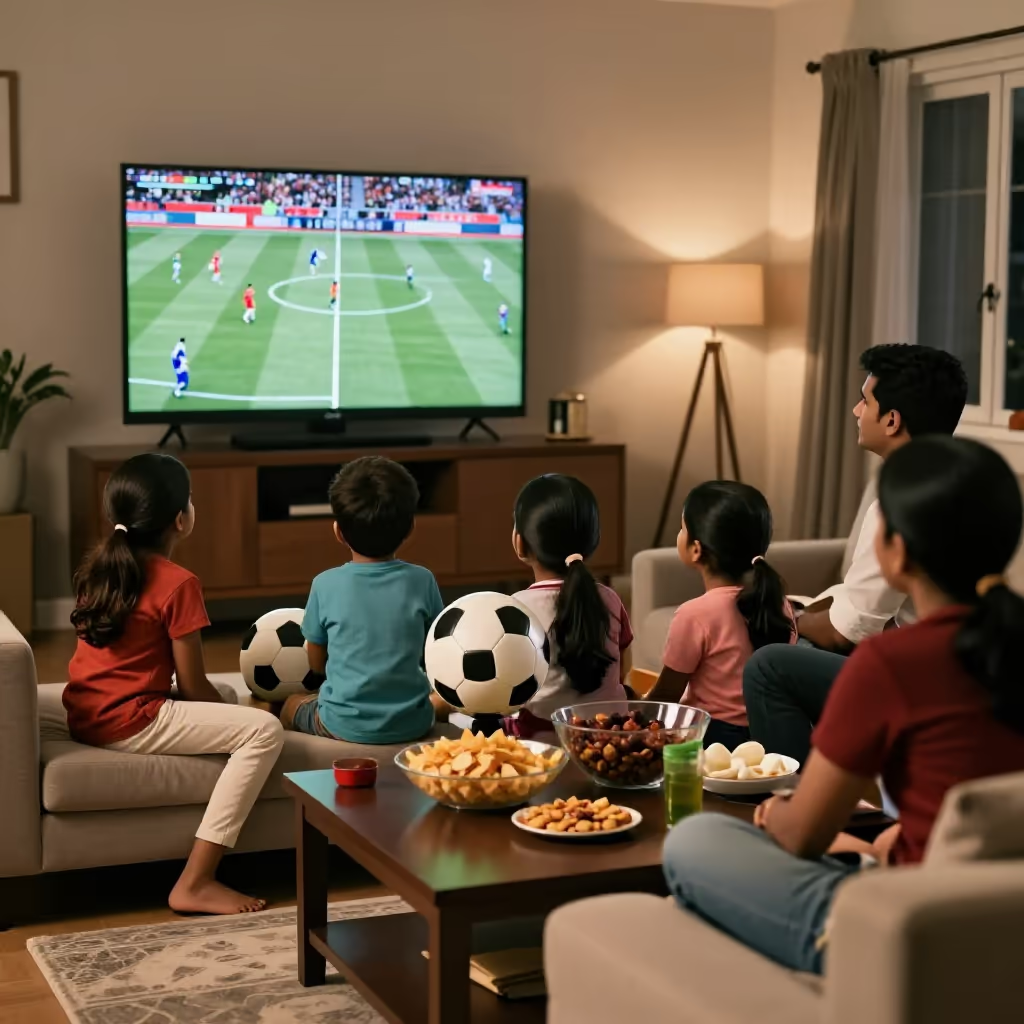
Am Sonntag schauen wir immer zusammen die Sportschau.
On Sundays, we always watch the sports show together.
Describing facial expressions
To describe a facial expression, 'schauen' is combined with an adjective or adverb. Examples are 'glücklich schauen' (to look happy), 'skeptisch schauen' (to look skeptical), or 'überrascht schauen' (to look surprised).
EXAMPLE
Als er das Geschenk sah, schaute er ganz überrascht.
When he saw the gift, he looked completely surprised.
Compare with
near_synonym · confusable
schauen vs sehen
to see
'sehen' and 'schauen' both have to do with the eyes. 'sehen' often simply describes perceiving something or having the ability to see. 'schauen' more strongly emphasizes that you deliberately direct your gaze at something. With films, television, or sports, both can be used in a similar way: you can say 'einen Film sehen' or 'einen Film schauen' (to watch a film). 'schauen' often sounds a bit more colloquial and is especially natural in southern Germany and Austria. Learners confuse the words because they often occur in similar situations. As a simple guideline: 'sehen' fits very generally, while 'schauen' works well when you actively look at something or watch something.
schauen
In der Pause schauen wir kurz auf den Plan für heute Abend.
During the break, we take a quick look at the plan for tonight.
sehen
Vom Fenster aus sehe ich den Bus an der Haltestelle.