
Colloquial for having a desire for or interest in something. Very often used in the negative form 'keinen Bock haben' (to not feel like it).
example
Ich habe heute Abend total Bock auf Pizza.
I really feel like having pizza tonight.
Usage tips
Context clue
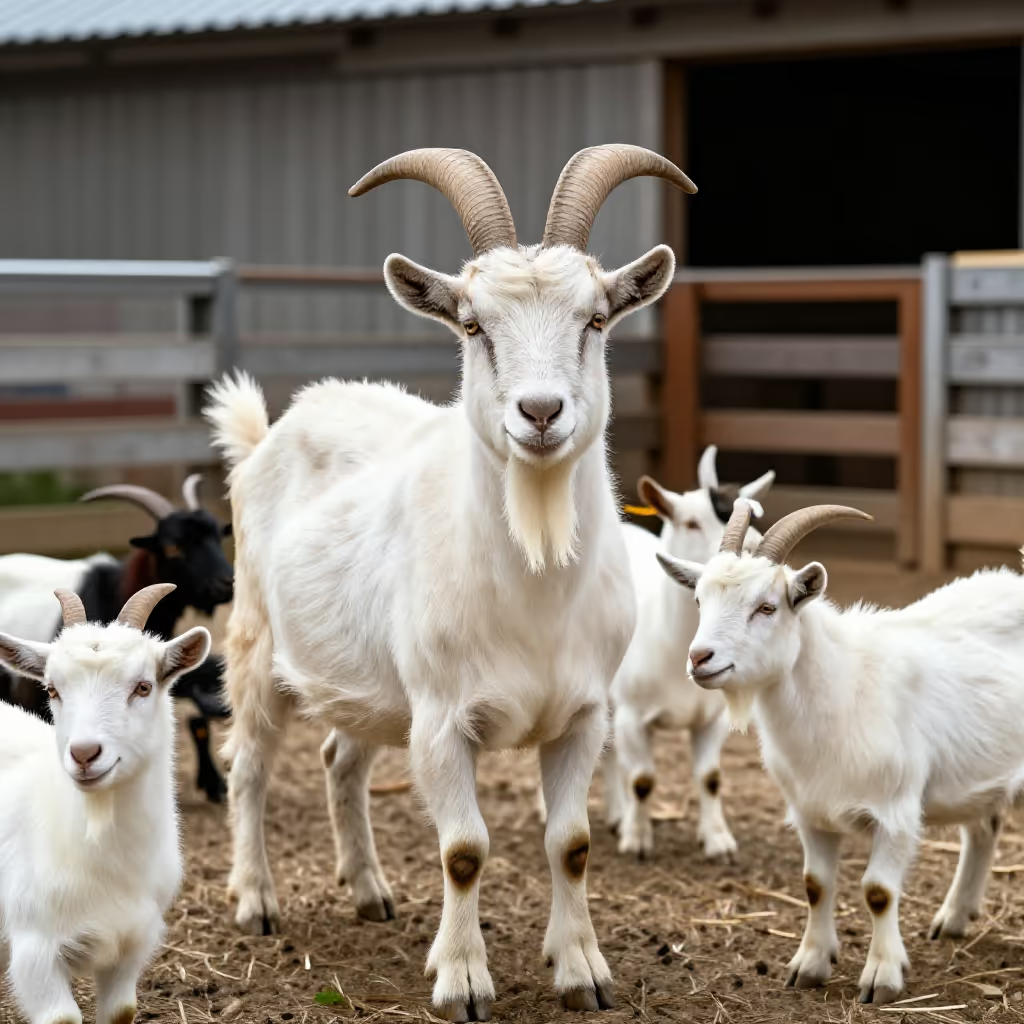
You can recognize the idiomatic meanings from the verbs: 'Bock haben' (to feel like), 'einen Bock schießen' (to make a mistake), or 'den Bock zum Gärtner machen' (to put an unsuitable person in charge). The literal meanings (animal, frame) become clear from the situational context.
EXAMPLE
Ich habe einen Bock geschossen und die falsche Datei gelöscht.
I made a blunder and deleted the wrong file.
Register: colloquial
The expression 'Bock haben' (to feel like) is very colloquial and is used especially by younger people. The negative form 'keinen Bock haben' (to not feel like it) is particularly common.
EXAMPLE
Sorry, ich komme nicht mit, ich hab keinen Bock auf Kino heute.
Sorry, I'm not coming along; I don't feel like going to the movies today.
Sentence structure: preposition
The expression requires the preposition 'auf' followed by the accusative to say what someone feels like doing or having.
EXAMPLE
Hast du Bock auf ein Eis?
Do you feel like having an ice cream?
Fixed expression
The expression 'einen Bock schießen' (to make a blunder) is a fixed idiom and means to make a clear, often embarrassing mistake. The verb 'schießen' (to shoot) is conjugated in the expression.
EXAMPLE
Der Torwart hat einen Bock geschossen und das Spiel verloren.
The goalkeeper made a blunder and lost the game.
Fixed expression
'Den Bock zum Gärtner machen' (literally: to make the buck the gardener) is a fixed idiom. You use it when you give someone responsibility for something they are demonstrably unsuited for.
EXAMPLE
Ihm das Geld anzuvertrauen, hieße, den Bock zum Gärtner zu machen.
Entrusting him with the money would be like putting the fox in charge of the henhouse.
Compare with
near_synonym
Bock vs Fehler
mistake / error
'der Fehler' and 'einen Bock schießen' can both express that someone does something wrong. 'der Fehler' is the normal, neutral word and fits in almost all situations, including at school, at work, or in official contexts. 'einen Bock schießen' (to make a blunder) is a colloquial idiom and usually means a fairly serious or embarrassing mistake. Important: 'Bock' by itself does not simply mean 'mistake' here. The meaning comes from the whole expression 'einen Bock schießen'.
Bock
Elif hat bei der Planung einen Bock geschossen und den falschen Termin eingetragen.
Elif made a blunder in the planning and entered the wrong date.
Fehler
Im Formular ist ein Fehler, deshalb muss Herr Kaya es noch einmal ausfüllen.
There is a mistake on the form, so Mr. Kaya has to fill it out again.