

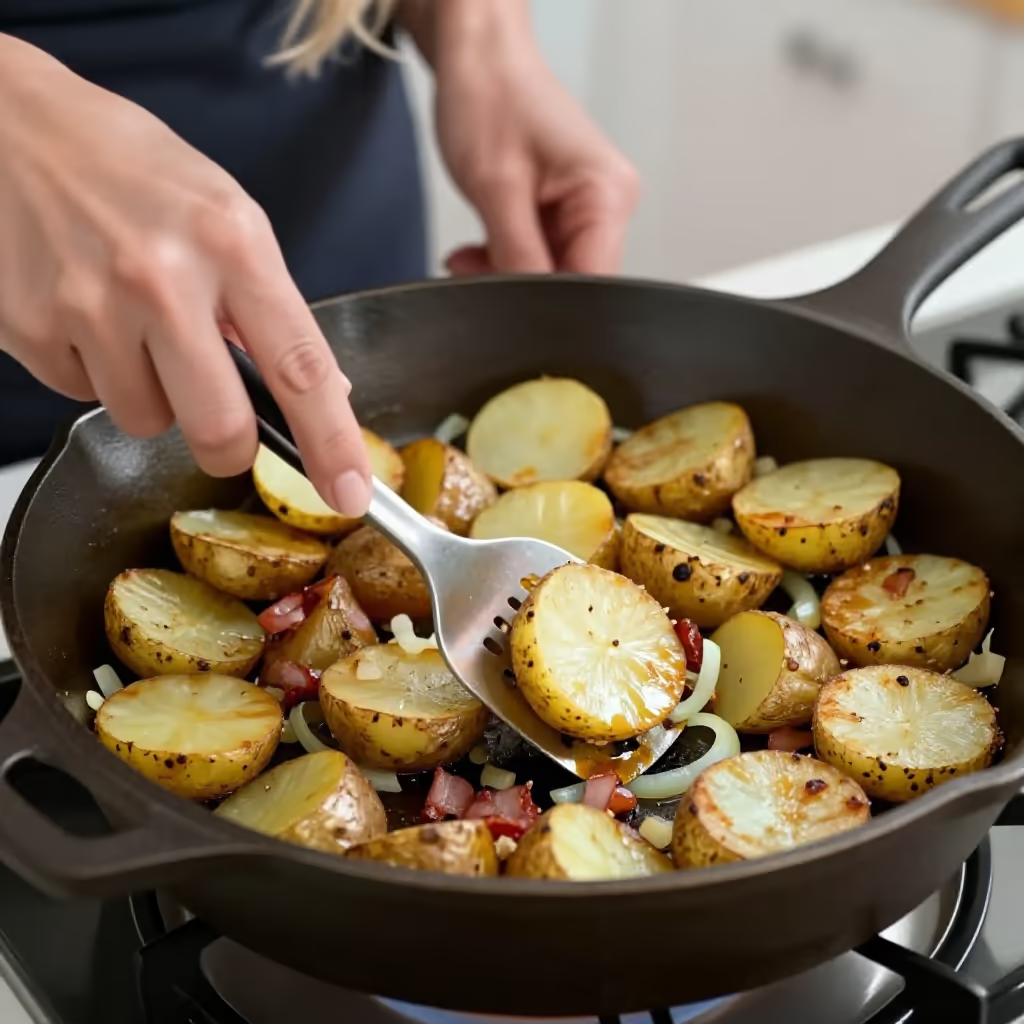
A potato sliced and fried in a pan. The plural "Bratkartoffeln" is usually used for the finished dish.
example
Zum Schnitzel bestelle ich mir immer Bratkartoffeln mit Speck und Zwiebeln.
With schnitzel, I always order fried potatoes with bacon and onions.
Usage tips
Compound structure
The word is made up of the stem of the verb 'braten' (to fry/roast) and the noun 'die Kartoffel' (the potato). So it literally describes a 'gebratene Kartoffel' (fried potato).
EXAMPLE
Für Bratkartoffeln muss man die Kartoffeln zuerst schneiden und dann in der Pfanne braten.
For fried potatoes, you first have to slice the potatoes and then fry them in the pan.
Singular and plural
In the singular, 'die Bratkartoffel' (the fried potato) refers to a single fried potato slice. When referring to the dish, the plural 'die Bratkartoffeln' (fried potatoes) is almost always used.
EXAMPLE
Er nahm sich noch eine letzte Bratkartoffel vom Teller.
He took one last fried potato from the plate.
Typical preparation
'Bratkartoffeln' (fried potatoes) are often fried together with other ingredients. Very typical combinations are 'Bratkartoffeln mit Speck und Zwiebeln' (fried potatoes with bacon and onions) or 'Bratkartoffeln mit Spiegelei' (fried potatoes with a fried egg).
EXAMPLE
Ein klassisches deutsches Gericht sind Bratkartoffeln mit Spiegelei.
A classic German dish is fried potatoes with a fried egg.