

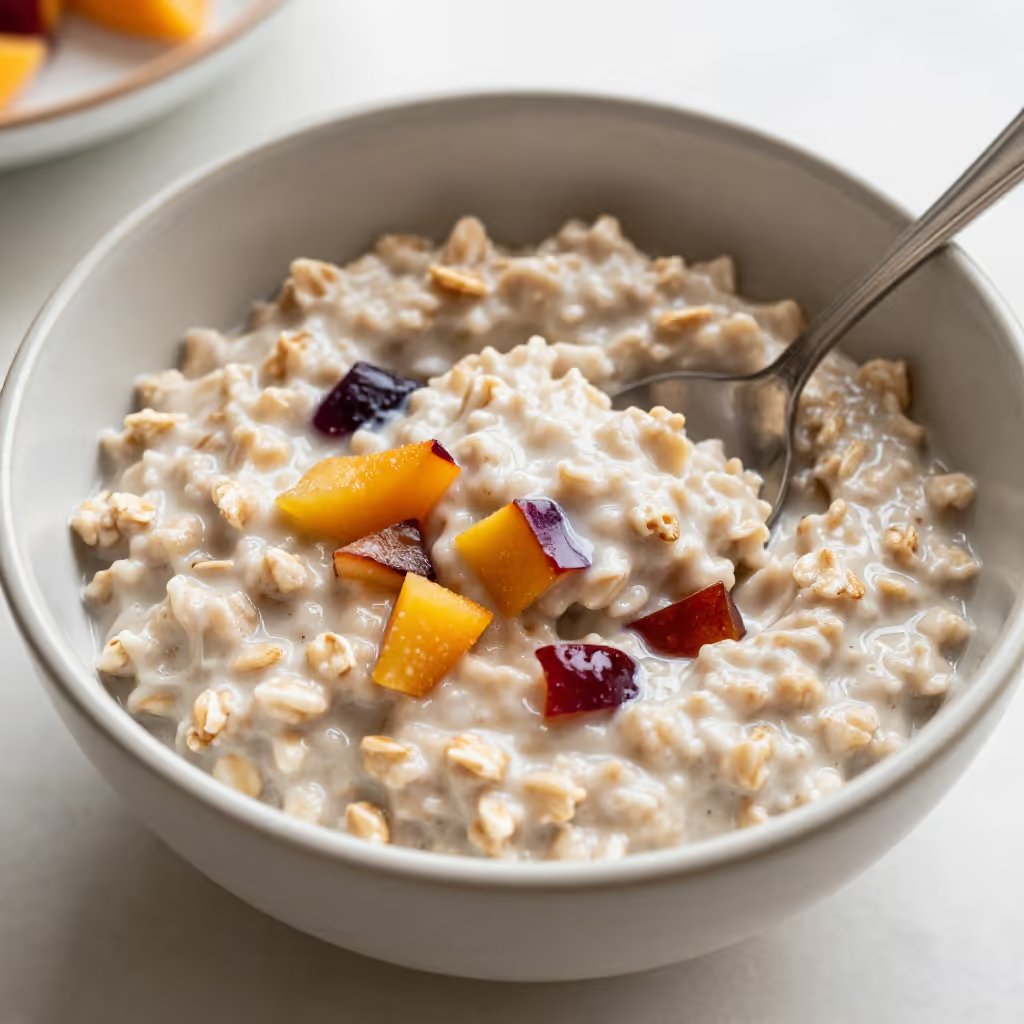
der Brei
porridge / purée
A soft, thick food made from cooked and often mashed grain, fruit, or vegetables.
EXAMPLE
Das Baby bekommt mittags einen Gemüsebrei.
The baby gets a vegetable purée at lunchtime.
porridge / mush
Loading your saved state.
porridge / purée
A soft, thick food made from cooked and often mashed grain, fruit, or vegetables.
Das Baby bekommt mittags einen Gemüsebrei.
The baby gets a vegetable purée at lunchtime.
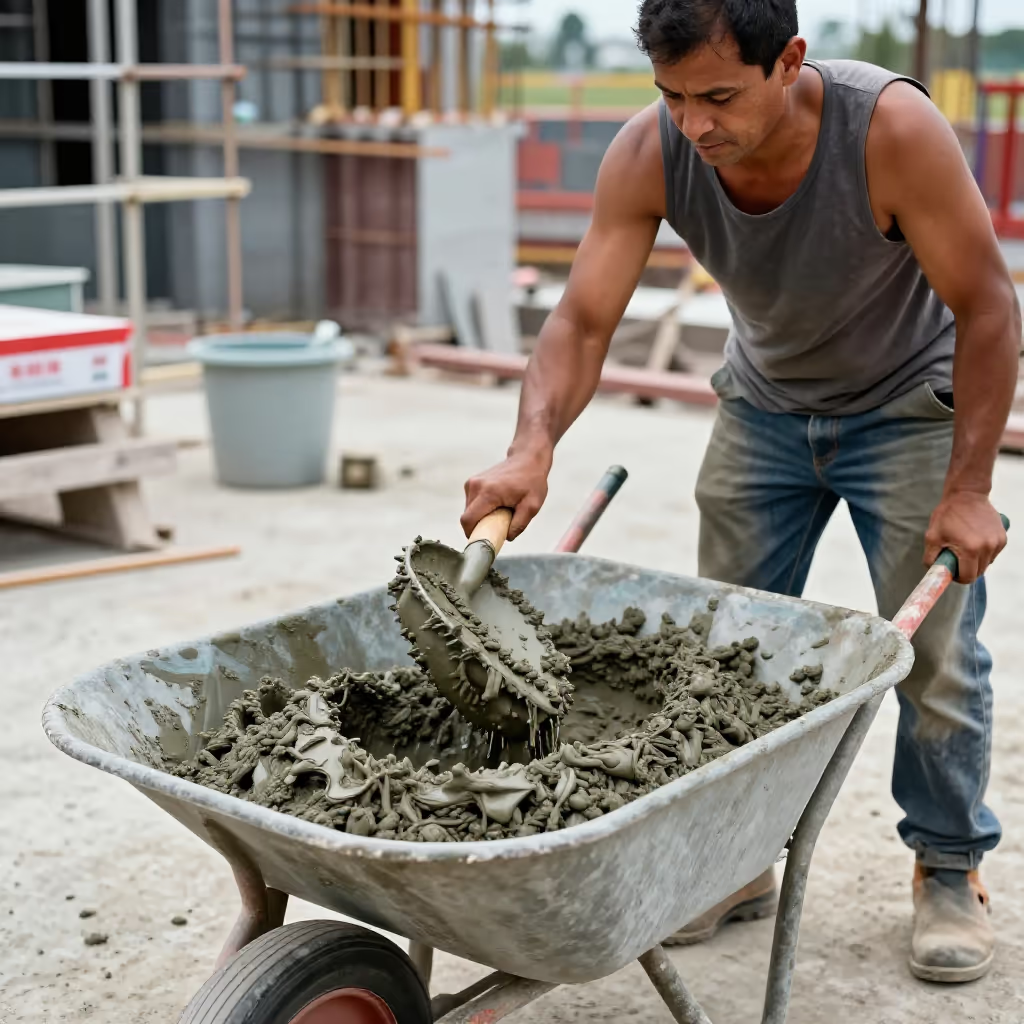
mush / sludge
A shapeless, tough, or mushy mass made of a substance.
Nach dem starken Regen war der Gartenweg ein einziger Brei aus Erde und Wasser.
After the heavy rain, the garden path was just a mush of dirt and water.

to beat around the bush
To avoid addressing an unpleasant or important matter directly and instead say evasive or irrelevant things.
Hör auf, um den heißen Brei herumzureden, und sag mir endlich, was passiert ist!
Stop beating around the bush and finally tell me what happened!
The word 'Brei' (porridge/mush) is almost always used in the singular because it describes an uncountable mass. The plural form 'Breie' is very rare and is only used when referring to different kinds.
Zum Frühstück esse ich gerne einen warmen Brei.
For breakfast, I like to eat a warm porridge.
The idiom 'um den heißen Brei herumreden' (to beat around the bush) is a fixed structure. It means that someone avoids the real topic and does not get straight to the point.
Bitte rede nicht um den heißen Brei herum und sag mir die Wahrheit.
Please don't beat around the bush and tell me the truth.
In connection with food, 'Brei' (porridge/purée) is often used as the second part of a compound word that names the ingredient. Typical examples are 'Haferbrei' (oatmeal/porridge), 'Grießbrei' (semolina pudding), or 'Kartoffelbrei' (mashed potatoes).
Ein warmer Haferbrei mit Früchten ist ein gesundes Frühstück.
A warm oatmeal with fruit is a healthy breakfast.
When 'Brei' (mush/sludge) describes a shapeless mass, it often appears in connection with words like 'Matsch' (mud), 'Schnee' (snow), or 'Erde' (soil/dirt). It then describes an unpleasant, thick consistency.
Nach dem Tauwetter war der Weg ein Brei aus Schnee und Schmutz.
After the thaw, the path was a mush of snow and dirt.
purée / mush
„Brei“ and „Mus“ can both refer to a thick, soft food made from fruit. „Brei“ tends to emphasize the soft, thick consistency, while „Mus“ is used for a mass made by deliberately cooking and puréeing fruit or vegetables.

Die weich gekochten Apfelstücke zerfielen zu einem dicken Brei.
The soft-cooked apple pieces broke down into a thick mush.
Sie kochte und pürierte die Äpfel zu einem feinen Mus.
She cooked and puréed the apples into a fine apple purée.