


der Bruch
fracture
The breaking of a bone in the body; a fracture.
EXAMPLE
Beim Skifahren hat er sich einen komplizierten Bruch im Bein zugezogen.
He suffered a complicated fracture in his leg while skiing.
break / fracture / fraction
Loading your saved state.
fracture
The breaking of a bone in the body; a fracture.
Beim Skifahren hat er sich einen komplizierten Bruch im Bein zugezogen.
He suffered a complicated fracture in his leg while skiing.

breach
The violation or non-observance of a rule, contract, promise, or agreement.
Sein Verhalten war ein klarer Bruch mit unseren Prinzipien.
His behavior was a clear breach of our principles.
break
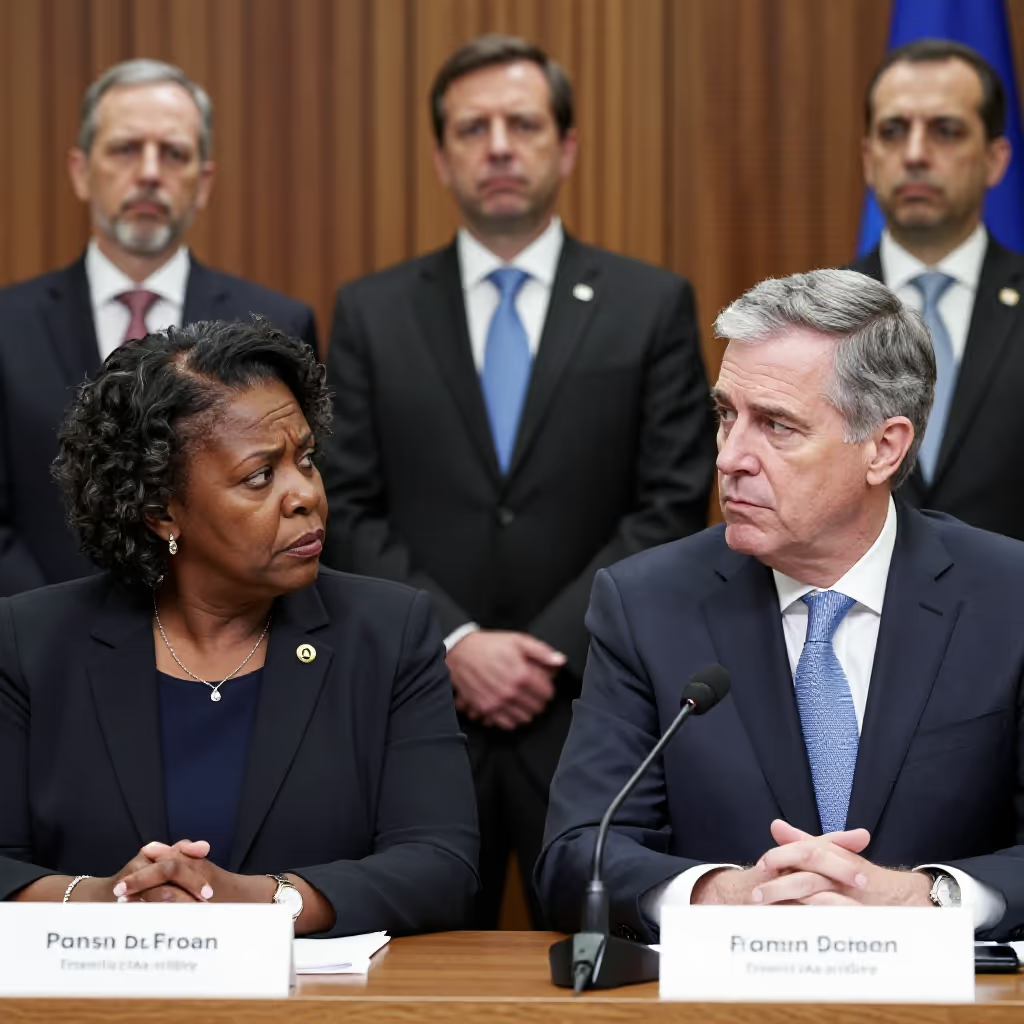
The abrupt end of a relationship, friendship, or political cooperation.
Nach dem heftigen Streit kam es zum endgültigen Bruch zwischen den beiden Freundinnen.
After the heated argument, there was a final break between the two friends.

break / crack
The place where something hard or brittle has broken; a crack or fissure.
Durch den Bruch in der Vase sickerte langsam das Wasser.
Water slowly seeped through the crack in the vase.

fraction
In mathematics, a number that represents part of a whole and consists of a numerator and a denominator.
Die Aufgabe war, den Bruch drei Viertel in eine Dezimalzahl umzuwandeln.
The task was to convert the fraction three quarters into a decimal number.

hernia
In medicine, the protrusion of intestines or tissue through a congenital or acquired opening, e.g., an inguinal hernia.
Der Arzt diagnostizierte einen leichten Bruch und riet zu einer Operation.
The doctor diagnosed a mild hernia and recommended surgery.
quarry
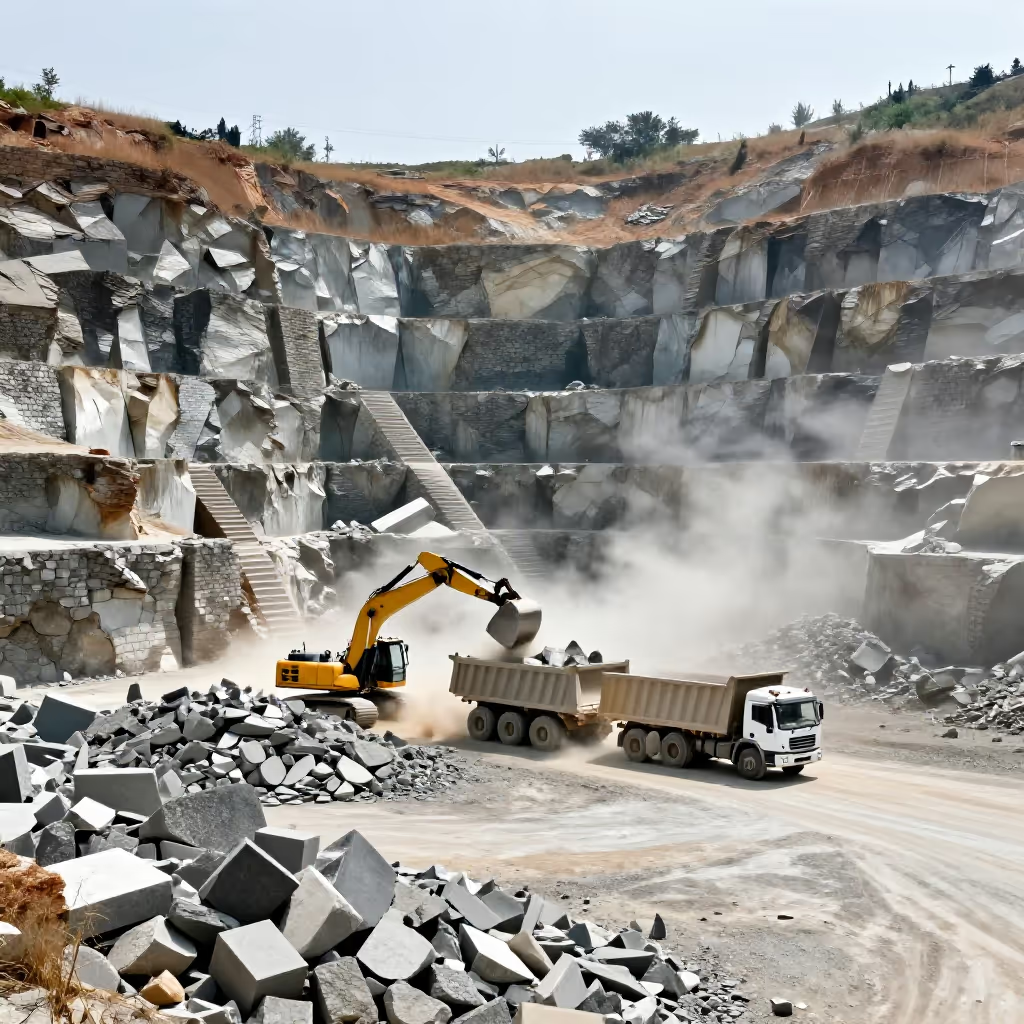
A place where stone is extracted on a large scale; a quarry.
Der Marmor für das Gebäude stammt aus einem nahegelegenen Bruch.
The marble for the building comes from a nearby quarry.
'Der Bruch' is the noun corresponding to the strong verb 'brechen' (to break). Almost all meanings of 'Bruch' derive from the idea that something breaks—literally or figuratively.
Das Brechen des Glases verursachte einen lauten Knall.
The breaking of the glass caused a loud bang.
'Bruch' is often part of compound nouns that make the meaning more precise. The first word explains what is broken: 'Beinbruch' (broken leg / bone fracture), 'Vertragsbruch' (breach of contract), 'Steinbruch' (quarry).
Ein Ehebruch kann zur Scheidung führen.
Adultery can lead to divorce.
In the medical sense ('Knochenbruch' = bone fracture), the phrase 'sich einen Bruch zuziehen' (to suffer a fracture) is often used.
Beim Fußball hat er sich einen komplizierten Bruch zugezogen.
He suffered a complicated fracture while playing soccer.
When it is about the violation of rules, 'Bruch' often appears with a genitive or in a compound. Typical examples are: 'der Bruch des Gesetzes' (the breaking of the law), 'ein Vertrauensbruch' (a breach of trust), or 'ein Regelbruch' (a rule violation).
Das war ein klarer Bruch seines Versprechens.
That was a clear breach of his promise.
When the end of a relationship is meant, the preposition 'mit' (with) or 'zwischen' (between) is often used: 'der Bruch mit jemandem' (the break with someone) or 'der Bruch zwischen zwei Parteien' (the break between two parties).
Der Streit führte zum Bruch zwischen den beiden Geschäftspartnern.
The argument led to a break between the two business partners.
In the context of mathematics, numbers, numerators, or denominators, 'Bruch' always means 'fraction'.
In der Grundschule lernt man, wie man mit Brüchen rechnet.
In elementary school, you learn how to calculate with fractions.
When stones, rock, or the extraction of materials are being discussed, 'Bruch' means 'Steinbruch' (quarry).
Aus diesem Bruch stammt der Sandstein für die Kirche.
The sandstone for the church comes from this quarry.
separation
Trennung and Bruch can both refer to the end of a relationship. Trennung sounds neutral and initially describes the end of the relationship, while Bruch usually suggests an abrupt and conflict-ridden break. Use Trennung for a factual description and Bruch when the argument or the harsh break is important.

Nach dem heftigen Streit kam es zum Bruch zwischen den beiden Freunden.
After the heated argument, the two friends broke off their friendship.
Nach vielen Gesprächen entschieden sie sich in gegenseitigem Einvernehmen für die Trennung.
After many discussions, they mutually agreed to end the relationship.