

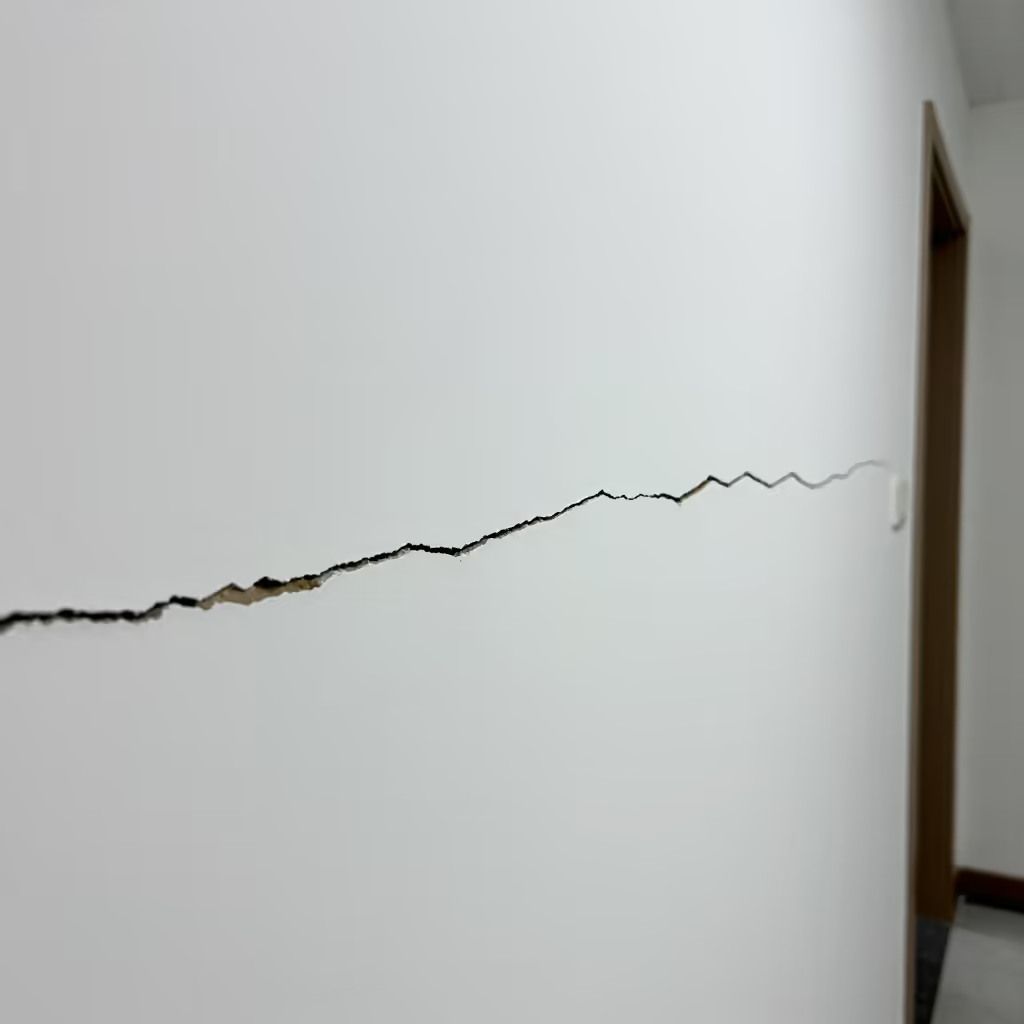
der Riss
crack
A long, narrow split or opening in a surface that has been caused by tearing, breaking, or splitting.
EXAMPLE
Durch das Erdbeben entstand ein tiefer Riss in der Hauswand.
The earthquake caused a deep crack in the wall of the house.
crack / rift
Loading your saved state.
crack
A long, narrow split or opening in a surface that has been caused by tearing, breaking, or splitting.
Durch das Erdbeben entstand ein tiefer Riss in der Hauswand.
The earthquake caused a deep crack in the wall of the house.

rift
A figurative term for a disruption, separation, or break in a relationship or social structure.
Der ständige Streit führte zu einem unüberbrückbaren Riss in ihrer Freundschaft.
The constant arguing led to an unbridgeable rift in their friendship.

sketch / draft
A quick, often rough sketch or drawing; a draft.
Der Architekt fertigte einen ersten Riss des geplanten Anbaus an.
The architect made an initial sketch of the planned extension.
'Der Riss' (the crack/rift) is the noun form of the verb 'reißen' (to tear). It describes the result of the action: when something tears, a 'Riss' (crack) appears. This applies to both physical and figurative meanings.
Beim Umzug ist das alte Foto leider gerissen und hat jetzt einen Riss.
During the move, the old photo unfortunately tore and now has a crack.
The context makes the meaning clear: if people are talking about materials like walls or paper, it means a split or crack. In connection with relationships or groups, it refers to a break or rift. Verbs like 'zeichnen' (to draw) or 'anfertigen' (to make/produce) point to a sketch.
Der Riss im Tischtuch lässt sich nähen.
The tear in the tablecloth can be sewn up.
For a physical split, 'Riss' (crack) is often combined with the places where it appears: 'ein Riss in der Wand' (a crack in the wall), 'im Glas' (in the glass), or 'im Stoff' (in the fabric). Typical adjectives are 'tief' (deep), 'fein' (fine), or 'kaum sichtbar' (barely visible).
Nach dem Winter hatten viele Straßen tiefe Risse im Asphalt.
After the winter, many roads had deep cracks in the asphalt.
In the figurative meaning, 'Riss' (rift) describes a deep division. The phrase 'ein Riss geht durch...' (a rift runs through...) is often used to describe disagreement within a group.
Seit der politischen Debatte geht ein Riss durch die Dorfgemeinschaft.
Since the political debate, a rift has run through the village community.
draft / design
In early architectural design, both Entwurf and Riss can refer to an initial drawing. Entwurf emphasizes the preliminary plan or design proposal, while Riss highlights the rough drawn version. Use Entwurf for the intended design and Riss for the quick, rough sketch.
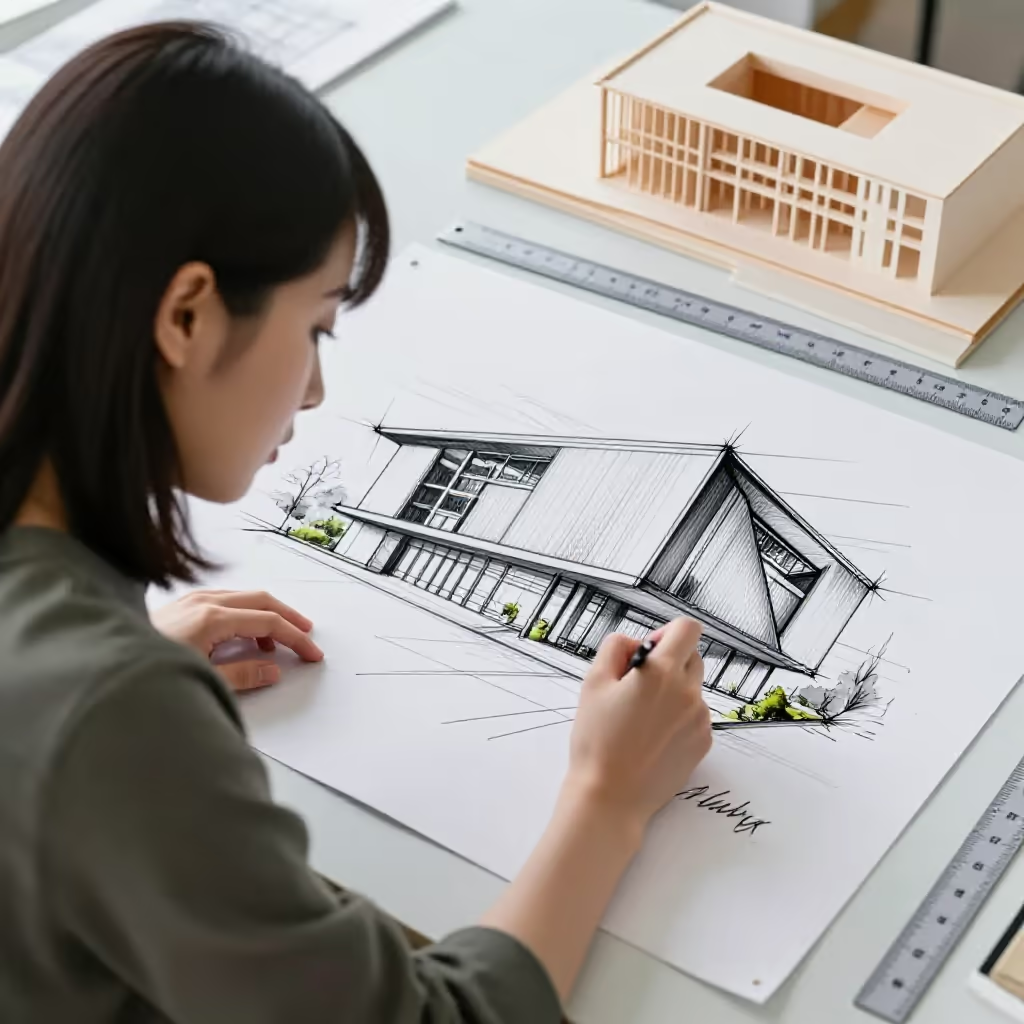
Der Architekt machte schnell einen Riss vom geplanten Haus.
The architect quickly made a sketch of the planned house.
Der Entwurf für das Haus zeigt, wie die Räume später angeordnet sein sollen.
The design for the house shows how the rooms are intended to be arranged later.