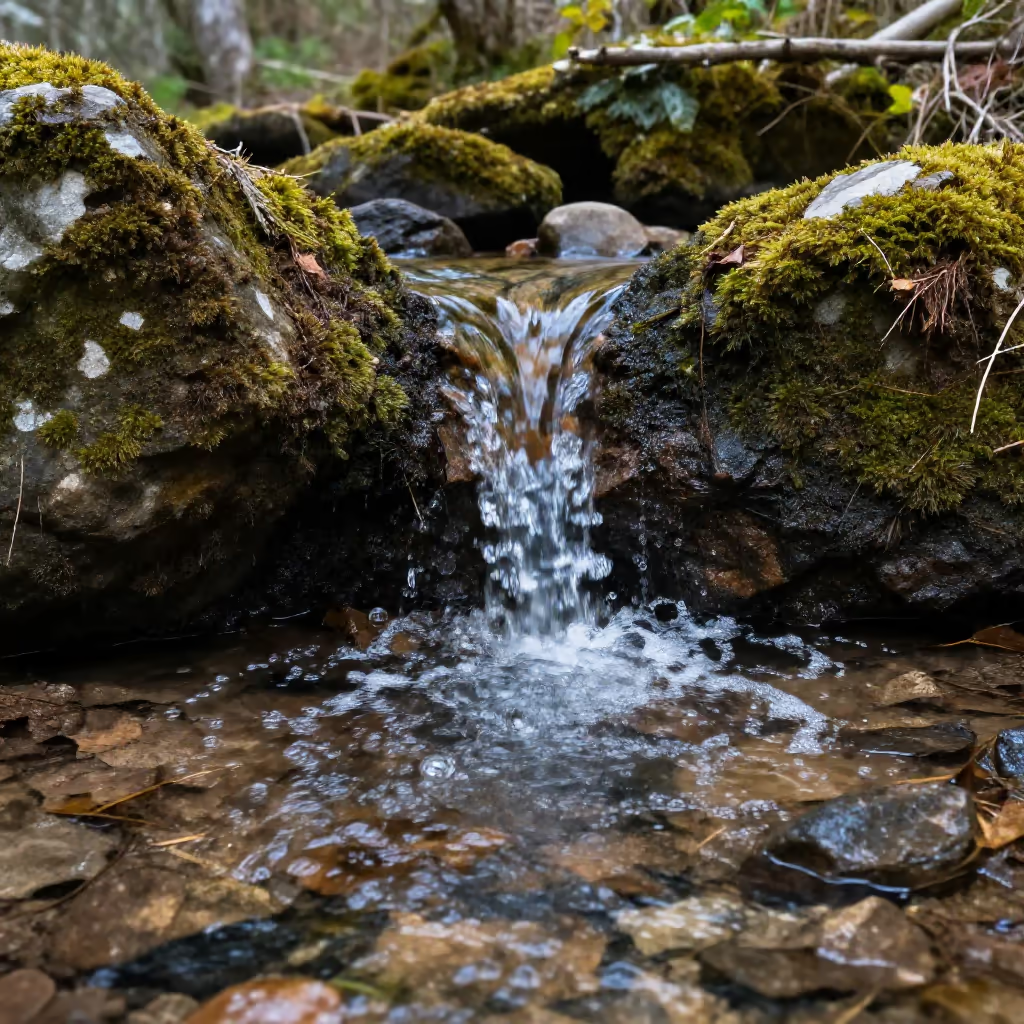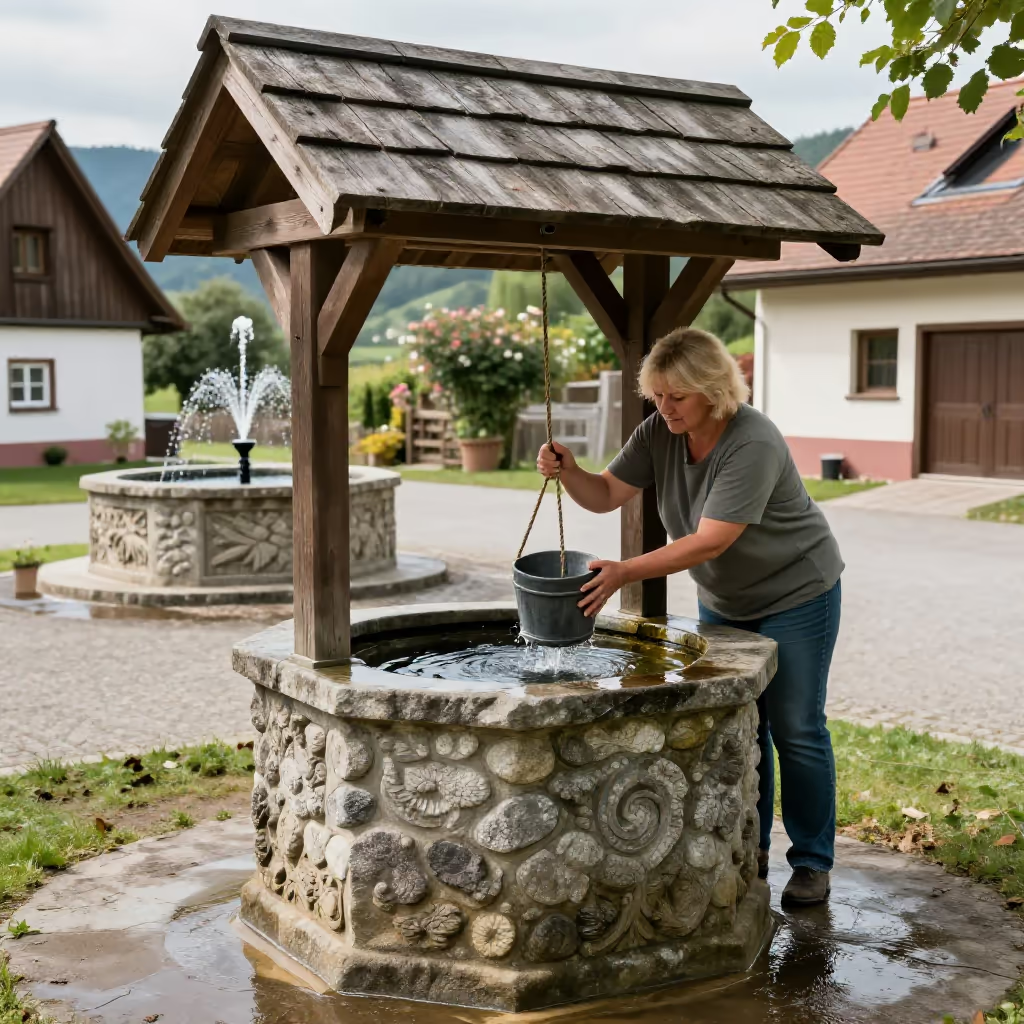
A structure for obtaining groundwater (draw well) or a decorative installation with jets of water (fountain).
example
Auf dem Marktplatz steht ein alter Brunnen mit einer steinernen Figur.
There is an old fountain with a stone figure in the marketplace.

Usage tips
Two main types
In German, people often distinguish between two kinds of 'Brunnen' (well/fountain). A 'Springbrunnen' (fountain) is a decorative installation with jets of water, while a 'Ziehbrunnen' (draw well) is dug deep into the ground to get groundwater.
EXAMPLE
Die Kinder spielten am Springbrunnen im Park.
The children played by the fountain in the park.
Figurative language
The figurative meaning of 'Brunnen' (source) is mainly used in elevated or poetic language. In normal everyday speech, this use is rare.
EXAMPLE
Seine Lebenserfahrung war ein Brunnen der Weisheit für uns alle.
His life experience was a source of wisdom for all of us.
Use with genitive
In the figurative meaning, 'Brunnen' (source) is almost always followed by a noun in the genitive that describes what it is the source of. The pattern is: 'ein Brunnen der/des [noun]' (a source of [noun]).
EXAMPLE
Ihre Freundlichkeit ist ein Brunnen der Freude.
Her kindness is a source of joy.
Compare with
confusable
Brunnen vs Quelle
source
'die Quelle' and 'der Brunnen' both have to do with water, but they are not the same thing. A 'Quelle' is a natural place where water comes out of the ground. A 'Brunnen' is usually a built place where people get water, or a decorative installation with water. Learners may confuse the words because in both cases water can come from the earth or from an opening. Remember: the 'Quelle' is natural; the 'Brunnen' is made or built.
Brunnen
Auf dem Marktplatz steht ein alter Brunnen mit frischem Wasser.
There is an old well with fresh water in the marketplace.
Quelle
Das klare Wasser kommt direkt aus einer Quelle in den Bergen.
The clear water comes directly from a spring in the mountains.