

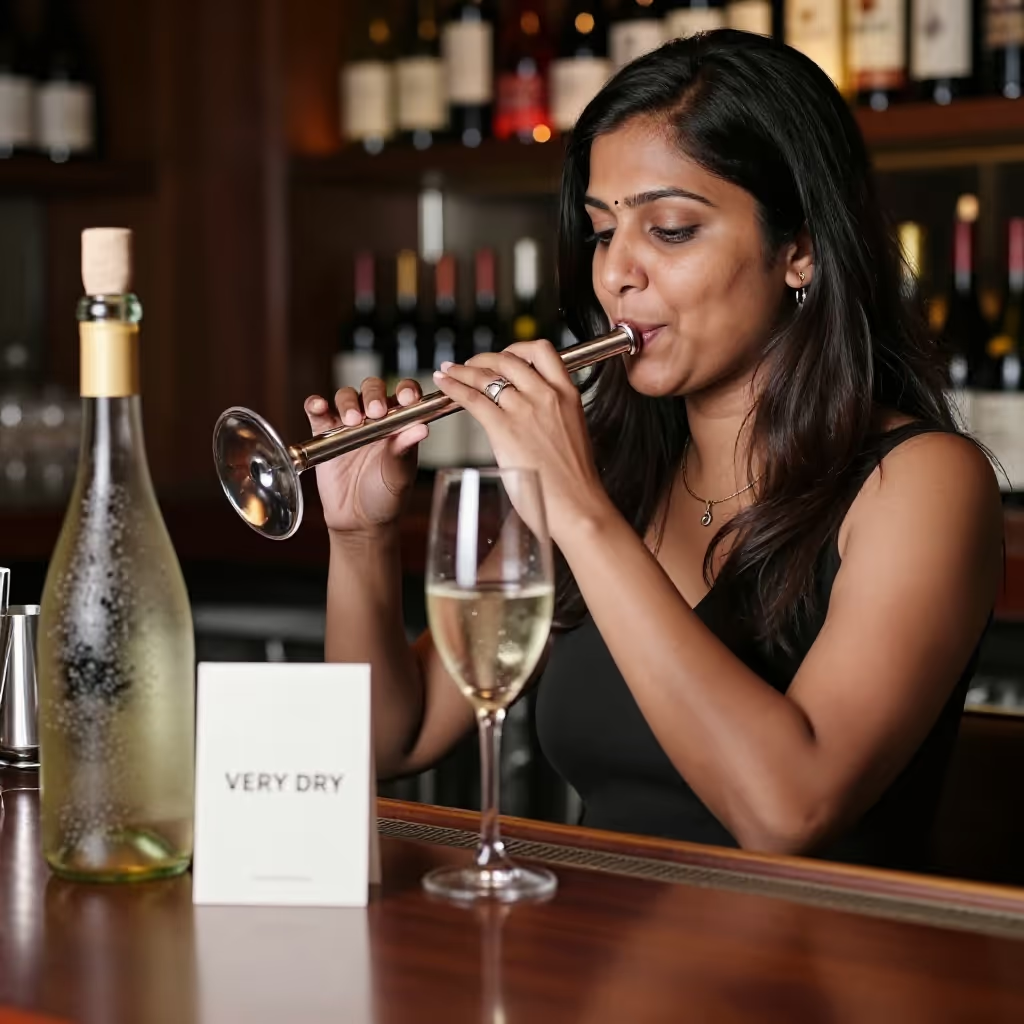
Describes the taste of sparkling wine, Sekt, or champagne as very dry. Wines with this label have a very low residual sugar content.
example
Ich bevorzuge Champagner, der als 'brut' klassifiziert ist, weil er nicht so süß schmeckt.
I prefer champagne classified as 'brut' because it doesn't taste so sweet.

Usage tips
No declension
The word 'brut' comes from French and is used in German as a fixed term. It is not declined like a normal adjective when it comes before a noun.
EXAMPLE
Wir trinken heute einen Brut Champagner.
We're drinking a brut champagne today.
Sentence position
'Brut' (brut) almost always comes after the noun or stands alone as a label. You say 'Der Sekt ist brut' (the sparkling wine is brut), but not 'ein bruter Sekt'.
EXAMPLE
Dieser Prosecco ist brut, also nicht süß.
This Prosecco is brut, so it is not sweet.
Typical collocations
This term is used exclusively for sparkling wines. Typical combinations are 'Sekt brut' (brut Sekt), 'Champagner brut' (brut champagne), or 'Prosecco brut' (brut Prosecco).
EXAMPLE
Zum Anstoßen haben wir einen Sekt brut gekauft.
For the toast, we bought a brut Sekt.
Compare with
near_synonym · confusable
Brut vs trocken
dry
'trocken' and 'brut' both describe the taste of alcoholic drinks with little sweetness. 'trocken' is the more general word and is especially used for wine, but also for other drinks. 'brut' is a specific taste designation for sparkling wine, Sekt, or champagne and means very dry. Learners may confuse the words because both point to low sugar. In practice: with wine, people usually say 'trocken'; on a bottle of Sekt or champagne, you often see 'brut'.
Brut
Für den Empfang kauft meine Mutter einen Champagner brut.
For the reception, my mother buys a brut champagne.