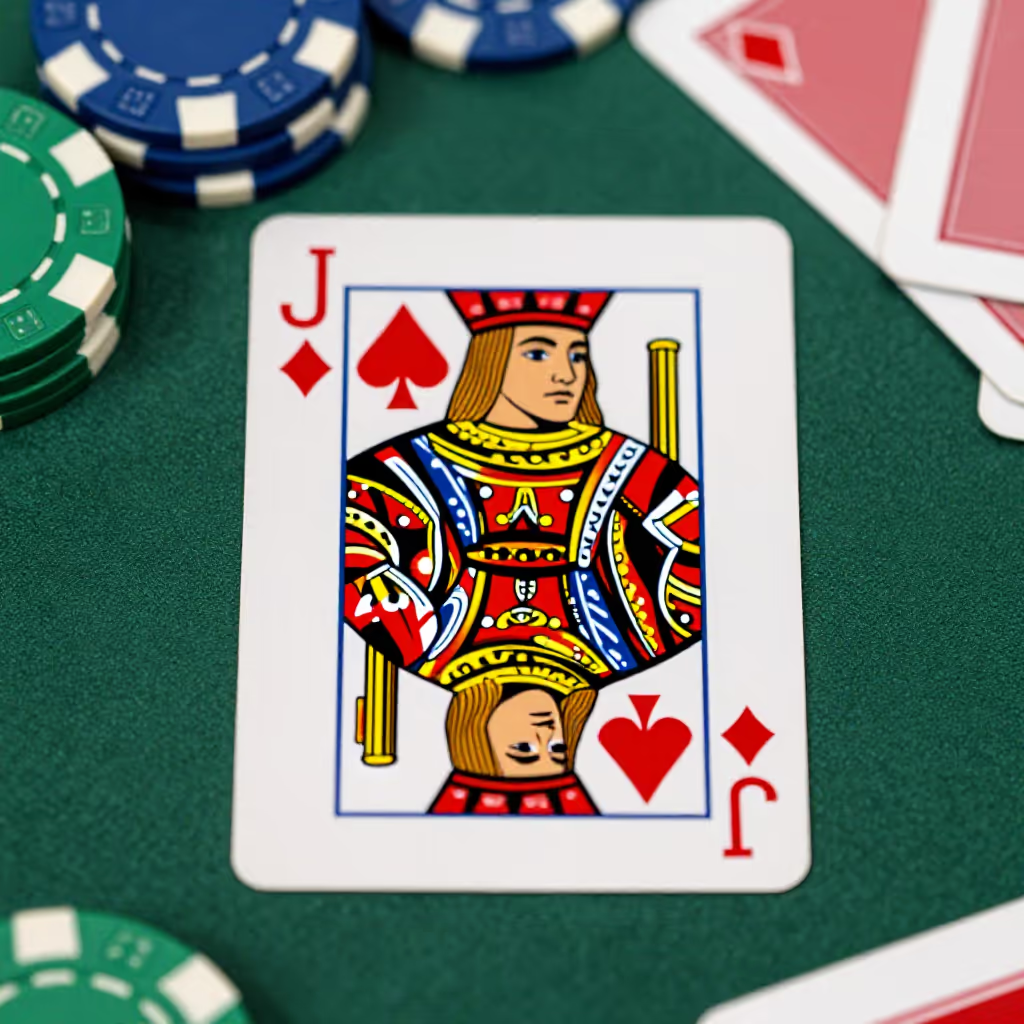
A playing card in card games such as Skat or poker, usually ranked between the ten and the queen. Also referred to as 'Wenzel' or 'Bauer' in German.
example
Beim Kartenspielen hatte ich drei Buben auf der Hand.
When playing cards, I had three jacks in my hand.
Usage tips
Context clues
You can clearly recognize the meaning of 'Bube' from the context. If it's about cards, it means the playing card. If people are talking about a person, it is either a boy (outdated) or an insult (very outdated).
EXAMPLE
Ich brauche noch den Herz-Buben, um das Spiel zu gewinnen.
I still need the jack of hearts to win the game.
Typical collocations
In the context of card games, 'Bube' (jack) is often combined with one of the four suits: 'Kreuz-Bube' (jack of clubs), 'Pik-Bube' (jack of spades), 'Herz-Bube' (jack of hearts), or 'Karo-Bube' (jack of diamonds).
EXAMPLE
Er spielte den Kreuz-Buben aus und gewann die Runde.
He played the jack of clubs and won the round.
Register and style
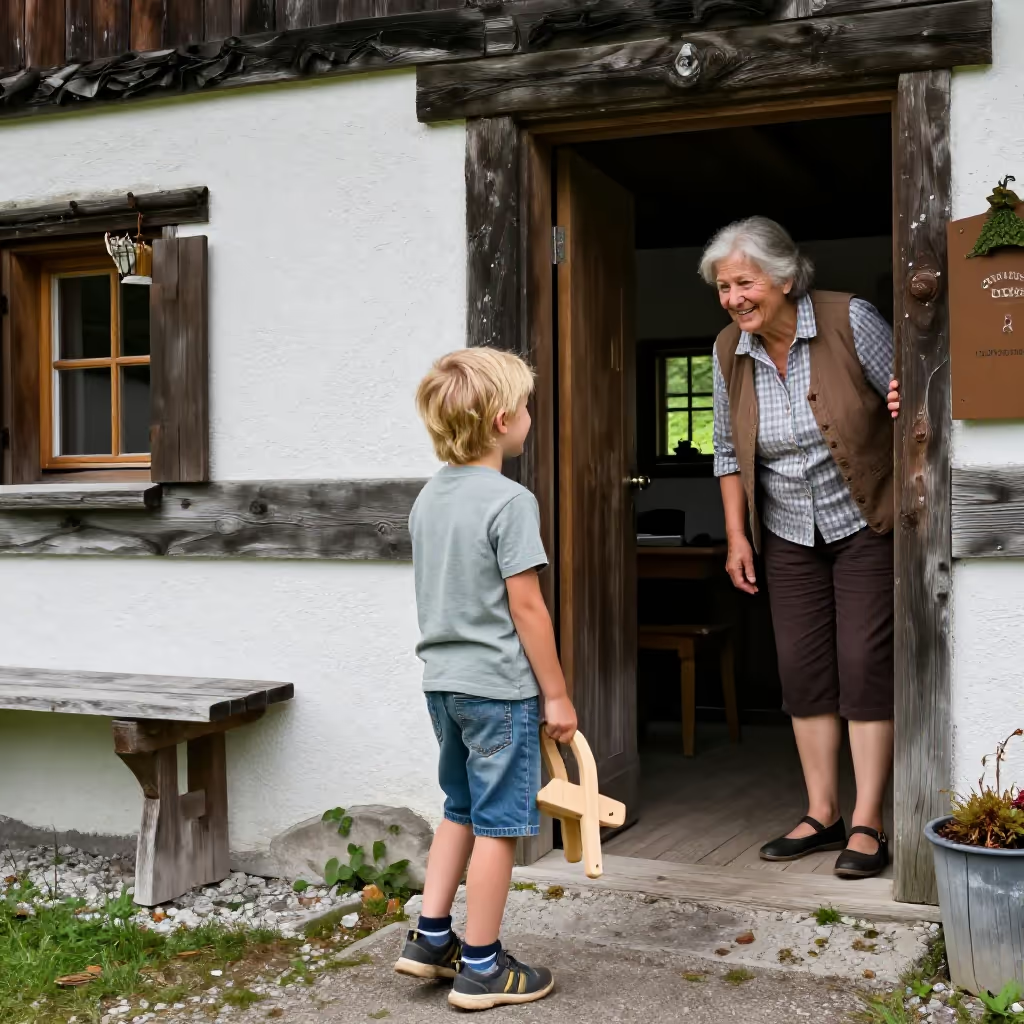
The term 'Bube' for a boy is outdated today and is only rarely used, often by older people. It is not a neutral term like 'Junge' (boy).
EXAMPLE
„Sei ein braver Bube und hilf deiner Mutter“, sagte die Großmutter.
'Be a good boy and help your mother,' said the grandmother.
Very outdated insult
As an insult for a man, 'Bube' is very old-fashioned and today sounds more like something from a historical novel or a fairy tale. It is hardly used in modern colloquial speech anymore.
EXAMPLE
Im Märchen wird der Dieb als „ehrloser Bube“ bezeichnet.
In the fairy tale, the thief is described as an 'ehrloser Bube' (dishonorable scoundrel).
Compare with
near_synonym · confusable
Bube vs Junge
boy
'der Junge' and 'der Bube' can both have to do with a boy, but today they are used very differently. 'Junge' is the normal word for a male child or a young man. 'Bube' as a term for a child is rather outdated or regional, and depending on the context it can sound affectionate or somewhat derogatory. Very often, however, 'Bube' means a playing card, for example in Skat or poker. Learners may confuse the words because 'Bube' used to be able to mean 'Junge' as well. In modern everyday language, 'Junge' is usually more natural for the person, while 'Bube' is often the card.
Bube
Beim Kartenspiel legt Tom den Buben auf die Dame.
In the card game, Tom lays the jack on the queen.
Junge
Der Junge ist heute zum ersten Mal allein mit dem Bus gefahren.
Today the boy took the bus by himself for the first time.