

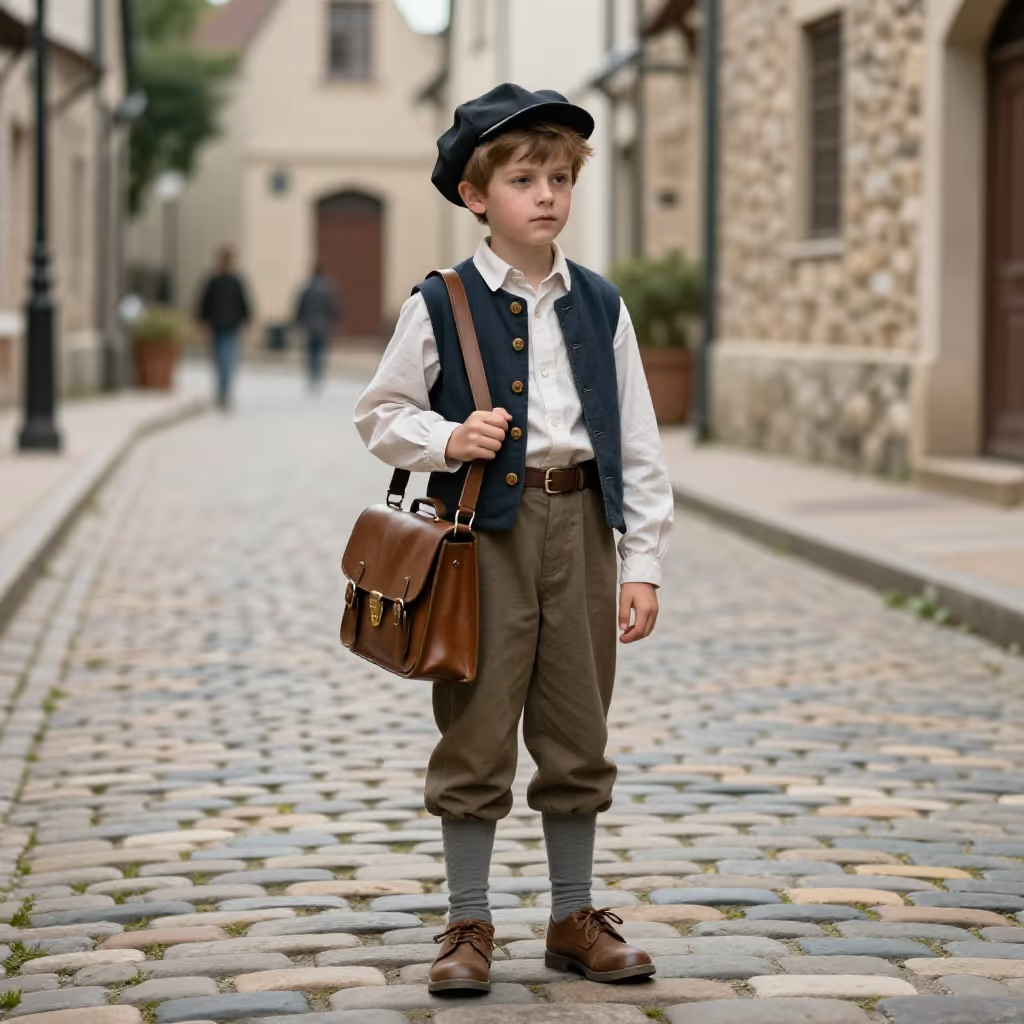
An outdated or literary term for a boy in childhood or adolescence. In modern everyday language, the word 'Junge' (boy) is used instead.
example
In dem alten Märchenbuch war es ein mutiger Knabe, der den Drachen besiegte.
In the old book of fairy tales, it was a brave boy who defeated the dragon.

Usage tips
N-declension
'Knabe' (boy) is a noun of the N-declension. It takes the ending '-n' in all cases except the nominative singular.
EXAMPLE
Der Dichter beschrieb die Gedanken des Knaben.
The poet described the boy's thoughts.
Register: outdated
This word is outdated and is no longer used in modern everyday language. It sounds poetic, literary, or old-fashioned. Using it in a normal conversation would sound very unusual.
EXAMPLE
„Sah ein Knab' ein Röslein stehn...“ ist der Anfang eines berühmten Gedichts von Goethe.
'Sah ein Knab' ein Röslein stehn...' is the beginning of a famous poem by Goethe.
Typical context
The word 'Knabe' (boy) is now found almost only in old poems, fairy tales, historical novels, or in classical music, for example in song titles.
EXAMPLE
Die Hauptfigur des Romans war ein Waisenknabe im 19. Jahrhundert.
The main character of the novel was an orphan boy in the 19th century.
Compare with
near_synonym · confusable
Knabe vs Kind
child
'das Kind' and 'der Knabe' can both refer to a young person. 'Kind' is general and says nothing about gender. It is the normal everyday word. 'Knabe' means a boy, but today it sounds outdated or literary. Learners may confuse the words because both can appear in texts about young people. In normal conversation, people almost always say 'Kind' or, if it is about a boy, 'Junge'. 'Knabe' fits better in old stories or deliberately elevated language.
Knabe
In der alten Geschichte bringt der Knabe dem Gast ein Glas Wasser.
In the old story, the boy brings the guest a glass of water.
Kind
Vor dem Termin ist das Kind sehr ruhig geblieben.
Before the appointment, the child stayed very calm.