


die Bude
place
Colloquial for a room, an apartment, or a house.
EXAMPLE
Komm heute Abend vorbei, wir machen bei mir in der Bude Pizza.
Come by tonight; we're making pizza at my place.
place / stall / outfit
Loading your saved state.
place
Colloquial for a room, an apartment, or a house.
Komm heute Abend vorbei, wir machen bei mir in der Bude Pizza.
Come by tonight; we're making pizza at my place.
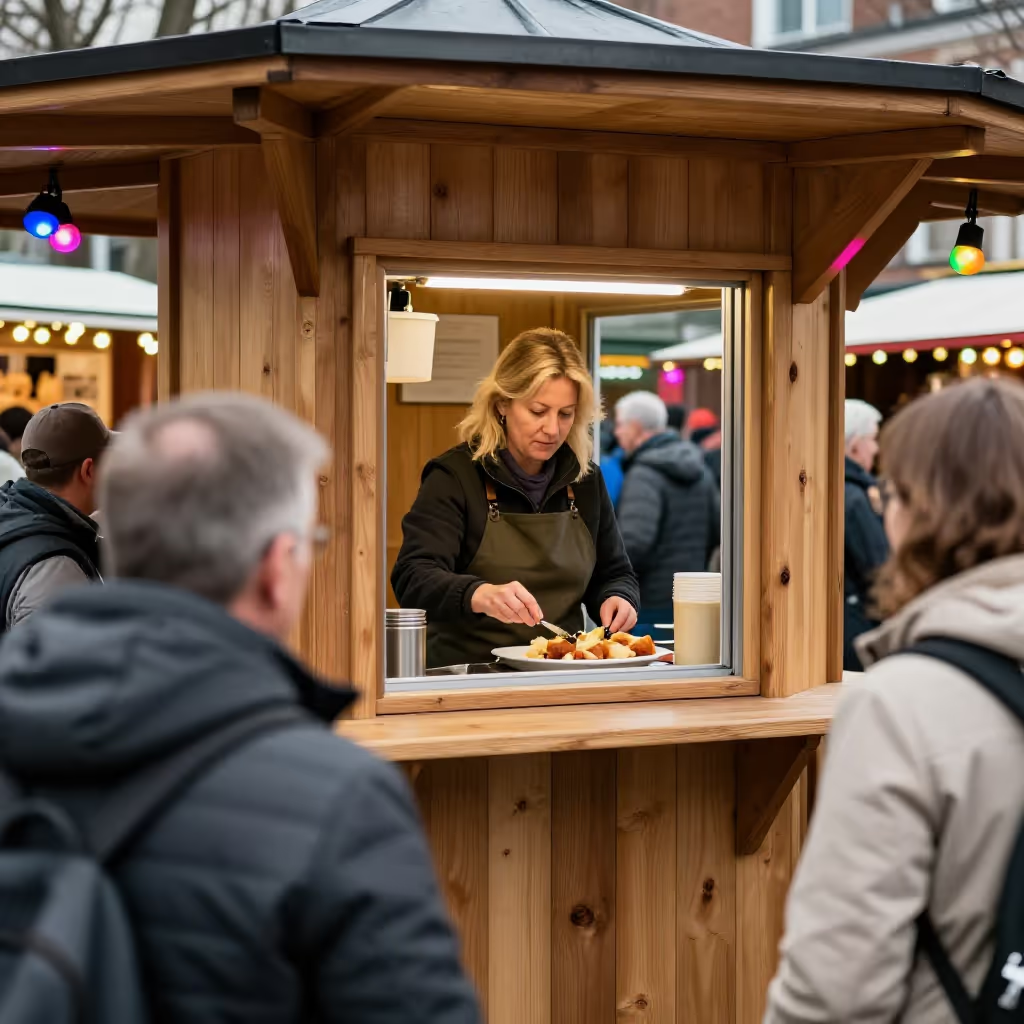
stall
A small, simple sales stand, for example at a market, a festival, or as a kiosk.
An der Bude am Strand gab es Pommes und Eis.
At the stall on the beach, they had fries and ice cream.

outfit / company
Colloquial and often slightly derogatory for a firm or company.
Er arbeitet jetzt für so eine kleine IT-Bude in Berlin.
He now works for some small IT outfit in Berlin.
The word 'Bude' is considered colloquial in all of its meanings. You should avoid it in formal situations, such as in official emails or academic texts.
Er nannte seine neue Firma am Anfang scherzhaft „meine kleine Bude“.
At first, he jokingly called his new company 'meine kleine Bude' (my little outfit).
When 'Bude' means an apartment or a room, it is often used with possessive pronouns like 'meine' (my), 'deine' (your), or 'seine' (his). A very common expression is 'sturmfreie Bude haben', which means that one's parents are not at home.
Am Wochenende habe ich sturmfreie Bude und lade ein paar Freunde ein.
This weekend I have the place to myself and am inviting a few friends over.
As a sales stand, 'Bude' is often part of compounds that describe what is being sold, e.g. 'Pommesbude' (fries stand) or 'Würstchenbude' (sausage stand). The context is usually a market, a festival, or a public square.
Auf dem Weihnachtsmarkt riecht es an jeder Bude anders.
At the Christmas market, every stall smells different.
When 'Bude' refers to a company, it often has a slightly derogatory or very casual undertone. It is usually used for smaller, less well-known companies or companies perceived as unimportant.
Er hat seinen Job gekündigt und macht jetzt seine eigene kleine Bude auf.
He quit his job and is now starting his own little outfit.
status / stand
Stand and Bude can both refer to a small sales area. Stand is the neutral term, while Bude sounds more colloquial and often emphasizes a simple, permanent structure. At a market, Stand is therefore usually the better choice; Bude also works for a simple sales stall.

In der kleinen Holzbude auf dem Weihnachtsmarkt verkauft eine Frau heißen Tee.
A woman is selling hot tea at the small wooden stall at the Christmas market.
Am Stand auf dem Weihnachtsmarkt verkauft eine Frau heißen Tee.
A woman is selling hot tea at the stand at the Christmas market.