


der Stand
status
The current state, level, or progress of something.
EXAMPLE
Können Sie mich über den aktuellen Stand des Projekts informieren?
Can you inform me about the current status of the project?
status / stand
Loading your saved state.
status
The current state, level, or progress of something.
Können Sie mich über den aktuellen Stand des Projekts informieren?
Can you inform me about the current status of the project?
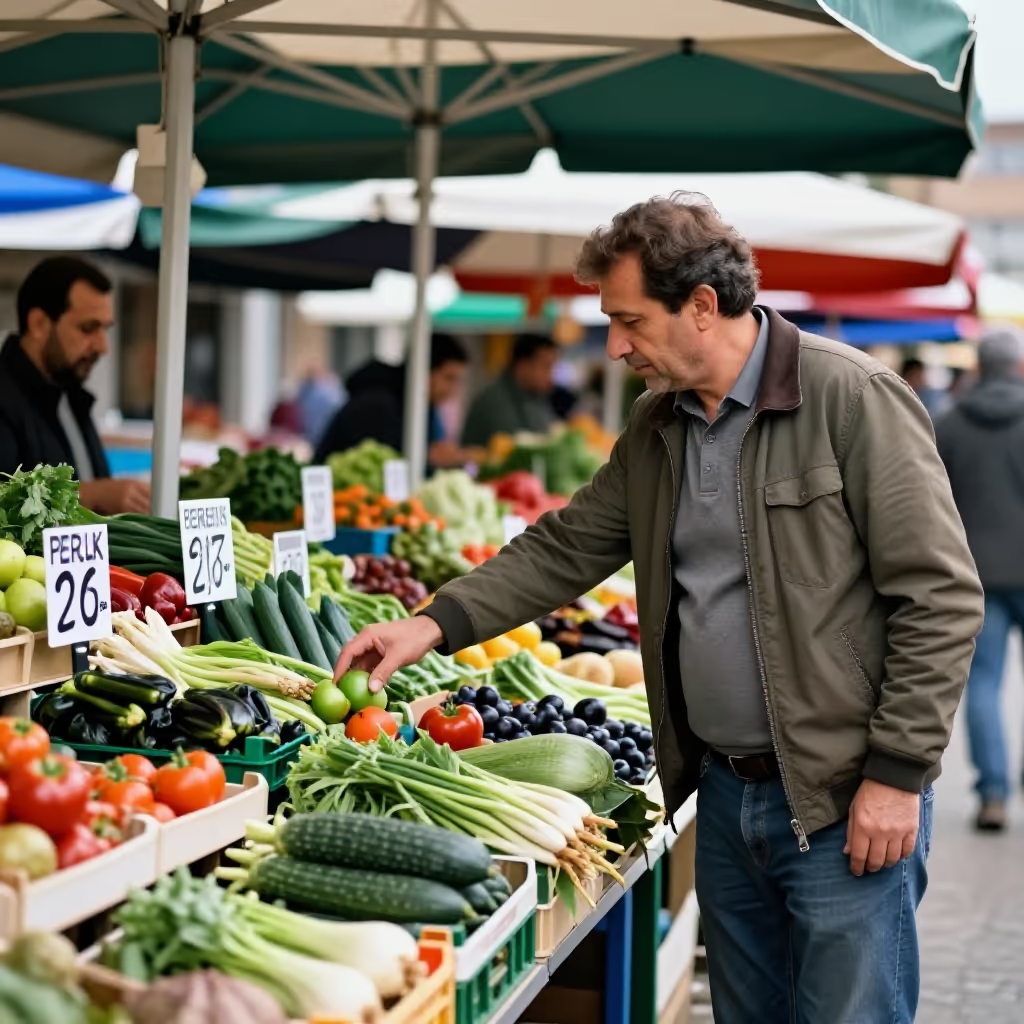
stand / stall
A sales or information spot at a market, trade fair, or exhibition.
Auf dem Wochenmarkt kaufe ich mein Gemüse immer am selben Stand.
At the weekly market, I always buy my vegetables at the same stand.
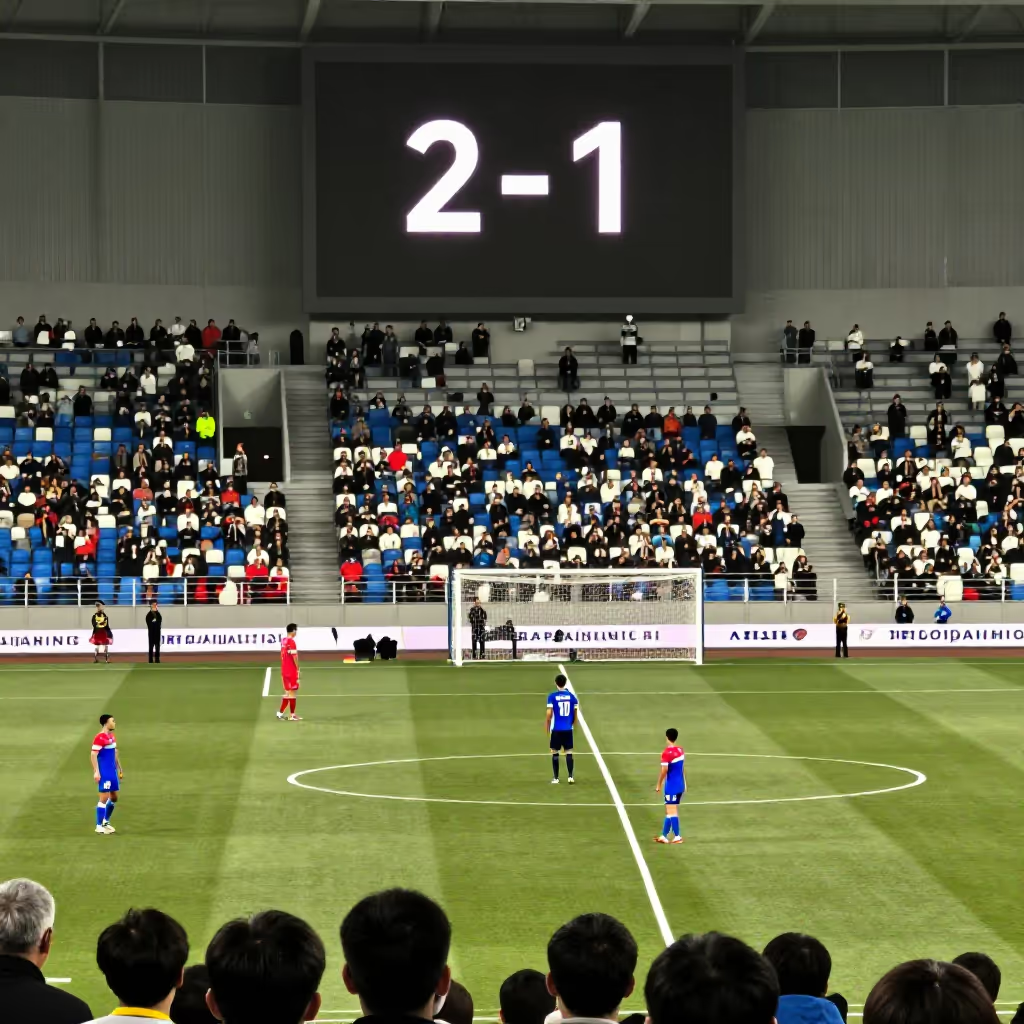
score
The result or score in a game or competition.
Nach der ersten Halbzeit war der Stand 1:1.
After the first half, the score was 1–1.

to be able
To have the ability or possibility to do something. Synonymous with 'in der Lage sein' (to be in a position to / to be able to).
Nach seiner Verletzung war er nicht imstande, am Wettkampf teilzunehmen.
After his injury, he was not able to take part in the competition.

stance
The physical posture or the way someone stands.
Für diese Übung benötigen Sie einen festen, schulterbreiten Stand.
For this exercise, you need a firm, shoulder-width stance.
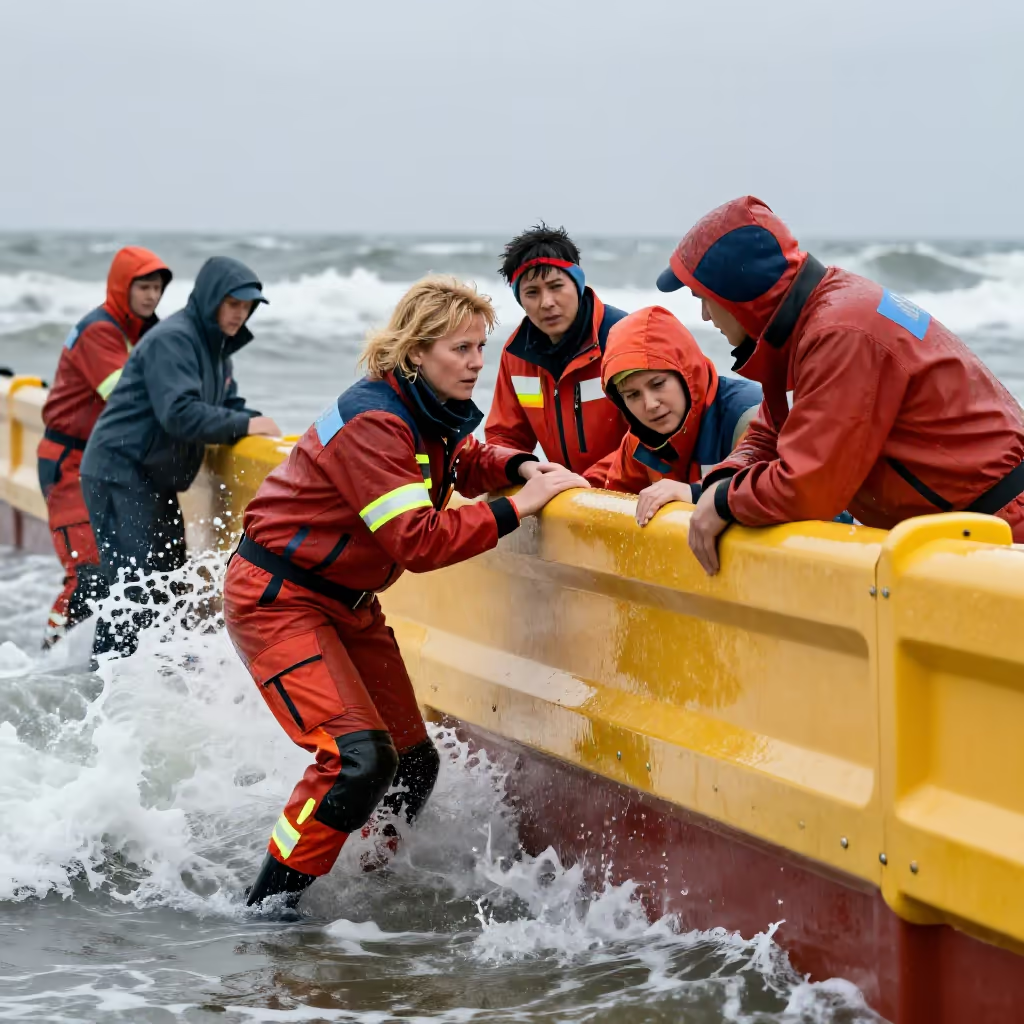
to withstand
To successfully resist an attack, pressure, or difficulty; not to give in.
Die kleine Firma konnte dem Preisdruck der großen Konkurrenten nicht Stand halten.
The small company could not withstand the price pressure from its large competitors.

social status
A person's social or professional position in society.
Im Mittelalter war es fast unmöglich, seinen gesellschaftlichen Stand zu verändern.
In the Middle Ages, it was almost impossible to change one's social status.
The noun 'der Stand' (status/stand) is closely related to the verb 'stehen' (to stand). Many meanings can be derived from the idea of standing, a position, or a state.
Wie ist der Stand der Dinge?
What is the state of things?
The context helps distinguish the many meanings. If it is about a project, progress (m01) is meant. At a market, it refers to a sales spot (m02). In a sports context, it often means the score (m03).
Auf dem Weihnachtsmarkt gibt es einen Stand mit Glühwein.
At the Christmas market, there is a stand with mulled wine.
In the meaning of 'Zustand' (state) or 'Fortschritt' (progress), 'Stand' is often used in fixed expressions. Typical ones are 'der Stand der Dinge' (the state of things), 'jemanden auf den neuesten Stand bringen' (to bring someone up to date), or 'auf dem aktuellen Stand sein' (to be up to date).
Bitte bringen Sie mich auf den neuesten Stand.
Please bring me up to date.
The expression 'imstande sein' (to be able) is always used with an infinitive construction with 'zu'. The structure is: 'imstande sein, etwas zu tun' (to be able to do something).
Nach der langen Wanderung war er kaum noch imstande zu gehen.
After the long hike, he was barely able to walk anymore.
When referring to body posture, 'Stand' is often combined with adjectives such as 'fest' (firm), 'sicher' (secure/stable), or 'breit' (wide) to describe the quality of the stance.
Für diese Yoga-Übung brauchst du einen festen Stand.
For this yoga exercise, you need a firm stance.
The expression 'Stand halten' (to withstand) is often used with a dative object that describes the pressure or opponent. The structure is: 'etwas/jemandem (Dativ) Stand halten' (to withstand something/someone).
Die Verteidigung konnte dem Angriff nicht lange Stand halten.
The defense could not withstand the attack for long.
The meaning 'soziale Stellung' (social status) is mainly used in historical or sociological contexts when talking about social structures.
Im Feudalismus war der soziale Stand durch Geburt festgelegt.
In feudalism, social status was determined by birth.
situation / location
Stand and Lage can both describe the current situation in negotiations. Stand focuses more on what has been achieved so far or how far something has progressed, while Lage covers all the circumstances that currently exist. Use Stand for progress so far and Lage for the overall situation.

Der Stand der Verhandlungen ist heute besser als letzte Woche.
The status of the negotiations is better today than it was last week.
Wegen der neuen Informationen ist die Lage bei den Verhandlungen unübersichtlich.
Because of the new information, the situation in the negotiations is unclear.