

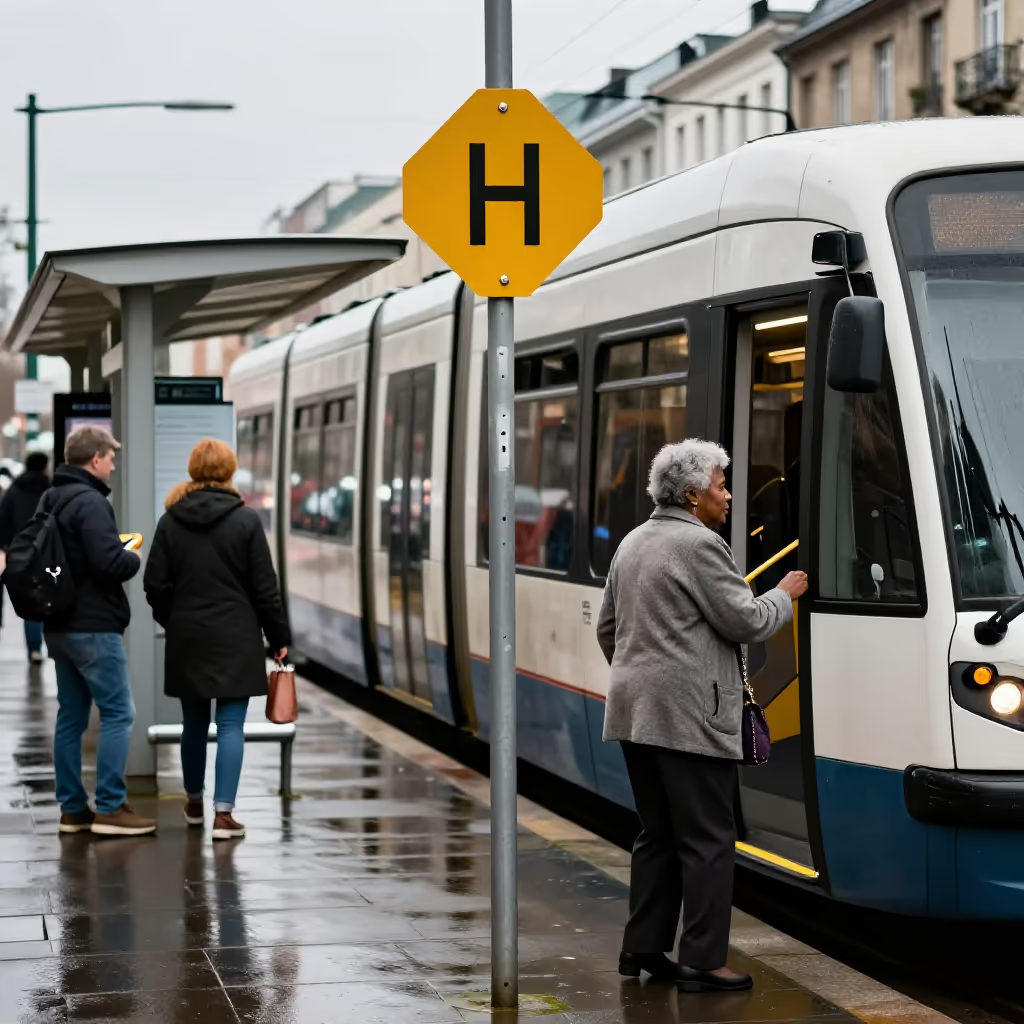
A marked place on a road or rail line where public transport such as buses or trams stops according to schedule to let passengers get on and off.
example
Der Bus kommt in fünf Minuten an der nächsten Haltestelle an.
The bus arrives at the next stop in five minutes.
Usage tips
Compound word
The word 'Haltestelle' (stop) is a compound of the verb 'halten' (to stop/hold) and the noun 'die Stelle' (place/spot). So it is literally a place or spot where something stops.
EXAMPLE
An dieser Stelle der Straße wird eine neue Bushaltestelle gebaut.
A new bus stop is being built at this spot on the street.
Correct preposition
Pay attention to the prepositions: you wait 'an der Haltestelle' (at the stop; location, dative). You go 'zur Haltestelle' (to the stop; direction, dative).
EXAMPLE
Ich treffe dich um 17 Uhr an der Haltestelle.
I'll meet you at the stop at 5 p.m.
Typical collocations
Common verbs used with 'Haltestelle' (stop) are 'einsteigen' (to get on), 'aussteigen' (to get off), 'warten' (to wait), and 'verpassen' (to miss). People also often speak of the 'nächste' (next) or 'letzte' (last) stop.
EXAMPLE
Oh nein, ich habe meine Haltestelle verpasst und muss jetzt zurücklaufen.
Oh no, I missed my stop and now I have to walk back.
Compare with
near_synonym · confusable
Haltestelle vs Bahnhof
train station
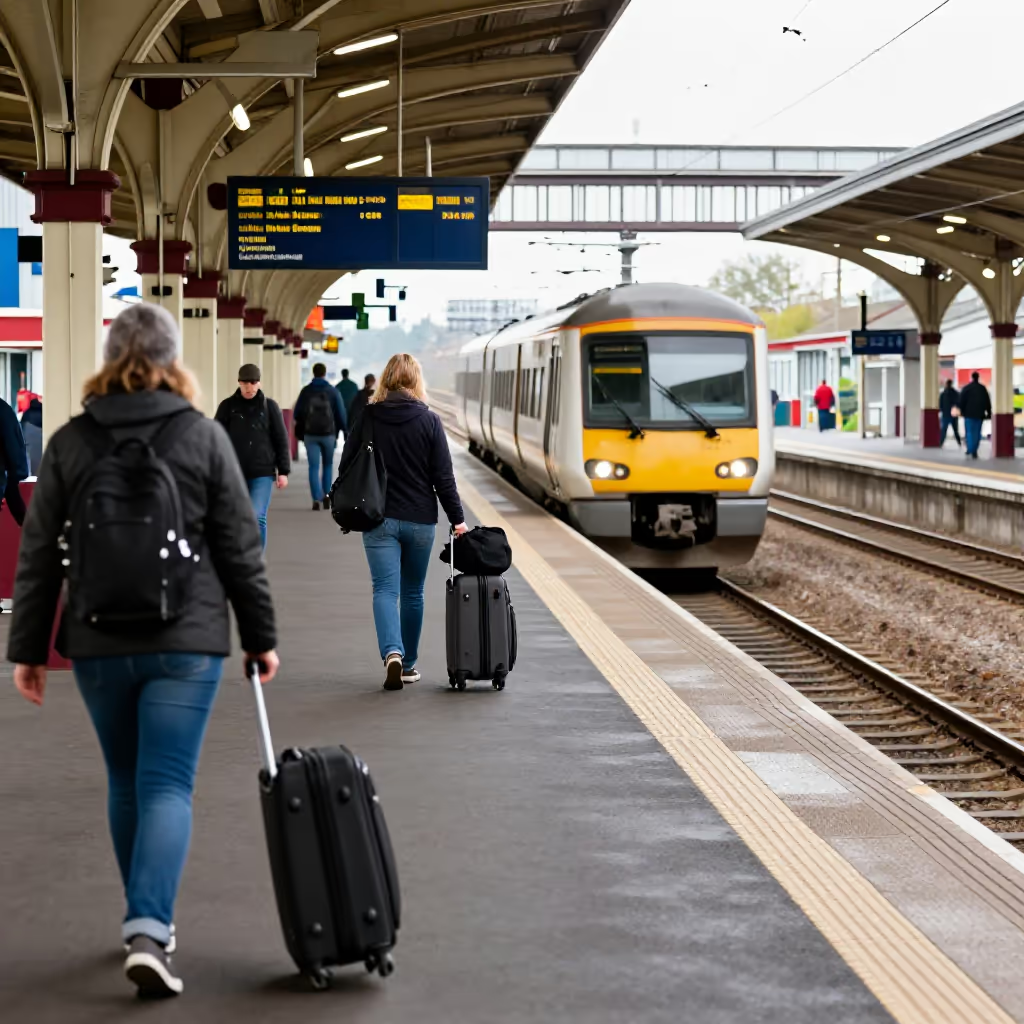
'der Bahnhof' and 'die Haltestelle' are both places where people get on or off public transport. 'Bahnhof' normally means a larger place for trains, often with a building, tracks, and platforms. 'Haltestelle' is usually a single marked place, especially for a bus or tram. The words can be confused because both are used in transportation. If you are traveling by train, you usually say 'Bahnhof'. If you are waiting for the bus or tram, 'Haltestelle' is more natural.
Haltestelle
An dieser Haltestelle fährt heute kein Bus.
No bus is running from this stop today.
Bahnhof
Der Bahnhof ist nur zehn Minuten von der Schule entfernt.
The train station is only ten minutes from the school.