

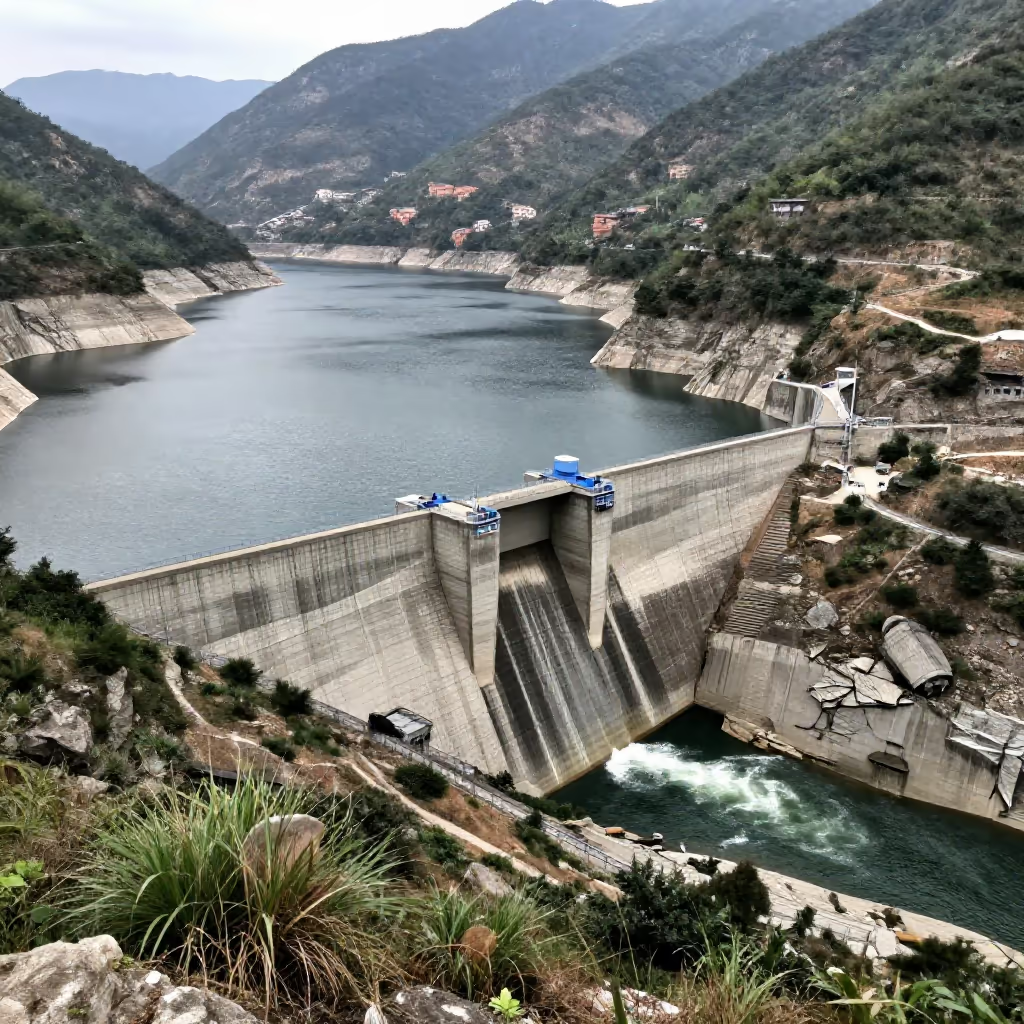
der Damm
dam
A structure that blocks or holds back water, for example to form a lake or prevent flooding.
EXAMPLE
Der Biber hat einen Damm gebaut, der den Bach aufstaut.
The beaver built a dam that blocks the stream.
dam / embankment / perineum
Loading your saved state.
dam
A structure that blocks or holds back water, for example to form a lake or prevent flooding.
Der Biber hat einen Damm gebaut, der den Bach aufstaut.
The beaver built a dam that blocks the stream.
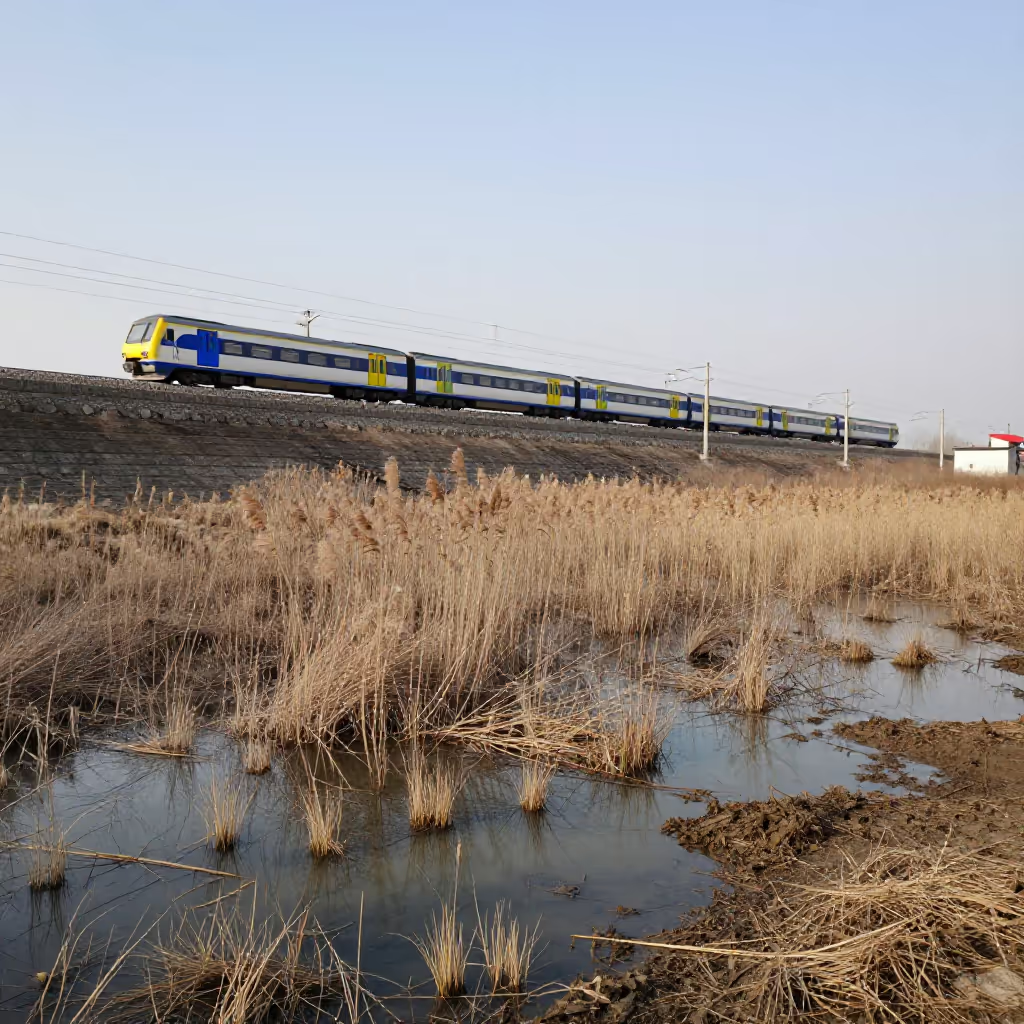
embankment
A built-up, raised path or road, often over wet ground or water.
Wir fuhren mit dem Auto über den Damm zur Insel.
We drove across the embankment to the island.

perineum
In anatomy, the area of the body between the anus and the external genitals.
Bei der Geburt kann es zu einem Dammriss kommen.
During childbirth, a perineal tear can occur.

barrier
In a figurative sense, a barrier or protective wall against something undesirable.
Die neuen Gesetze sollen ein Damm gegen die Korruption sein.
The new laws are intended to be a barrier against corruption.
You can recognize the meaning of 'Damm' (dam / embankment / perineum) from the context. If it is about water, a river, or a lake, the structure is usually meant. In connection with words like 'Straße' (road), 'fahren' (to drive), or 'gehen' (to walk), it means the raised path.
Der Damm schützt das Dorf vor Hochwasser.
The dam protects the village from flooding.
A very common and vivid expression is 'der Damm bricht' (the dam breaks). This is often used when a barrier, literally or figuratively, suddenly gives way.
Nach tagelangem Regen brach der Damm und das Tal wurde überflutet.
After days of rain, the dam broke and the valley was flooded.
In a figurative sense, 'Damm' (barrier) is often used with the preposition 'gegen' (against) to describe a barrier against something negative and abstract. The pattern is: 'ein Damm gegen + [abstract noun]' (a barrier against + [abstract noun]).
Bildung ist der beste Damm gegen Armut.
Education is the best barrier against poverty.
The anatomical meaning of 'Damm' (perineum) is used almost exclusively in medical or biological technical language, for example in obstetrics or anatomy.
Der Arzt erklärte die Funktion des Damms während der Geburt.
The doctor explained the function of the perineum during childbirth.
rampart / embankment
Both words can refer to a man-made embankment built to protect against flooding. “Wall” tends to emphasize the elongated earth embankment as a protective boundary. “Damm” is more general and refers more strongly to a structure that holds back water; in some situations, both words are possible.
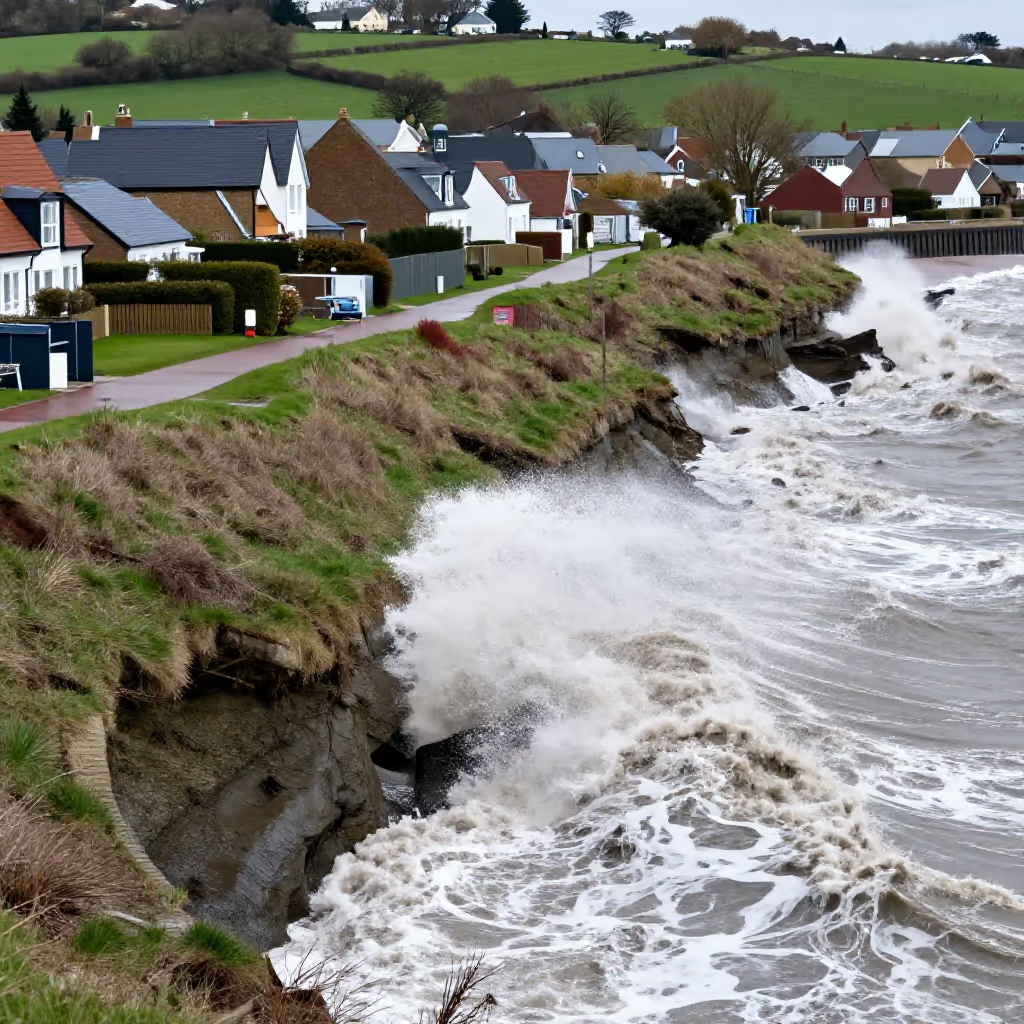
Die Helfer verstärkten den Damm am Fluss mit Sandsäcken, damit das Wasser nicht übertrat.
The helpers reinforced the dam along the river with sandbags so that the water would not overflow.
Die Helfer verstärkten den langen Erdwall am Fluss mit Sandsäcken.
The helpers reinforced the long earth embankment along the river with sandbags.