


sich zur Wehr setzen
to defend oneself
To actively defend oneself or resist an attack or injustice.
EXAMPLE
Als er beschuldigt wurde, setzte er sich sofort zur Wehr.
When he was accused, he immediately defended himself.
defense / weir
Loading your saved state.
to defend oneself
To actively defend oneself or resist an attack or injustice.
Als er beschuldigt wurde, setzte er sich sofort zur Wehr.
When he was accused, he immediately defended himself.
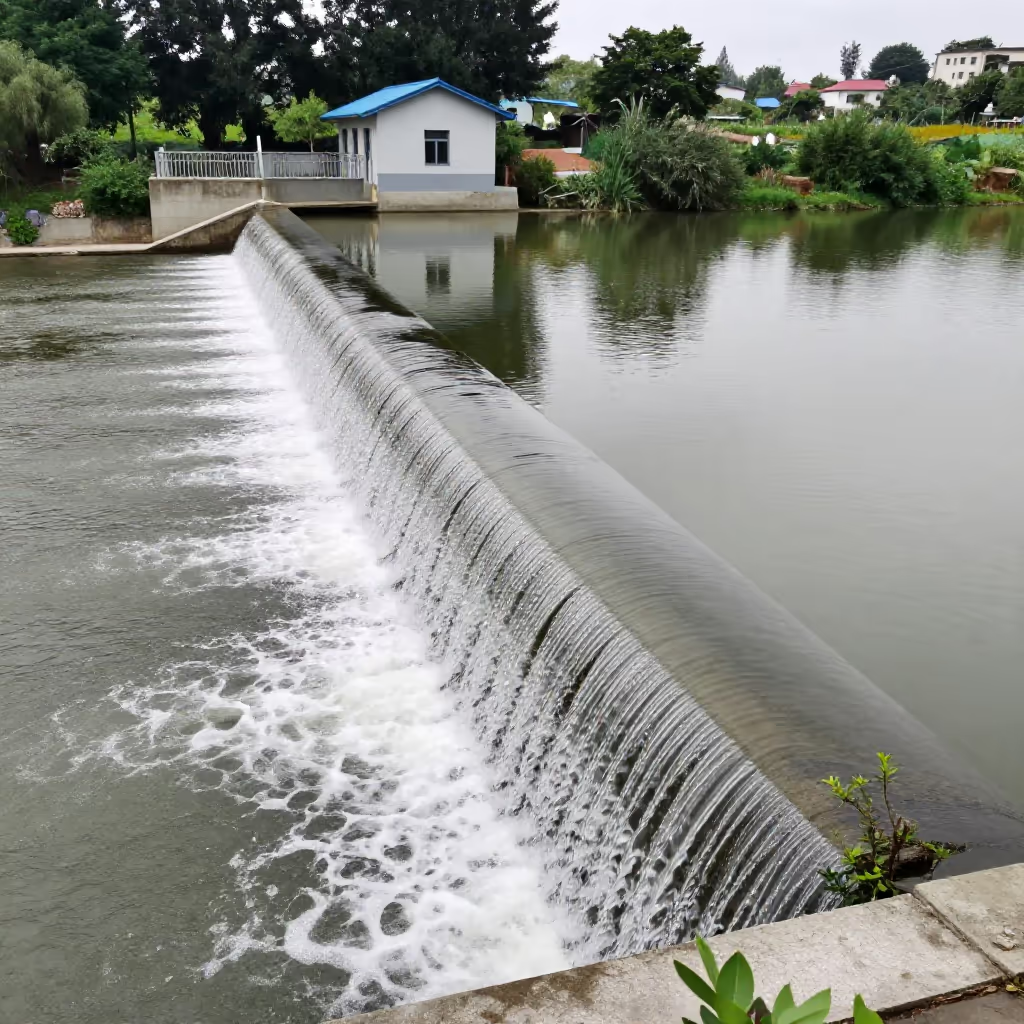
weir
A dam-like structure in a river or stream that regulates the water level or diverts water for mills or power plants.
Unterhalb der alten Brücke befindet sich ein Wehr, das den Wasserpegel anhebt.
Below the old bridge there is a weir that raises the water level.
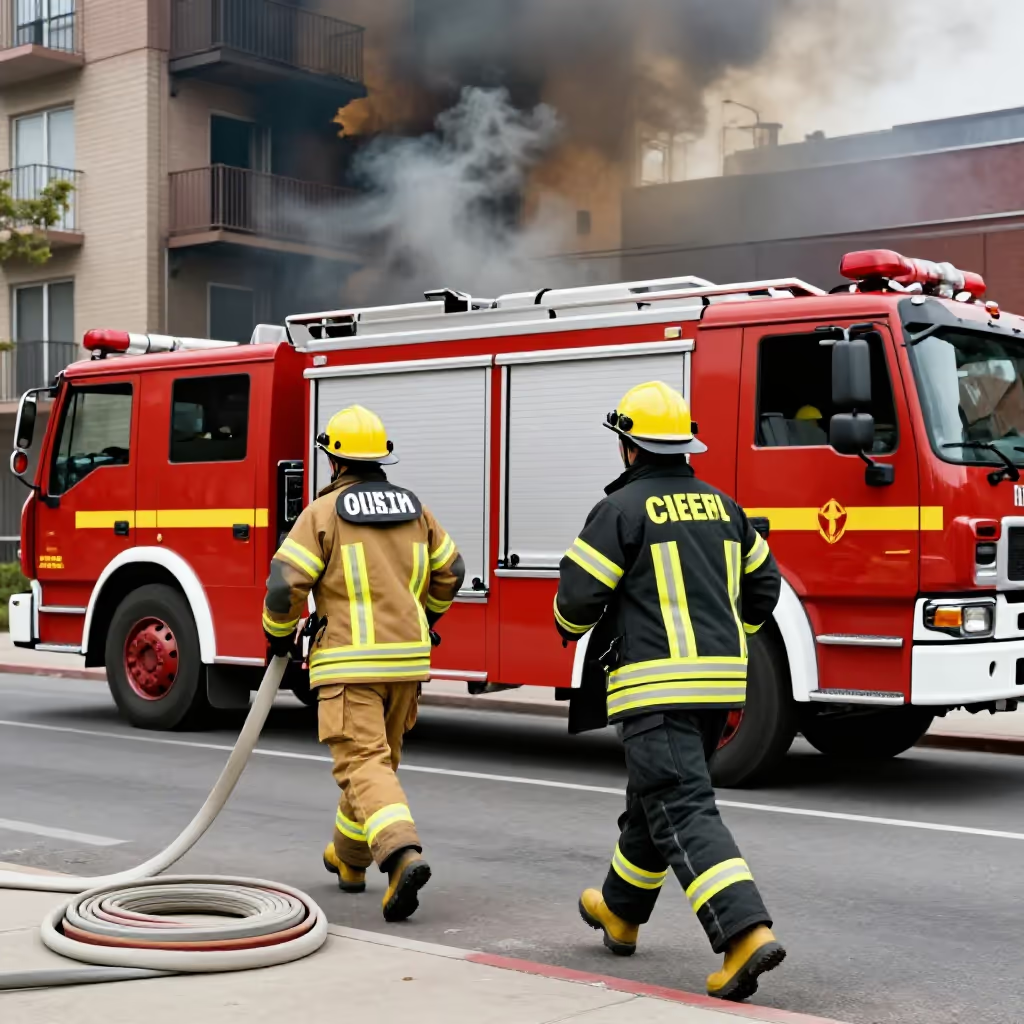
fire brigade
A colloquial or regional short form for the fire brigade.
Bei dem Brand war die freiwillige Wehr des Dorfes schnell vor Ort.
During the fire, the village's volunteer fire brigade was quickly on the scene.
'Die Wehr' is closely related to the verb 'sich wehren' (to defend oneself). The basic meaning of protection and resistance is also found in words like 'Abwehr' (defense) or 'Bundeswehr' (German armed forces).
Die Dorfbewohner mussten sich gegen die Angreifer wehren.
The villagers had to defend themselves against the attackers.
The expression 'sich zur Wehr setzen' (to defend oneself / to resist) is a fixed unit with a reflexive pronoun. It is often followed by the preposition 'gegen' with the accusative to name the opponent or injustice.
Die Mitarbeiter setzten sich gegen die ungerechte Behandlung zur Wehr.
The employees defended themselves against the unfair treatment.
You can recognize the meaning of 'Wehr' from the context. If it is about defense, the expression 'sich zur Wehr setzen' is a signal. With rivers and water, it refers to the weir. In the context of fires and emergencies, it means the fire brigade.
Das Wehr reguliert den Wasserstand des Flusses.
The weir regulates the water level of the river.
The use of 'die Wehr' for 'die Feuerwehr' (the fire brigade) is a colloquial abbreviation. It is especially common in the combination 'die Freiwillige Wehr' (the volunteer fire brigade) in rural areas.
Mein Onkel ist seit 20 Jahren bei der Freiwilligen Wehr.
My uncle has been in the volunteer fire brigade for 20 years.
dam / embankment / perineum
Damm and Wehr can both be used to hold back water. A Damm holds back larger quantities of water and can form a lake. A Wehr is located in a river or stream and is mainly used to regulate the water level or divert water.
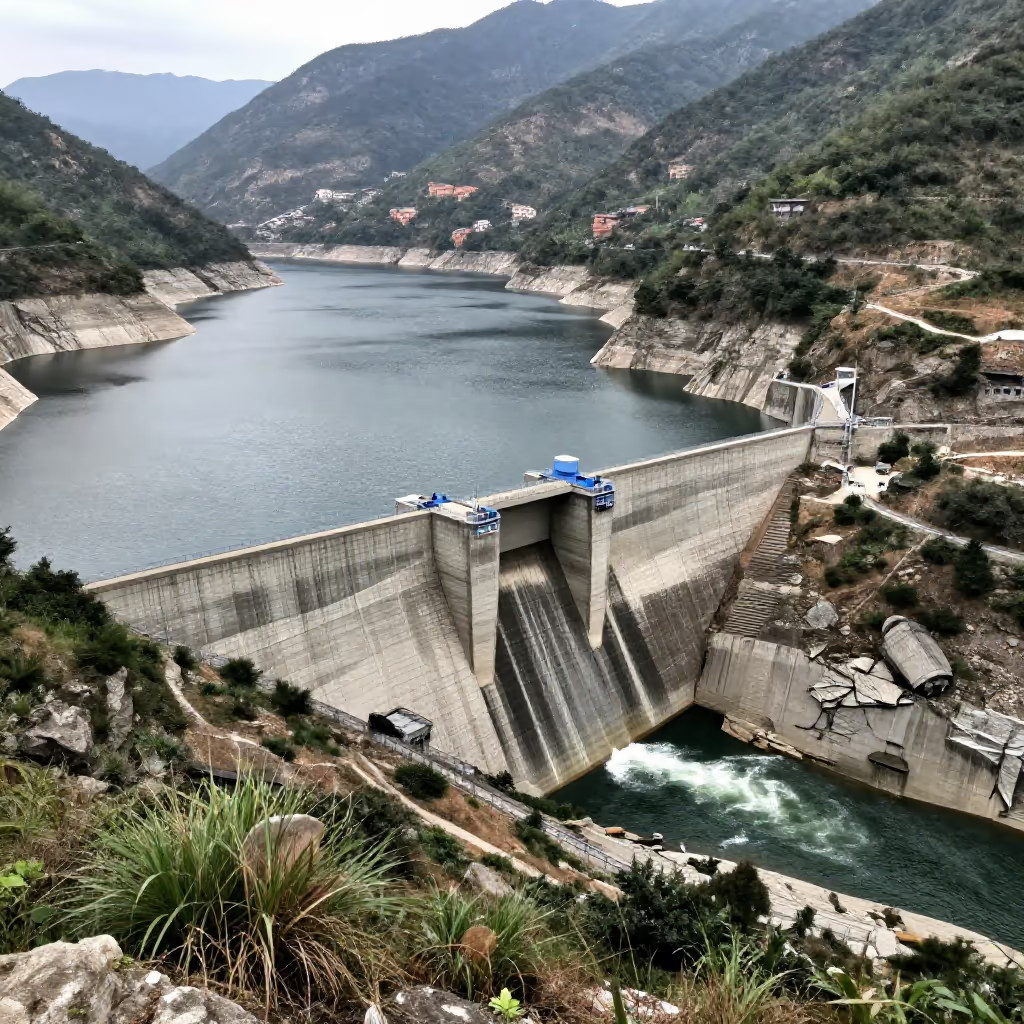
Das Wehr regelt den Wasserstand des Flusses und leitet Wasser zur Mühle.
The weir regulates the river's water level and diverts water to the mill.
Der Damm hält den Fluss zurück und bildet einen Stausee.
The dam holds back the river and forms a reservoir.