


der Dank
thanks
A feeling or expression of gratitude for help received, a gift, or a kindness.
EXAMPLE
Als Dank für seine Mühe erhielt er einen Gutschein.
As thanks for his effort, he received a gift certificate.
thanks
Loading your saved state.
thanks
A feeling or expression of gratitude for help received, a gift, or a kindness.
Als Dank für seine Mühe erhielt er einen Gutschein.
As thanks for his effort, he received a gift certificate.
thank God
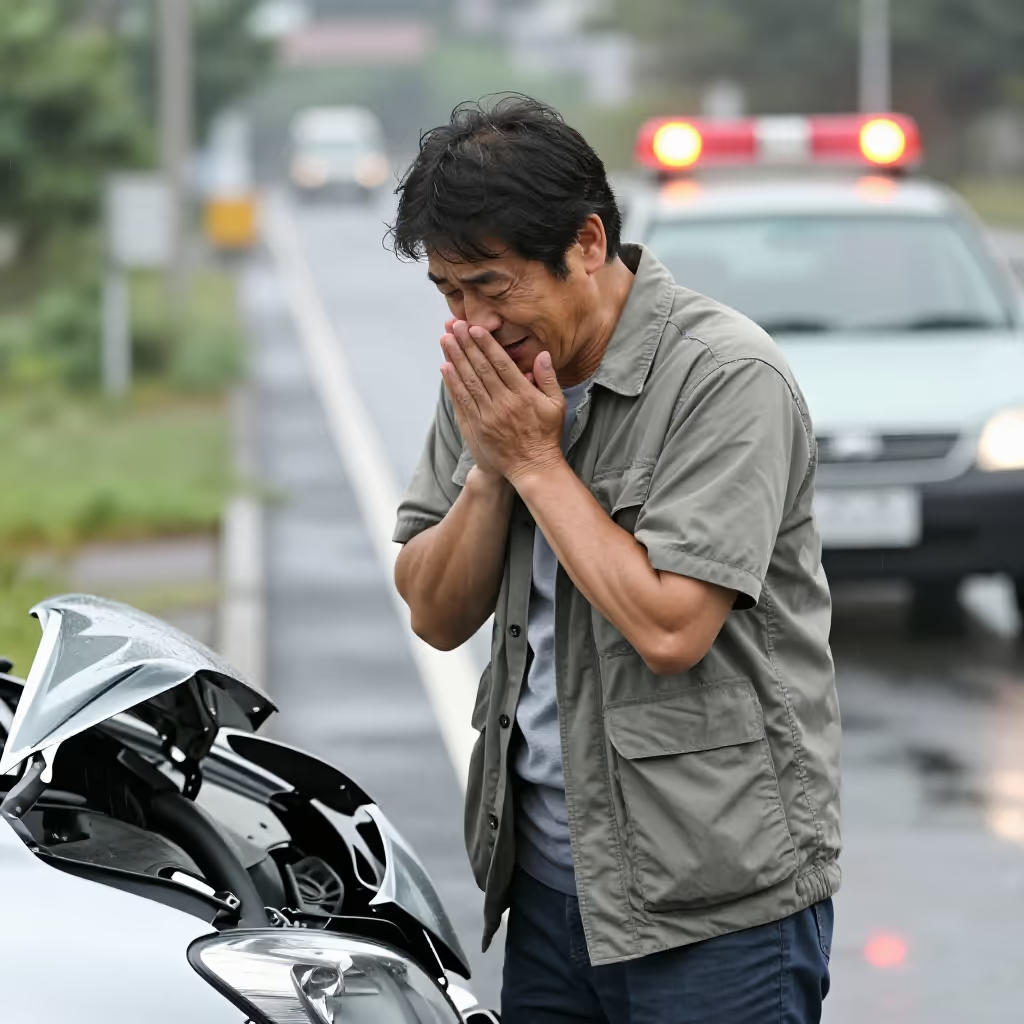
An expression of relief that something good has happened or something bad has been avoided.
Gott sei Dank ist bei dem Unfall niemand verletzt worden!
Thank God no one was injured in the accident!

reward
The payment or reward for an action, often used in a negative or ironic sense.
Er hat ihr immer geholfen, und der Dank dafür war, dass sie ihn ignorierte.
He had always helped her, and his reward for that was that she ignored him.
'Der Dank' (thanks/gratitude) belongs to the word family of 'danken' (to thank) and 'dankbar' (grateful). All of these words relate to the concept of gratitude.
Ich möchte dir für deine Hilfe danken.
I would like to thank you for your help.
To express the reason for gratitude, German uses the preposition 'für' (for) followed by the accusative.
Vielen Dank für die schönen Blumen!
Many thanks for the beautiful flowers!
'Dank' (thanks) is part of many fixed expressions. Common phrases are 'Vielen Dank' (many thanks), 'Herzlichen Dank' (heartfelt thanks), 'zum Dank' (as thanks), or 'Dank sagen' (to say thanks).
Zum Dank für ihre Hilfe lud er sie zum Essen ein.
As thanks for her help, he invited her out to eat.
'Gott sei Dank' (thank God) is a fixed expression of relief. If it appears at the beginning of a sentence, the conjugated verb follows directly after it (inversion).
Gott sei Dank habe ich den Zug noch erwischt!
Thank God I still caught the train!
The meaning 'Lohn' (payment) or 'Belohnung' (reward) is almost always used ironically or negatively. You can recognize it when a good deed leads to a bad result.
Ich habe stundenlang auf ihn gewartet, und der Dank dafür war, dass er gar nicht kam.
I waited for him for hours, and my reward for that was that he didn’t come at all.
because of
„Wegen“ and „der Dank“ can both occur in situations where a reason or help is mentioned, but they are not interchangeable. „Wegen“ states the objective cause, while „der Dank“ refers to gratitude or an expression of it. Use „wegen“ for the reason and „der Dank“ for the reaction to it.
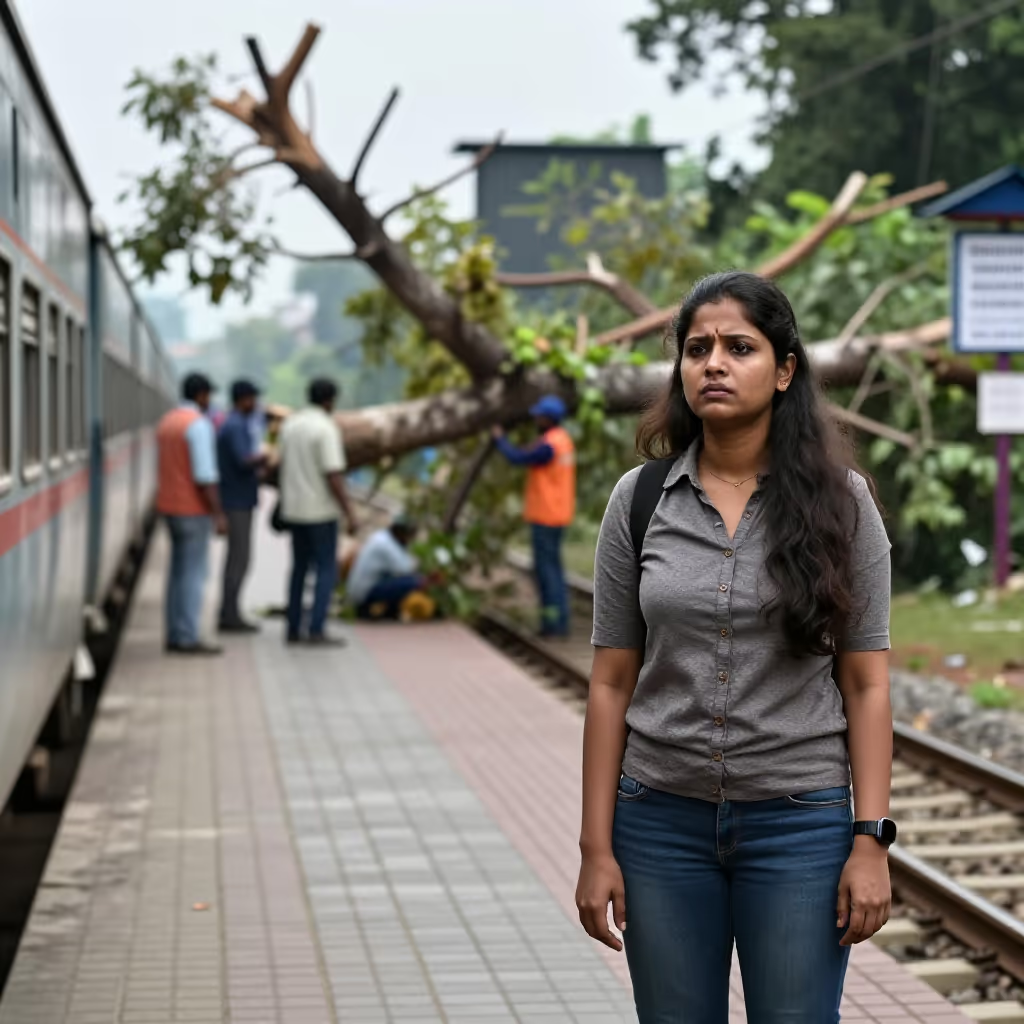
Mein Dank gilt der Nachbarin, die mir geholfen hat, den Zug noch zu erreichen.
My thanks go to the neighbor who helped me catch the train.
Wegen der schnellen Hilfe konnte ich den Zug noch erreichen.
Because of the quick help, I was still able to catch the train.