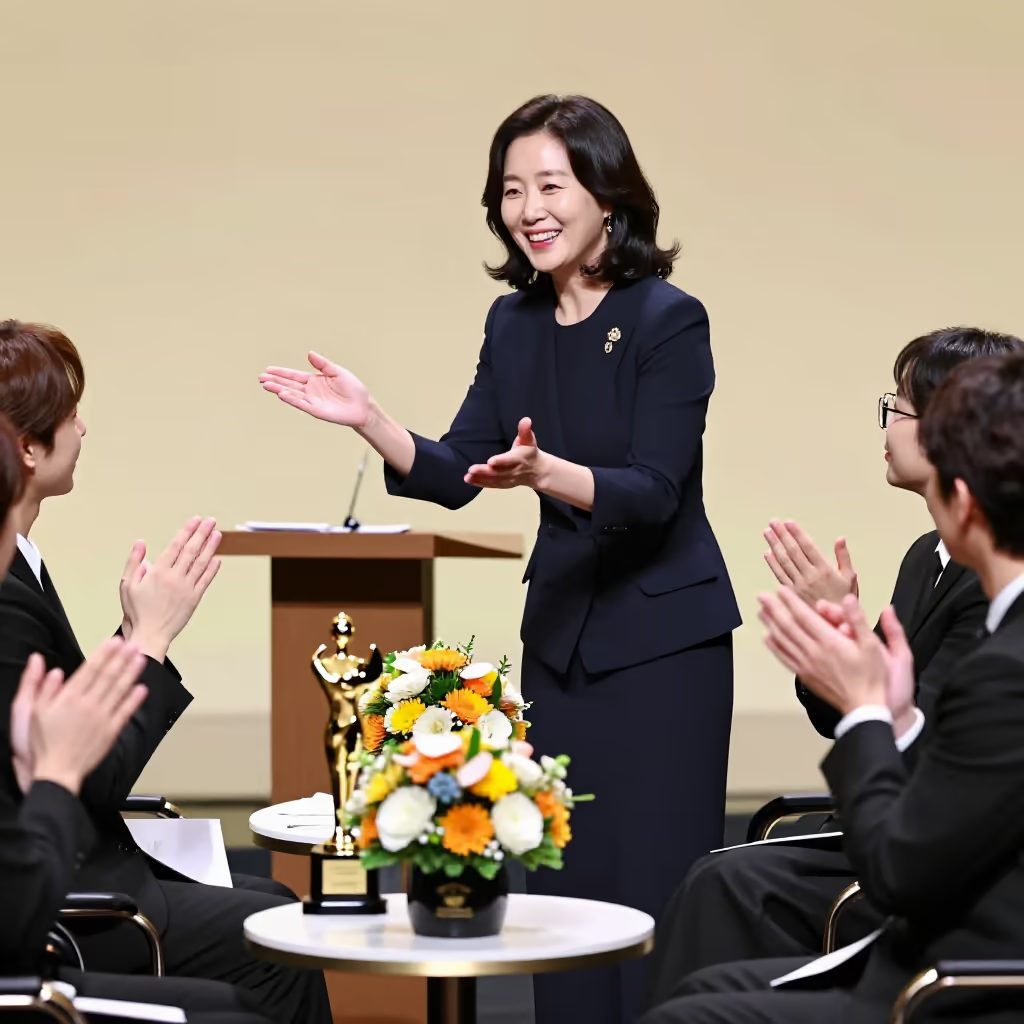
The formal or public expression of thanks to one or more people. This can be done orally or in writing.
example
Nach der Preisverleihung folgte eine emotionale Danksagung des Gewinners an seine Familie.
After the award ceremony, there was an emotional expression of thanks from the winner to his family.

Usage tips
Word composition
The word is a combination of 'Dank' (thanks) and a form of 'sagen' (to say). So a 'Danksagung' (acknowledgment / expression of thanks) is literally the act of saying thanks.
EXAMPLE
Am Ende seiner Rede hielt er eine kurze Danksagung.
At the end of his speech, he gave a short expression of thanks.
Context clue
The meaning can often be recognized from the verb. An oral 'Danksagung' (expression of thanks) is often 'gehalten' (given) or 'ausgesprochen' (expressed), while a written 'Danksagung' (acknowledgment) in a book is 'geschrieben' (written) or 'gelesen' (read).
EXAMPLE
Der Autor hat eine persönliche Danksagung an den Anfang seines Romans gestellt.
The author placed a personal acknowledgment at the beginning of his novel.
Typical collocations
When referring to public thanks, 'Danksagung' (expression of thanks) is often combined with verbs such as 'halten' (to give), 'aussprechen' (to express), or with adjectives such as 'herzlich' (heartfelt), 'öffentlich' (public), or 'persönlich' (personal).
EXAMPLE
Die Gewinnerin hielt eine emotionale Danksagung an ihr Team.
The winner gave an emotional expression of thanks to her team.
Use in texts
In the context of books or academic papers, the acknowledgment usually appears at the beginning or at the end. Typical phrases are 'in der Danksagung erwähnen' (to mention in the acknowledgment) or 'die Danksagung widmen' (to dedicate the acknowledgment).
EXAMPLE
In der Danksagung seiner Dissertation dankte er seiner Familie für die Geduld.
In the acknowledgment of his dissertation, he thanked his family for their patience.
Compare with
near_synonym · confusable
Danksagung vs Dank
thanks
'der Dank' and 'die Danksagung' both have to do with expressing thanks. 'Dank' is more general and can be a feeling, a short word, or a small gesture. 'Danksagung' means a more formal or public expression of thanks, for example in a speech, in a notice, or in a book. Learners may confuse the words because both fit after help or support. In everyday life, however, people usually say 'Dank'; 'Danksagung' is more appropriate for official or written situations.
Danksagung
Am Ende des Buches steht eine Danksagung an die Familie des Autors.
At the end of the book, there is an acknowledgment to the author's family.
Dank
Als Dank für die schnelle Reparatur lud ich meinen Nachbarn zum Essen ein.
As thanks for the quick repair, I invited my neighbor to dinner.