


den Tisch decken
to set the table
To arrange dishes, cutlery, and glasses on a table for a meal.
EXAMPLE
Könntest du bitte schon mal den Tisch für das Abendessen decken?
Could you please go ahead and set the table for dinner?
to cover / to set
Loading your saved state.
to set the table
To arrange dishes, cutlery, and glasses on a table for a meal.
Könntest du bitte schon mal den Tisch für das Abendessen decken?
Could you please go ahead and set the table for dinner?

to cover
To put something over a person or thing in order to cover, protect, or warm them or it.
Sie deckte das schlafende Kind mit einer warmen Decke zu.
She covered the sleeping child with a warm blanket.

to cover
To pay for or cover financial costs or a need.
Die Einnahmen aus dem Konzert reichten nicht aus, um die Kosten zu decken.
The proceeds from the concert were not enough to cover the costs.

to mark / cover
In sports or the military, to guard an opponent or an area in order to prevent an attack.
Der Verteidiger muss den gegnerischen Stürmer eng decken.
The defender has to mark the opposing striker closely.

to correspond to
To agree with or be identical to something else.
Seine Beschreibung des Vorfalls deckt sich genau mit der Aussage der Zeugin.
His description of the incident corresponds exactly to the witness's statement.
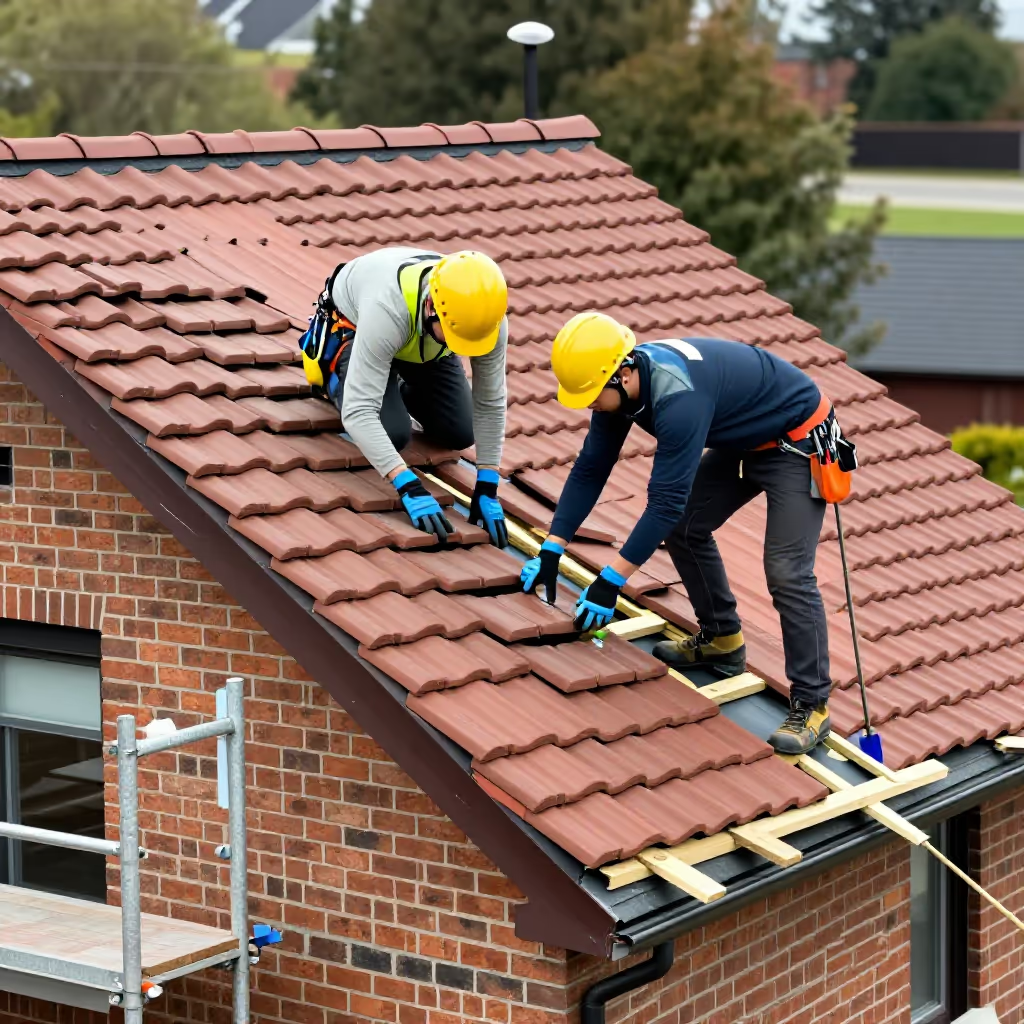
to roof
To cover the surface of a roof with material such as tiles or slate.
Nächste Woche lassen wir unser Dach neu decken.
Next week we're having our roof redone.
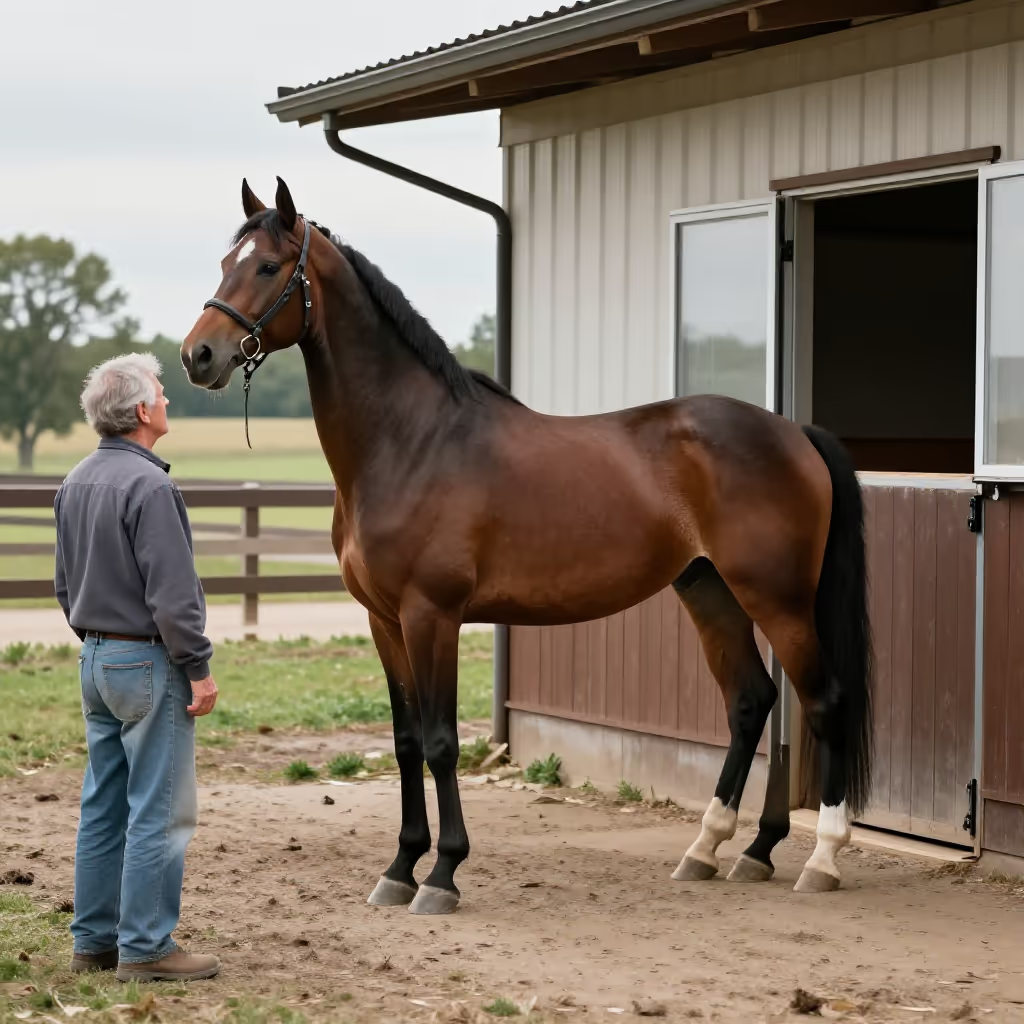
to cover
In animal breeding, the mating of a female animal by a male.
Der Züchter hat seine beste Stute von einem berühmten Hengst decken lassen.
The breeder had his best mare covered by a famous stallion.
The verb 'decken' (to cover / to set) is closely related to the noun 'die Decke' (blanket, ceiling). The basic idea of the verb is almost always to cover something or cover something up.
Eine Schneeschicht deckte die ganze Landschaft.
A layer of snow covered the whole landscape.
The many meanings of 'decken' (to cover / to set) become clear from the object. You set 'den Tisch' (the table, for a meal), cover 'die Kosten' (the costs, finances), roof 'das Dach' (the roof, house construction), or mark 'den Gegner' (the opponent, sports).
Die Versicherung wird den Schaden nicht vollständig decken.
The insurance will not fully cover the damage.
The phrase 'den Tisch decken' (to set the table) is a fixed expression. It always means preparing the table for a meal.
Die Kinder helfen am Wochenende dabei, den Tisch zu decken.
The children help set the table on weekends.
When you cover a person or thing with something, the preposition 'mit' (with) and the dative are often used. The construction is: jemanden/etwas mit etwas decken (to cover someone/something with something).
Die Mutter deckte ihr Kind mit einer zusätzlichen Wolldecke.
The mother covered her child with an extra wool blanket.
In the financial meaning, 'decken' (to cover) is typically used with objects such as 'die Kosten' (the costs), 'die Ausgaben' (the expenses), 'den Bedarf' (the need), or 'ein Defizit' (a deficit).
Mit seinem Gehalt kann er kaum seine monatlichen Ausgaben decken.
With his salary, he can barely cover his monthly expenses.
In the meaning 'übereinstimmen' (to correspond / agree), the verb is always reflexive and is used with the fixed preposition 'mit' (with) and the dative: 'sich mit etwas decken' (to correspond to something).
Meine Beobachtungen decken sich nicht mit seinen Erzählungen.
My observations do not correspond to his accounts.
The meaning 'begatten' (to mate) is used exclusively in the technical language of animal breeding. This meaning does not occur in normal everyday usage.
Der Hengst hat in dieser Saison bereits mehrere Stuten gedeckt.
The stallion has already covered several mares this season.
to correspond / to meet
Entsprechen and sich decken mit can both express that a result agrees with a forecast. Entsprechen links the result to the forecast using the dative. Sich decken mit presents the two pieces of information as matching and requires the preposition mit.
Das Ergebnis deckt sich genau mit der Prognose.
The result matches the forecast exactly.
Das Ergebnis entspricht genau der Prognose.
The result corresponds exactly to the forecast.