

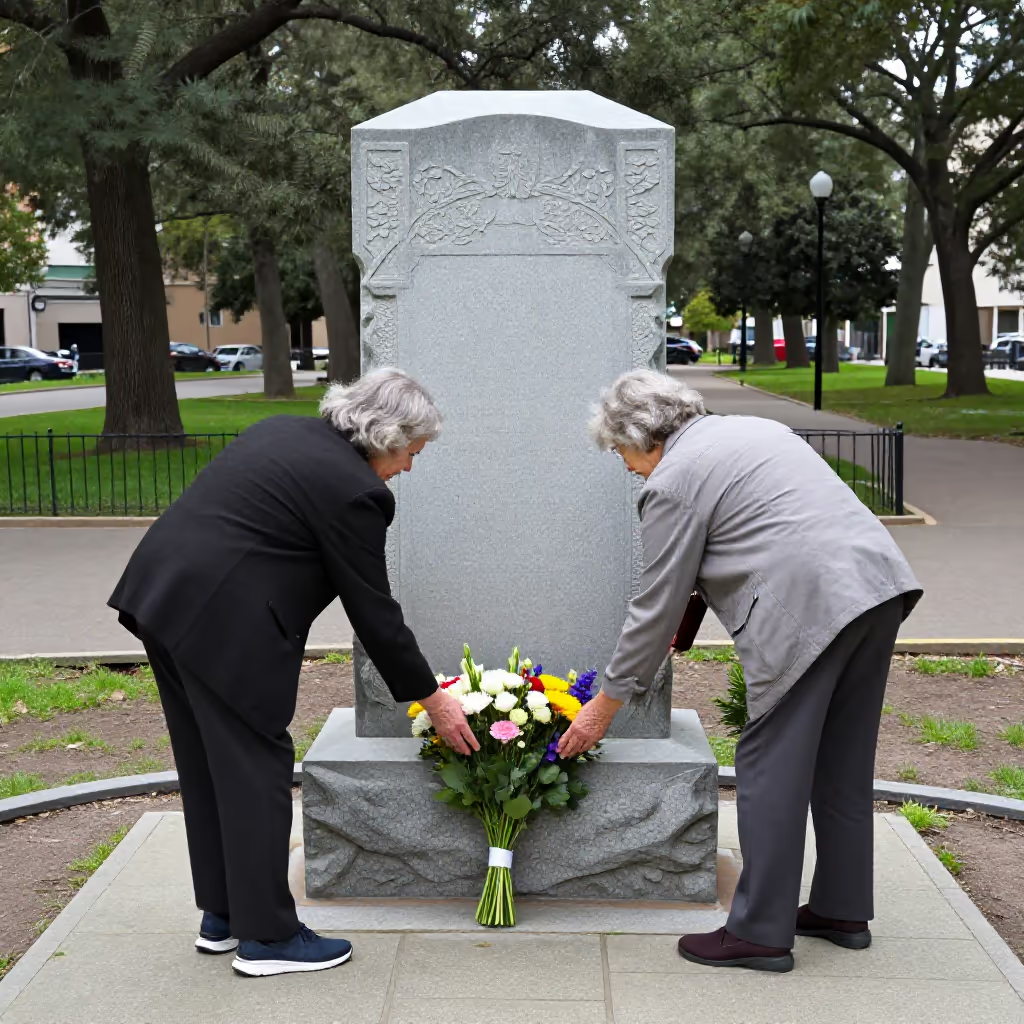
A stone, often provided with an inscription or relief, that is erected in memory of a person, an event, or a special place.
example
Am Ort des ehemaligen Konzentrationslagers wurde ein Gedenkstein für die Opfer errichtet.
A memorial stone for the victims was erected at the site of the former concentration camp.
Usage tips
Word composition
The word consists of 'gedenken' (to remember/commemorate) and 'der Stein' (the stone). So it is literally a stone meant to help people remember something or someone.
EXAMPLE
Die Familie stellte einen Gedenkstein für die verstorbenen Großeltern auf.
The family put up a memorial stone for the deceased grandparents.
Word family
'Gedenkstein' (memorial stone) belongs to the word family around the verb 'gedenken' (to remember/commemorate). Other words are 'das Gedenken' (remembrance), 'die Gedenkfeier' (memorial ceremony), or 'der Gedenktag' (day of remembrance).
EXAMPLE
Jedes Jahr findet am Gedenkstein eine kleine Feier statt.
Every year, a small ceremony takes place at the memorial stone.
Typical verbs
Memorial stones are not simply 'gestellt' (placed). Typical verbs in this context are 'einen Gedenkstein errichten' (to erect a memorial stone), 'aufstellen' (to put up), or, at a ceremonial event, 'enthüllen' (to unveil).
EXAMPLE
Die Stadt wird an dieser Stelle einen Gedenkstein errichten.
The city will erect a memorial stone at this site.
Correct preposition
To express what is being remembered, you use the preposition 'für' (for) with the accusative or the phrase 'zur Erinnerung an' (in memory of).
EXAMPLE
Dieser Gedenkstein ist für die gefallenen Soldaten.
This memorial stone is for the fallen soldiers.
Compare with
near_synonym · confusable
Gedenkstein vs Denkmal
monument / landmark
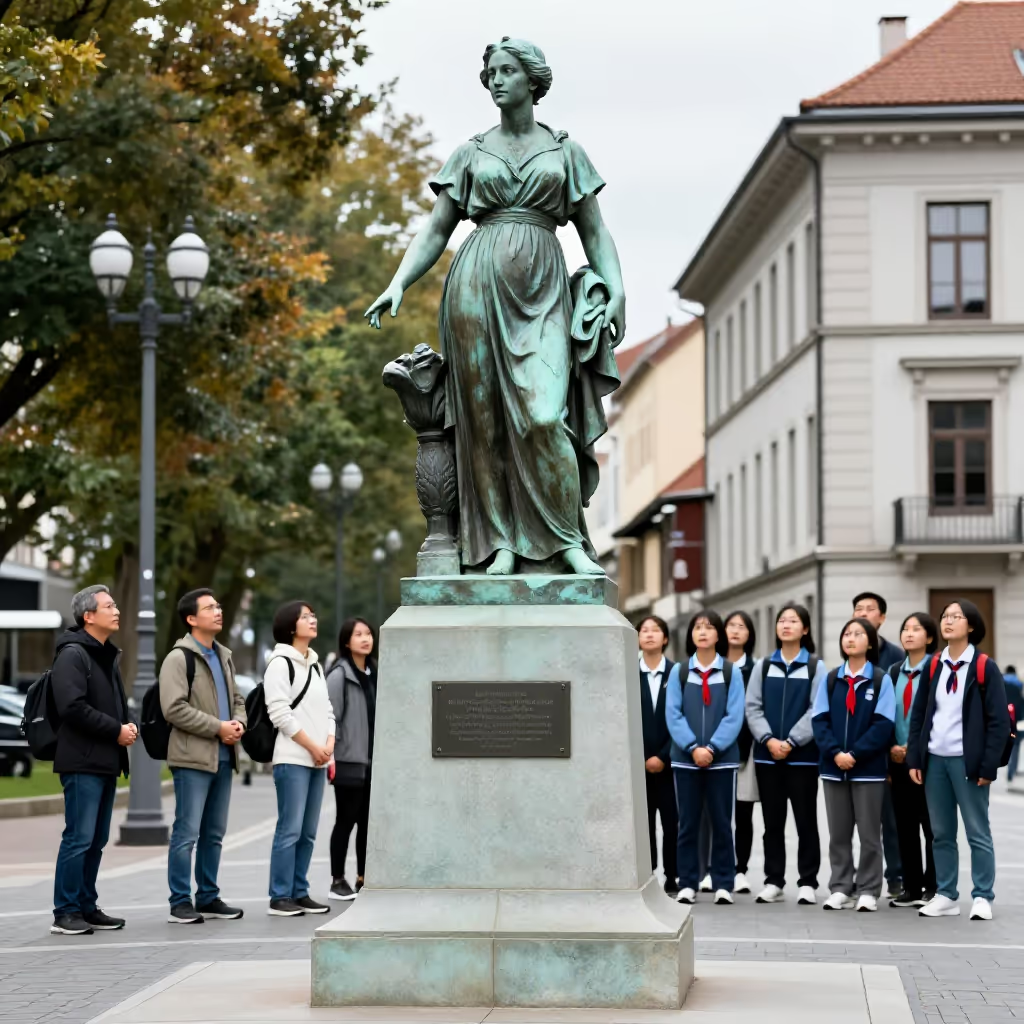
'das Denkmal' and 'der Gedenkstein' both serve to commemorate people, events, or special places. 'Denkmal' is the broader term and can look very different, for example as a statue, structure, or plaque. A 'Gedenkstein' is more specific: it is a stone, often with an inscription. Learners may confuse the words because a 'Gedenkstein' can also be a 'Denkmal'. If the exact form is not important, 'Denkmal' fits. If it really is a stone, 'Gedenkstein' sounds more precise and natural.
Gedenkstein
Am Rand des Waldes erinnert ein Gedenkstein an das alte Dorf.
At the edge of the forest, a memorial stone commemorates the old village.
Denkmal
Besuchen die Gäste am Wochenende auch das Denkmal in der Altstadt?
Are the guests also visiting the monument in the old town this weekend?