


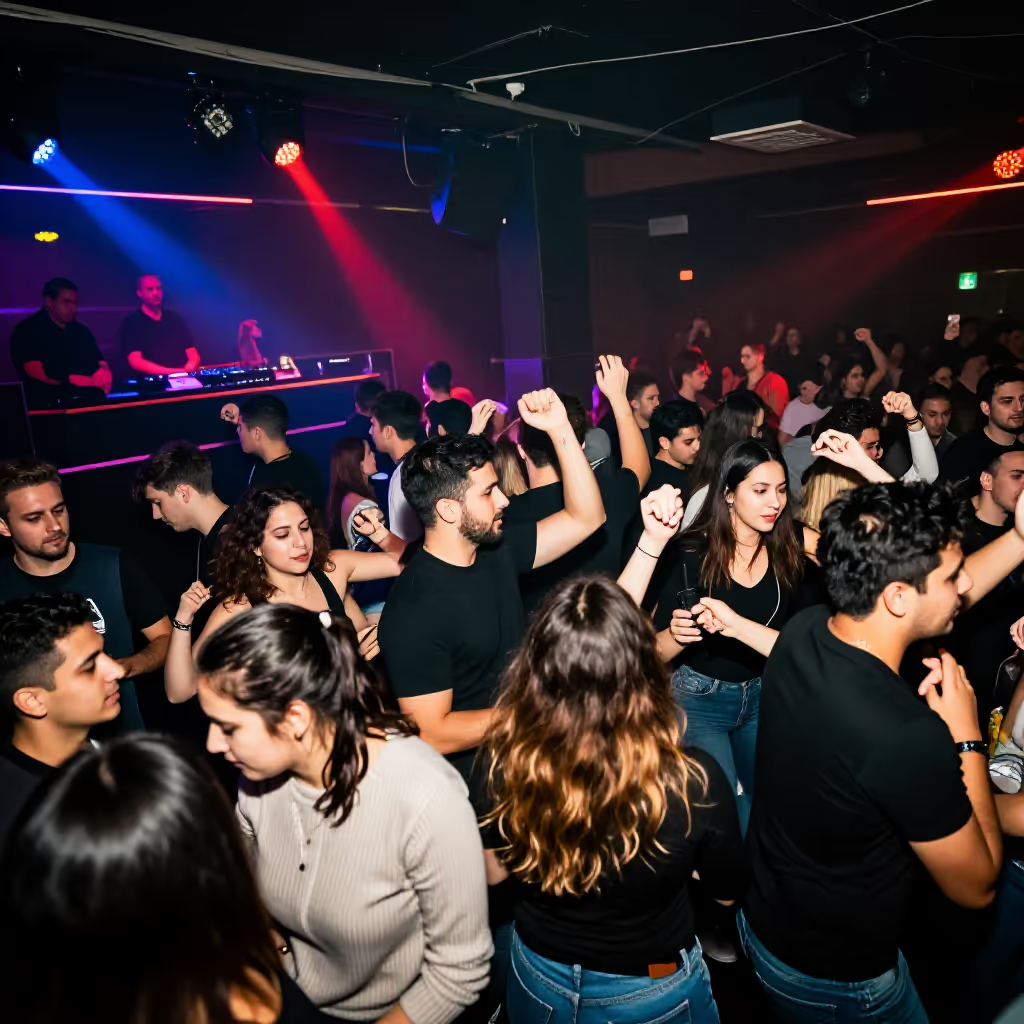
A venue where you can dance to music from a DJ, usually at night. Alcohol is often served there too.
example
Am Wochenende gehen wir oft in die neue Diskothek in der Innenstadt.
On the weekend, we often go to the new nightclub in the city center.
Usage tips
Word structure
The word 'Diskothek' (nightclub) comes from Greek. 'Disko-' refers to the 'Scheibe' (disc/record; Greek 'diskos'), meaning the record, and '-thek' means collection, as in 'Bibliothek' (library).
EXAMPLE
Früher legten DJs in Diskotheken nur Schallplatten auf.
In the past, DJs in nightclubs only played records.
Colloquial form
In everyday language and colloquial speech, 'Diskothek' (nightclub) is very often shortened to 'Disko' (disco/nightclub). This short form is widespread and sounds more natural in informal conversations.
EXAMPLE
Kommst du am Samstag mit in die Disko?
Are you coming to the club with us on Saturday?
Movement and location
Pay attention to the preposition 'in' and the correct case. If you are going there, you use the accusative. If you are already there, you use the dative.
EXAMPLE
Wir gehen heute Abend in die Diskothek.
We're going to the nightclub tonight.
Compare with
near_synonym · confusable
Diskothek vs Club
club
'der Club' and 'die Diskothek' can both mean a nightclub where people dance to music. 'die Diskothek' is the more precise word for this kind of dance venue and sounds a little more complete or formal than 'Disco'. 'der Club' is used very often in everyday language for modern dance venues and can sound a bit broader, for example with a particular type of music, a DJ, or a bar. The words can be confused because they often refer to the same place. But 'Club' also has the meaning 'association'; 'Diskothek' does not have this meaning.
Diskothek
Nach dem Konzert sind sie noch in eine Diskothek gegangen.
After the concert, they went to a nightclub.
Club
Du warst gestern mit Paul in einem neuen Club in der Innenstadt.
You were in a new club downtown with Paul yesterday.