


der Einwohner
resident
A person who lives in a particular place (e.g. in a city, a country, a house) and is registered there.
EXAMPLE
Berlin hat über 3,5 Millionen Einwohner.
Berlin has over 3.5 million residents.
resident
Loading your saved state.
resident
A person who lives in a particular place (e.g. in a city, a country, a house) and is registered there.
Berlin hat über 3,5 Millionen Einwohner.
Berlin has over 3.5 million residents.
The word is made up of 'ein-' and the stem of the verb 'wohnen' (to live). An 'Einwohner' (resident) is therefore literally someone who 'lives inside' a place.
Alle Einwohner des Hauses wurden über die Renovierung informiert.
All residents of the building were informed about the renovation.
'Einwohner' (resident) is almost always used in connection with a number and a geographical place (city, country). A typical sentence structure is '[place] hat [number] Einwohner' ([place] has [number] residents).
Die Stadt hat ungefähr 50.000 Einwohner.
The city has about 50,000 residents.
To name the place whose residents are meant, you usually use the preposition 'von' (of/from) followed by the dative. Alternatively, the genitive can also be used, but that sounds more formal.
Die Einwohner von Paris feiern heute ihren Nationalfeiertag.
The residents of Paris are celebrating their national holiday today.
population
Bevölkerung refers to all the inhabitants of an area as a whole and is grammatically singular. Einwohner refers to one person who lives there and is countable; for several people, the plural Einwohner is used. The choice therefore depends on whether the perspective is collective or individual.
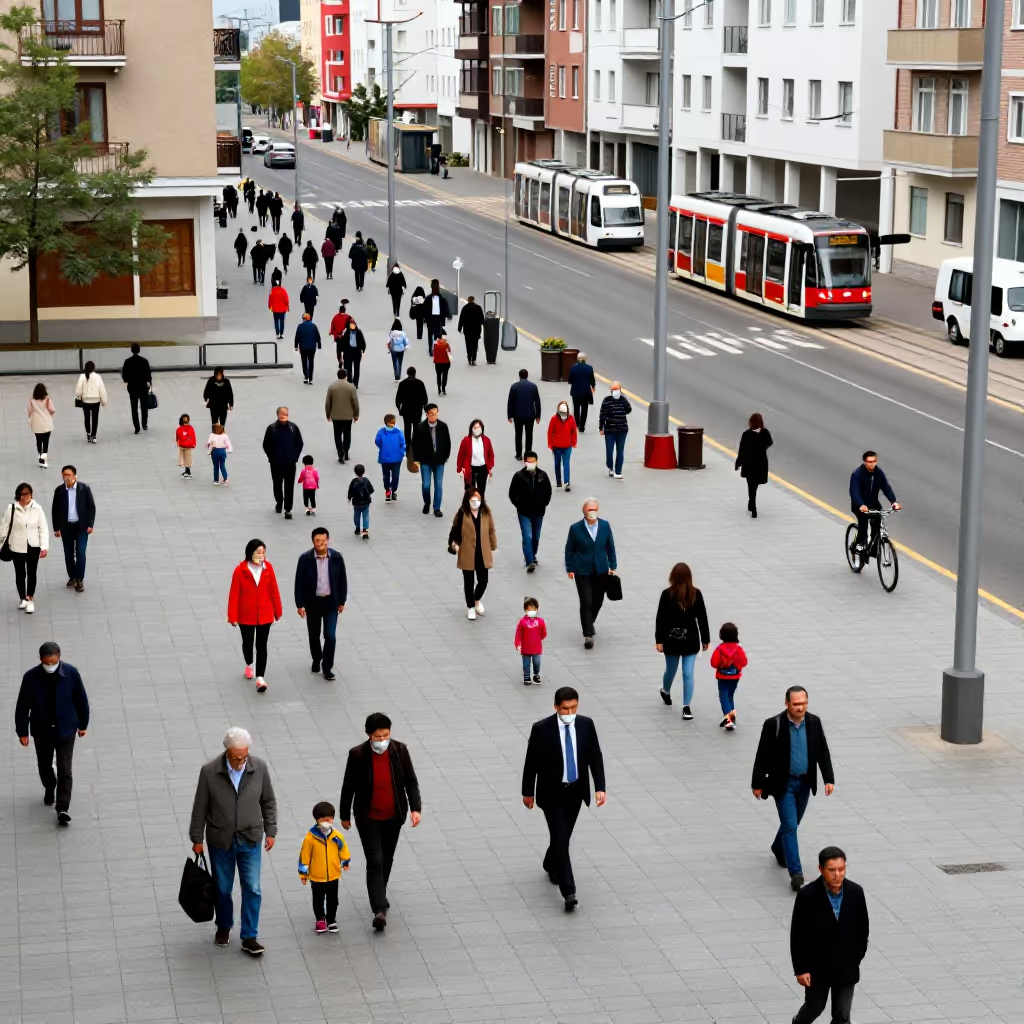
Viele Einwohner der Stadt protestieren gegen die geplante Schließung.
Many residents of the city are protesting against the planned closure.
Die Bevölkerung der Stadt protestiert gegen die geplante Schließung.
The city's population is protesting against the planned closure.