

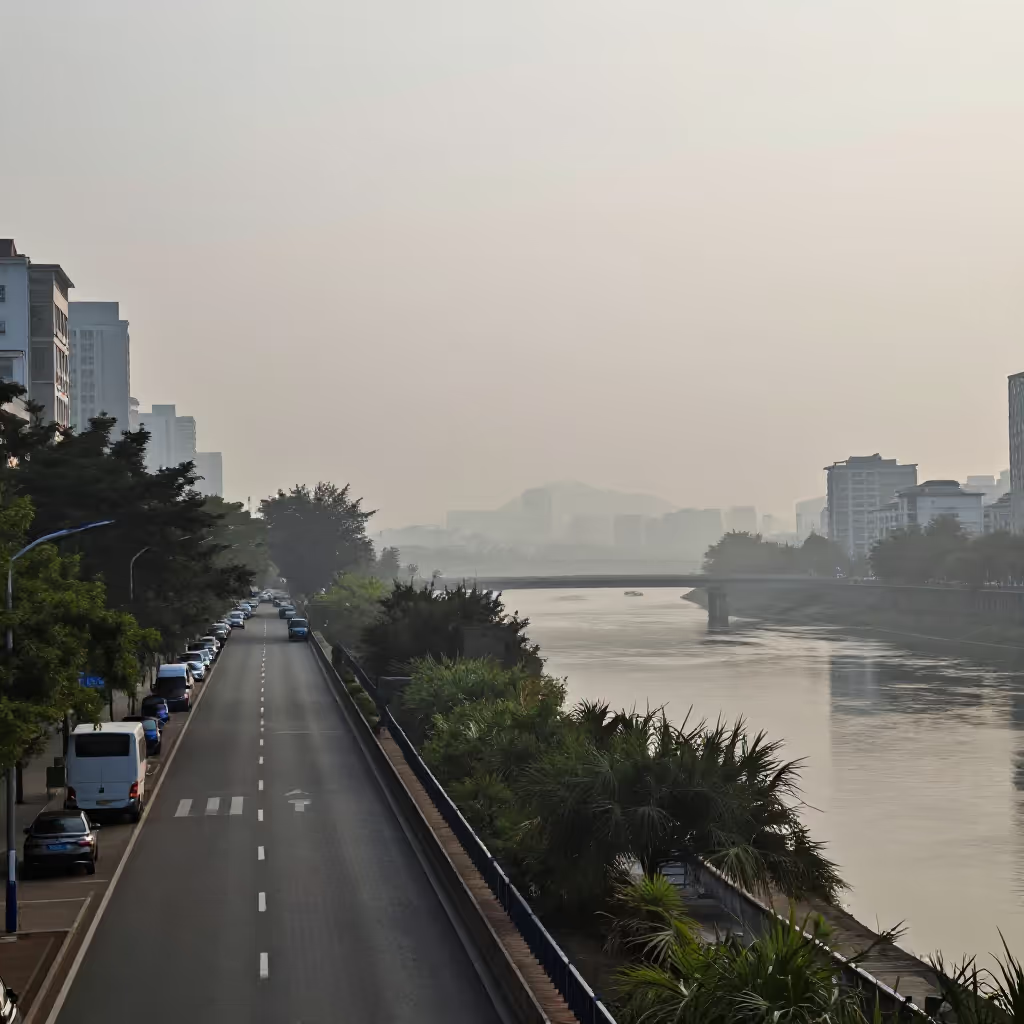
der Dunst
haze
A slight clouding of the atmosphere caused by fine water, smoke, or dust particles that limits visibility; a light fog or veil.
Am Morgen lag ein bläulicher Dunst über dem Tal.
In the morning, a bluish haze lay over the valley.


haze / clue
Loading your saved state.
haze
A slight clouding of the atmosphere caused by fine water, smoke, or dust particles that limits visibility; a light fog or veil.
Am Morgen lag ein bläulicher Dunst über dem Tal.
In the morning, a bluish haze lay over the valley.

The two meanings are easy to distinguish. The fixed expression 'keinen (blassen) Dunst haben' (to have no clue) refers to a lack of knowledge. The literal meaning always describes a visible clouding in the air, that is, a weather phenomenon.
Durch den morgendlichen Dunst konnte man die Berge kaum sehen.
Because of the morning haze, you could hardly see the mountains.
The idiom is 'keinen (blassen) Dunst haben' (to have no clue). The word 'blass' (pale) is optional and intensifies the statement. The verb is always a form of 'haben' (to have).
Er hat keinen blassen Dunst, wovon wir reden.
He has no clue what we're talking about.
The expression 'keinen Dunst haben' (to have no clue) is colloquial. It is used very often in spoken language among friends or in informal situations.
Sorry, von Mathe habe ich absolut keinen Dunst.
Sorry, I have absolutely no clue about math.
In the literal meaning, 'Dunst' is often combined with weather and landscape. Typical phrases include 'ein Schleier aus Dunst' (a veil of haze), 'im Dunst liegen' (to lie in the haze), or 'ein leichter Dunst' (a light haze).
Die ganze Stadt lag unter einer Glocke aus Dunst und Abgasen.
The whole city lay under a dome of haze and exhaust fumes.
smoke
'Rauch' and 'Dunst' can both cloud the air and make visibility worse. 'Rauch' comes from combustion, for example from fire, wood, or cigarettes. 'Dunst' is usually lighter and can consist of water, dust, or even a little smoke. It is easy to confuse the words when the air looks gray or foggy. As a practical rule: if something is burning or has burned, you are more likely to say 'Rauch'. If the air is only slightly hazy and the cause is not so important, 'Dunst' sounds more natural.

Am Morgen lag feiner Dunst über den Feldern.
In the morning, a fine haze lay over the fields.
Nach dem Grillen roch meine Jacke stark nach Rauch.
After the barbecue, my jacket smelled strongly of smoke.