A weather phenomenon in which very fine water droplets float in the air and severely limit visibility.
example
Wegen des dichten Nebels am Morgen kam es zu vielen Verkehrsunfällen.
Because of the thick fog in the morning, there were many traffic accidents.

Usage tips
Word family
The adjective 'neblig' (foggy) is derived from the noun 'der Nebel' (fog). When the weather is characterized by fog, you say: 'Es ist neblig' (It is foggy).
EXAMPLE
Fahr vorsichtig, es ist heute Morgen sehr neblig.
Drive carefully; it is very foggy this morning.
Uncountable noun
In most cases, 'Nebel' (fog) is used as an uncountable noun in the singular. People speak of 'dichtem Nebel' (thick fog) or 'leichtem Nebel' (light fog).
EXAMPLE
Am Seeufer lag dichter Nebel.
Thick fog lay on the lakeshore.
Typical collocations
Common expressions in connection with weather are 'der Nebel zieht auf' (the fog rolls in), 'der Nebel lichtet sich' (the fog lifts), or 'im Nebel fahren' (to drive in the fog). A typical adjective is 'dicht' (thick).
EXAMPLE
Gegen Abend zog plötzlich Nebel auf.
Toward evening, fog suddenly rolled in.
Figurative meaning
The expression 'im Nebel sein' (to be in a fog) or 'wie im Nebel sein' (to be as if in a fog) is often used to describe a state of mental confusion, dazedness, or lack of clarity.
EXAMPLE
Nach der langen Reise war ich den ganzen Tag wie im Nebel.
After the long trip, I was in a fog all day.
Compare with
confusable
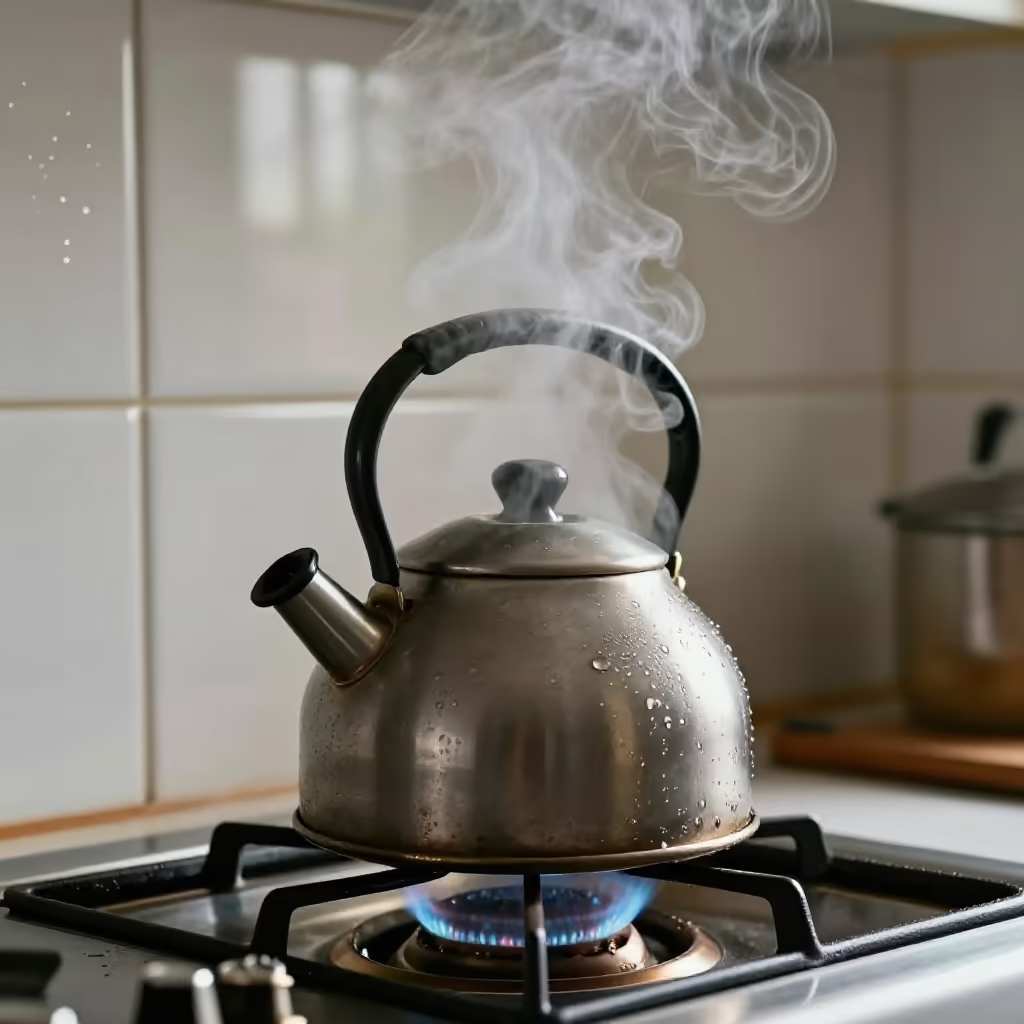
Nebel vs Rauch
smoke
'Rauch' and 'Nebel' can look similar because both make the air visible and can reduce visibility. The difference is the cause. 'Rauch' is produced by fire or combustion and often has a strong smell. 'Nebel' is a weather phenomenon made of fine water droplets in the air. Learners may confuse the words if they only think of a gray cloud. Pay attention to the source: if it comes from fire, you say 'Rauch'. If it comes from the weather, you say 'Nebel'.