

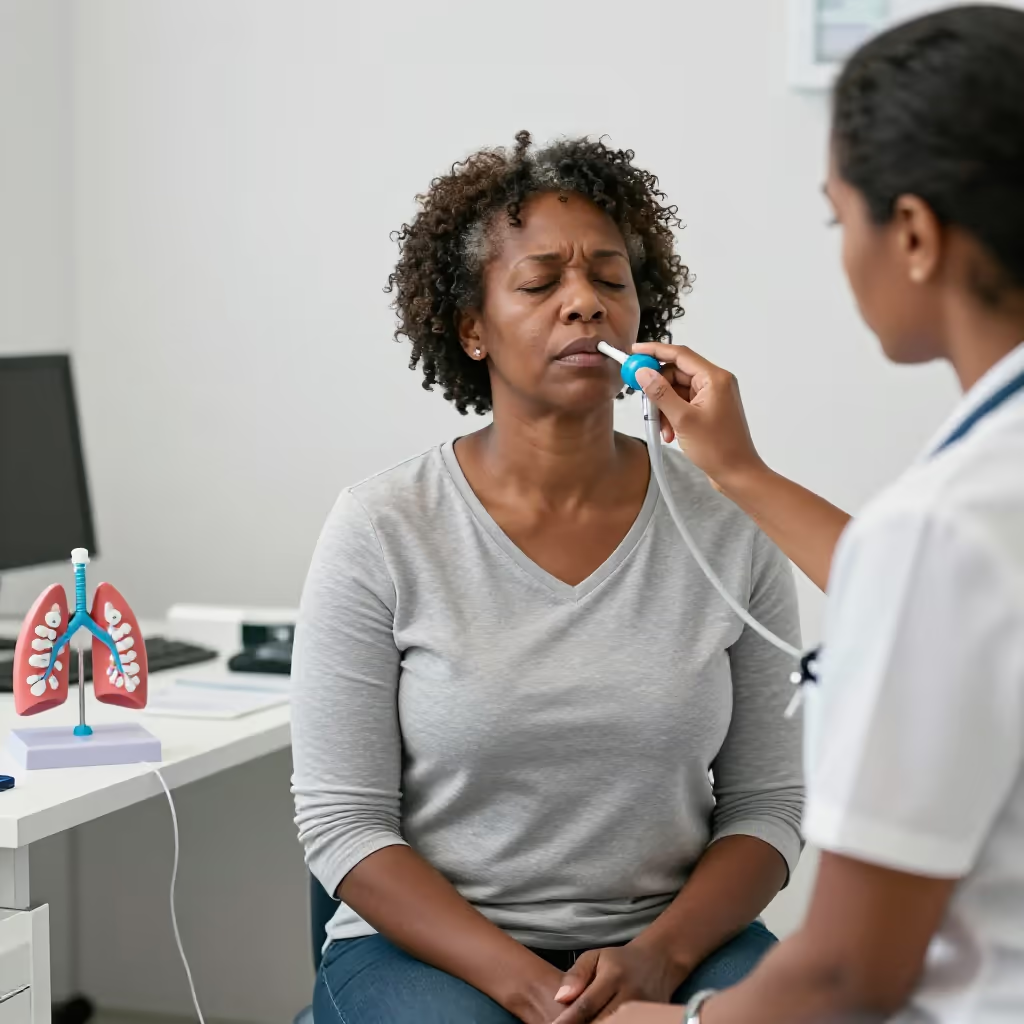
einatmen
to inhale
To draw air or other gaseous substances through the mouth or nose into the lungs.
EXAMPLE
Bitte atmen Sie tief ein und halten Sie die Luft kurz an.
Please inhale deeply and hold your breath briefly.
to inhale
Loading your saved state.
to inhale
To draw air or other gaseous substances through the mouth or nose into the lungs.
Bitte atmen Sie tief ein und halten Sie die Luft kurz an.
Please inhale deeply and hold your breath briefly.

to take in
In a figurative sense: to intensely absorb and internalize an atmosphere, feeling, or experience.
Bei einem Spaziergang im Wald kann man die Ruhe richtig einatmen.
On a walk in the forest, you can really take in the peace and quiet.
'Einatmen' (to inhale) is a separable verb. In a main clause, the prefix 'ein' goes at the end. In subordinate clauses and in the infinitive with 'zu', the verb stays together.
Ich atme die frische Morgenluft ein.
I inhale the fresh morning air.
The prefix 'ein-' indicates movement inward. In combination with 'atmen' (to breathe), the word therefore logically describes drawing air into the body.
Beim Yoga lernt man, bewusst ein- und auszuatmen.
In yoga, you learn to consciously inhale and exhale.
In its literal meaning, 'einatmen' (to inhale) is often combined with the adverbs 'tief' (deeply), 'langsam' (slowly), or 'ruhig' (calmly). Typical objects are 'Luft' (air), 'Sauerstoff' (oxygen), or also 'Rauch' (smoke).
Der Arzt bat mich, tief einzuatmen.
The doctor asked me to inhale deeply.
You can recognize the figurative meaning by the fact that the object is something abstract that you cannot actually breathe. Examples are 'die Atmosphäre' (the atmosphere), 'die Kultur' (the culture), or 'die Geschichte' (the history) of a place.
In den alten Gassen der Stadt kann man die Geschichte förmlich einatmen.
In the old alleys of the city, you can practically take in its history.
to record / take in
Aufnehmen an atmosphere neutrally describes perceiving and processing it internally. Einatmen conveys the same idea more vividly and physically: the atmosphere is experienced and internalized particularly intensely. Use aufnehmen for a matter-of-fact statement and einatmen for a powerful experience.

Sie atmet die besondere Atmosphäre der Altstadt tief ein.
She is breathing in the special atmosphere of the old town.
Sie nimmt die besondere Atmosphäre der Altstadt aufmerksam in sich auf.
She is attentively taking in the special atmosphere of the old town.