

einwechseln
to substitute in
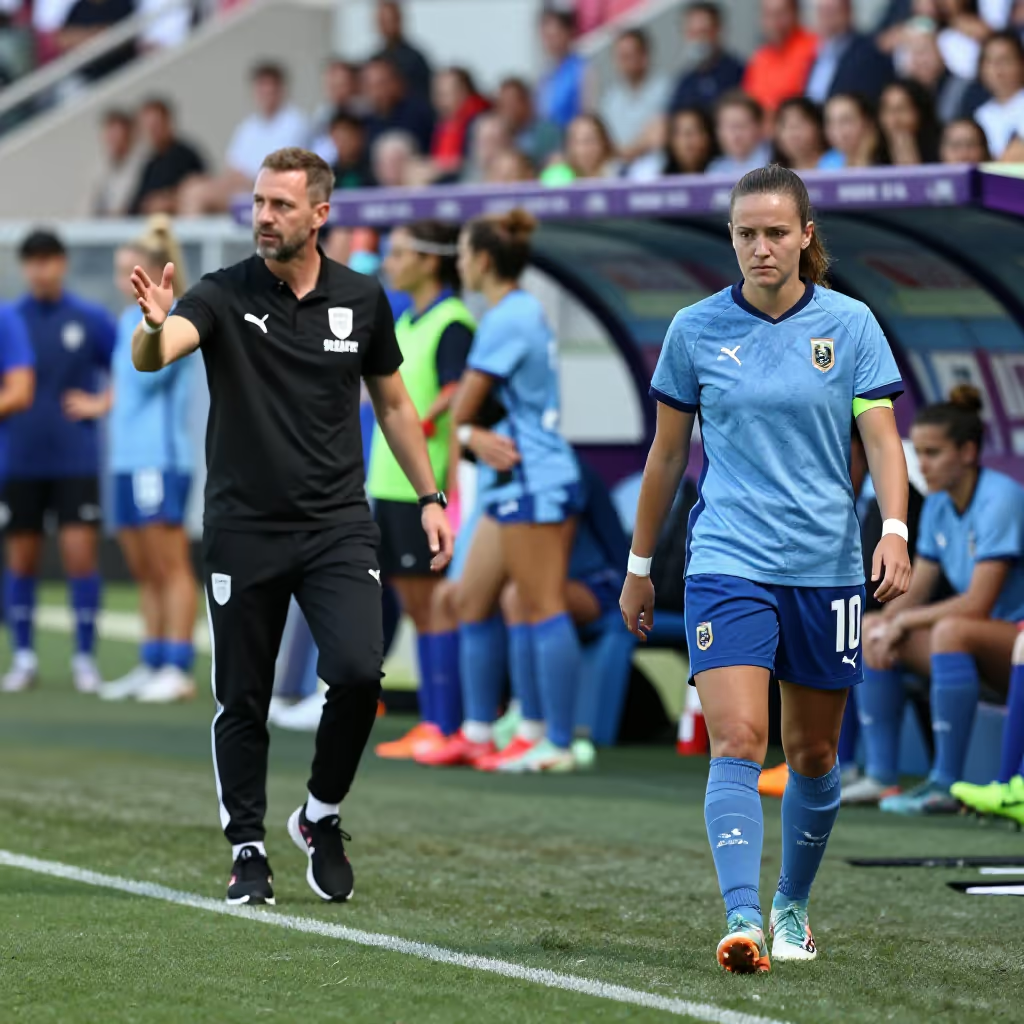
In sports, to bring a player into the game as a replacement for another.
Der Trainer wird in der zweiten Halbzeit einen frischen Stürmer einwechseln.
The coach will substitute in a fresh striker in the second half.

to substitute in / exchange
Loading your saved state.
to substitute in
In sports, to bring a player into the game as a replacement for another.
Der Trainer wird in der zweiten Halbzeit einen frischen Stürmer einwechseln.
The coach will substitute in a fresh striker in the second half.

'Einwechseln' (to substitute in / exchange) is a separable verb. The prefix 'ein-' stands at the end in a main clause; in subordinate clauses and in the infinitive, it stays attached to the verb. In the infinitive with 'zu', 'zu' stands between the prefix and the verb.
Der Trainer wechselt in der 80. Minute einen neuen Spieler ein.
The coach substitutes in a new player in the 80th minute.
This meaning is used almost exclusively in sports. Words like 'Spieler' (player), 'Trainer' (coach), 'Halbzeit' (half), 'Minute' (minute), or the name of a sport in the sentence make it clear that it is about a substitution in a game.
In der zweiten Halbzeit wurde der verletzte Torwart eingewechselt.
In the second half, the injured goalkeeper was substituted in.
If you want to indicate which player is leaving the field, you use the preposition 'für' (for) with the accusative. The structure is: jemanden (accusative) für jemanden (accusative) einwechseln.
Der junge Stürmer wurde für den müden Kapitän eingewechselt.
The young striker was substituted in for the tired captain.
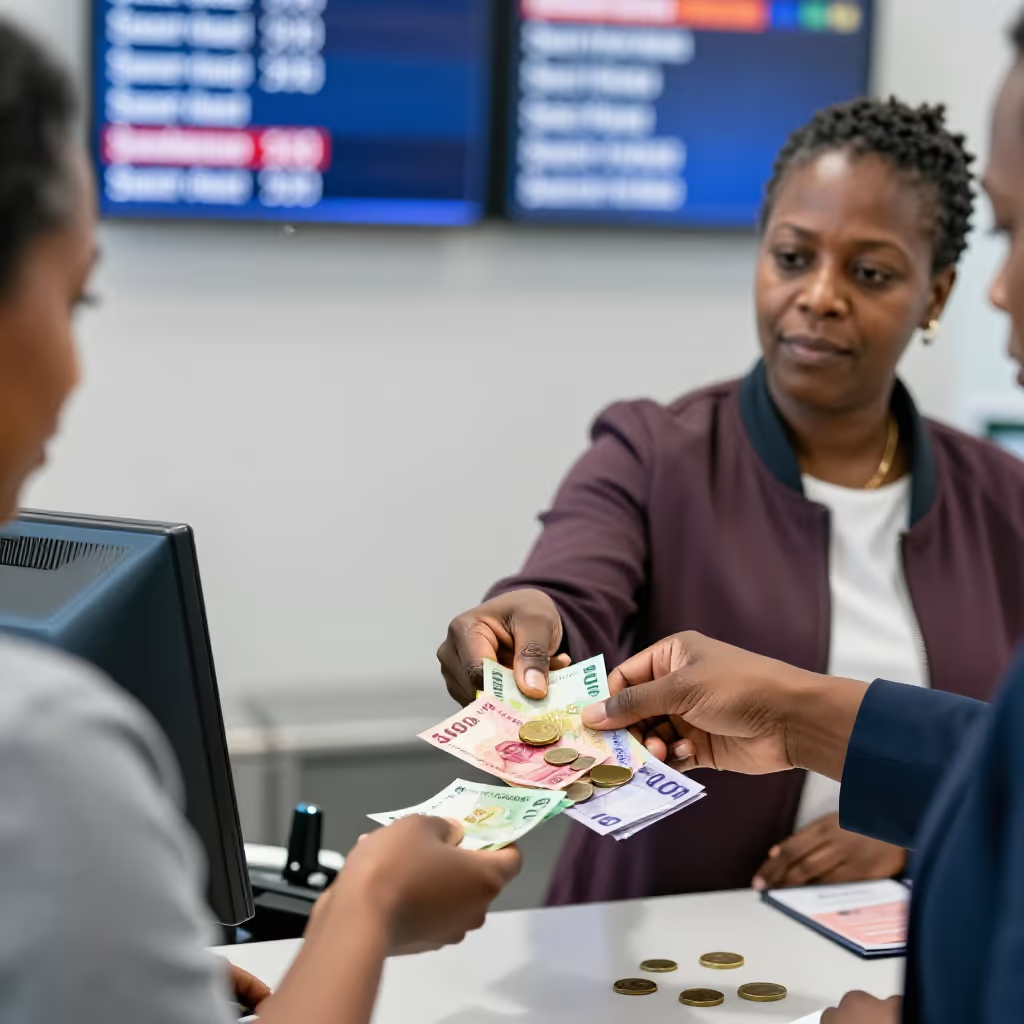
The meaning 'Geld umtauschen' (to exchange money) is rather rare and formal. You sometimes find it in bank texts, but it is hardly used in everyday language.
Kunden können am Schalter Fremdwährungen einwechseln.
Customers can exchange foreign currencies at the counter.
to insert / to begin / to use
'einsetzen' and 'einwechseln' can both have to do with players in sports. 'einsetzen' generally means that a person is used or assigned for a task. So a coach can use a player from the start or for a particular game. 'einwechseln' is more specific: a player comes into the game during play and replaces someone else. Learners may confuse the words because both can mean that someone plays. A practical tip: 'einwechseln' happens during an ongoing game, while 'einsetzen' is more general.

In der zweiten Halbzeit wurde Anna für die verletzte Stürmerin eingewechselt.
In the second half, Anna was substituted in for the injured striker.
Der Trainer setzt heute einen jungen Spieler in der Abwehr ein.
The coach is using a young player in defense today.