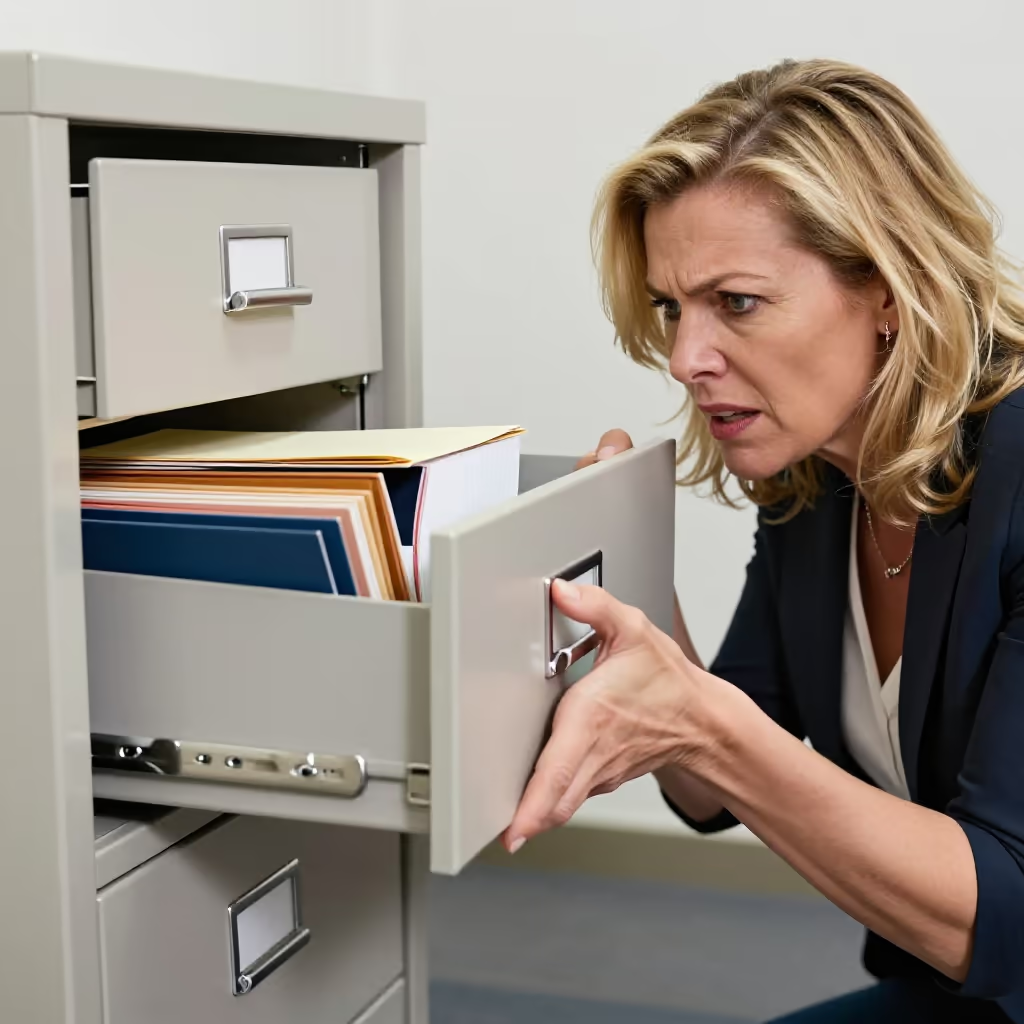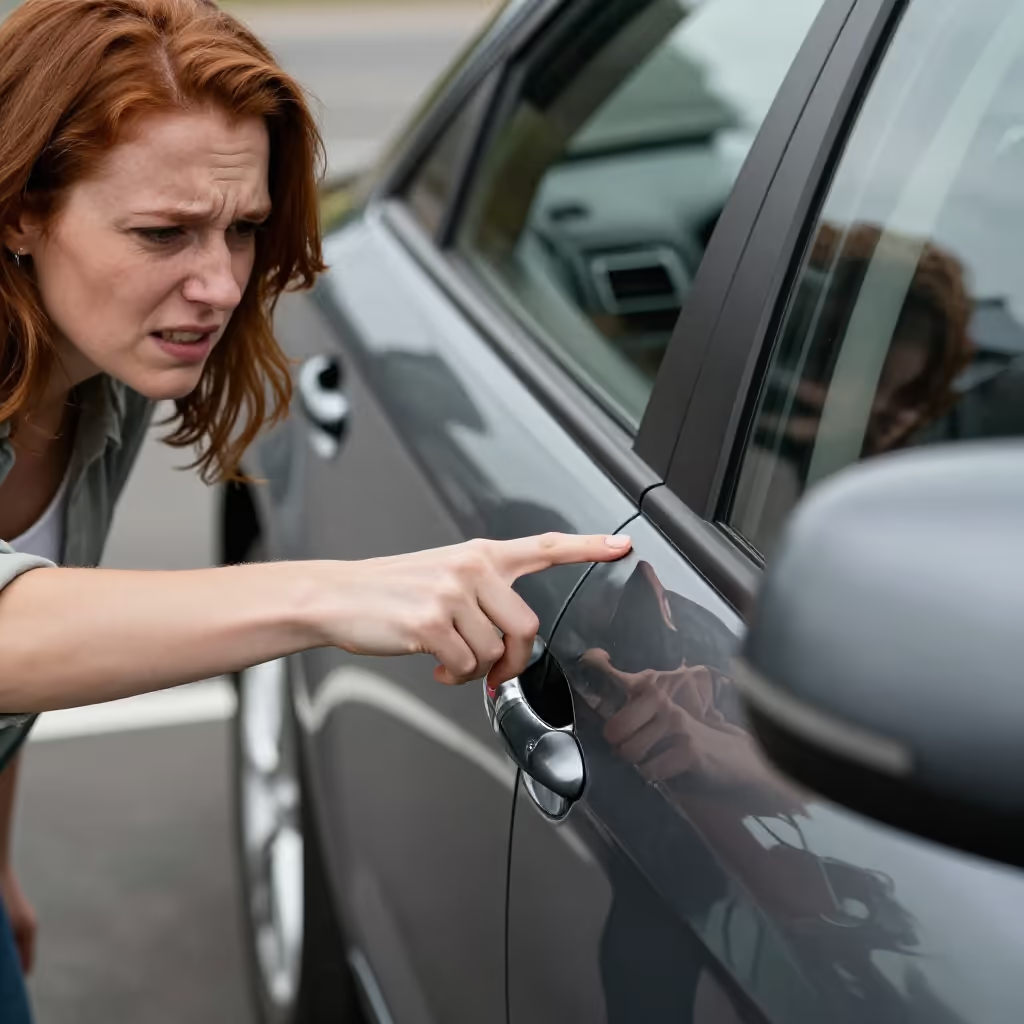
To trap something or someone between two objects or in a narrow gap so firmly that it can no longer move. This often happens accidentally and can be painful.
example
Ich habe mir beim Schließen der Tür den Finger eingeklemmt.
I pinched my finger while closing the door.

Usage tips
Separable verb
'Einklemmen' (to pinch/wedge) is a separable verb. The prefix 'ein-' comes at the end in main clauses, remains attached to the verb in subordinate clauses, and in infinitive constructions 'zu' goes between the prefix and the verb.
EXAMPLE
Vorsicht, du klemmst das Kabel ein!
Careful, you're pinching the cable!
Sentence structure for injuries
When someone accidentally pinches a body part, a special reflexive construction with dative and accusative is used: sich [Dativ] etwas [Akkusativ] einklemmen (to pinch one's something).
EXAMPLE
Ich habe mir die Hand in der Autotür eingeklemmt.
I pinched my hand in the car door.
Typical expression
When carrying something, the fixed phrase 'etwas unter den Arm klemmen' (to tuck something under one's arm) is often used. Typical objects are flat items such as a newspaper, a book, or a folder.
EXAMPLE
Er klemmte die Zeitung unter den Arm und rannte zum Bus.
He tucked the newspaper under his arm and ran to the bus.
Always reflexive
In the meaning 'sich in einen engen Raum zwängen' (to squeeze oneself into a tight space), the verb 'einklemmen' (to squeeze in) is always used reflexively. It describes how people arrange themselves in a place with little room.
EXAMPLE
Wir klemmten uns zu viert auf das kleine Sofa.
The four of us squeezed onto the small sofa.
Compare with
near_synonym · confusable
einklemmen vs klemmen
to jam / to pinch
'einklemmen' and 'klemmen' both describe something being stuck or held in place by pressure. 'Einklemmen' usually emphasizes the action: something or someone gets caught between two things and is then stuck. This often happens suddenly or by accident, for example with a finger in a door. 'Klemmen' often describes the state instead: a drawer, door, or key does not move properly. But it can also mean to stick or wedge something firmly in a place. The words can be confused because both have to do with tight spaces and being stuck. As a simple guide: you 'klemmt etwas ein' when it gets caught between two things; something 'klemmt' when it is already stuck or blocked.
einklemmen
Beim Schließen der Autotür hat sich Max den Finger eingeklemmt.
While closing the car door, Max pinched his finger.
klemmen
Die alte Schublade klemmt, deshalb bekomme ich sie kaum auf.
The old drawer is jammed, so I can hardly get it open.