

klemmen
to jam
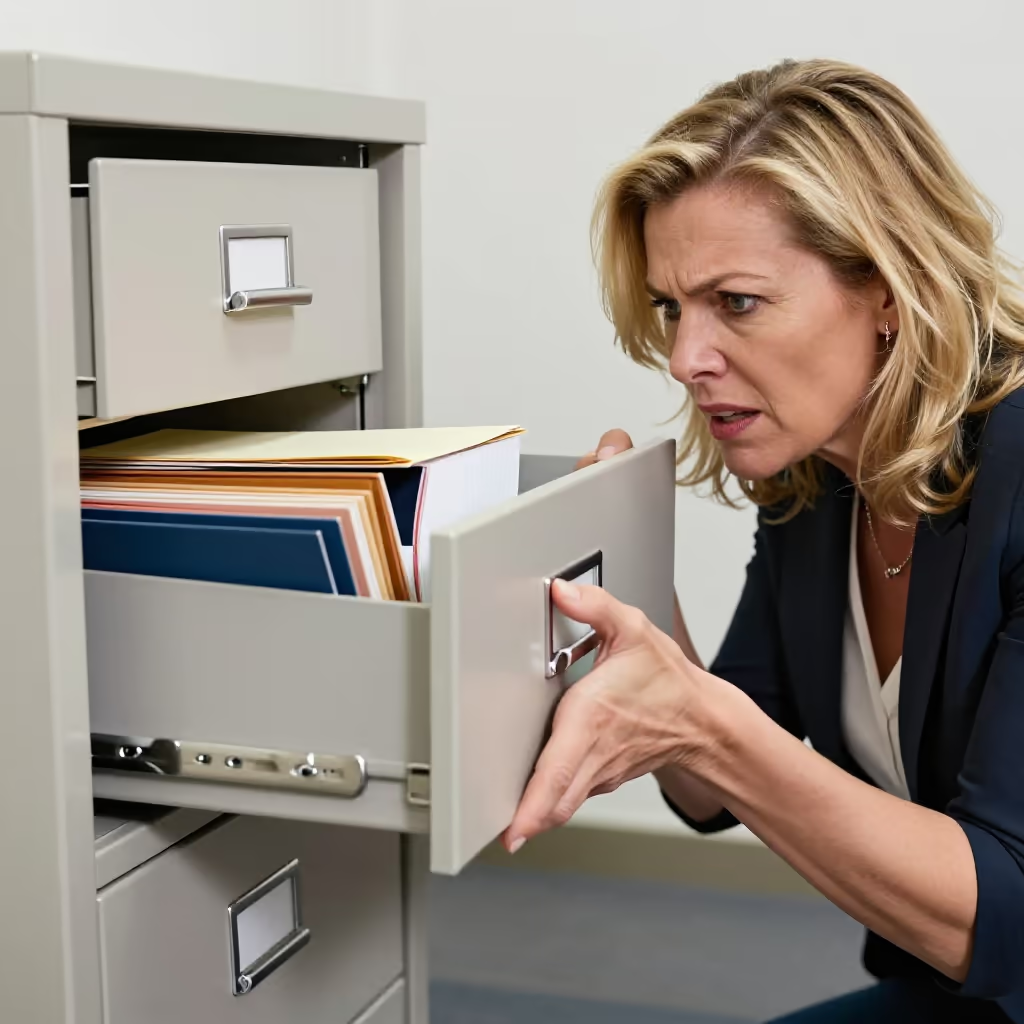
To no longer be movable, or to be movable only with difficulty; to be stuck or blocked.
EXAMPLE
Die Schublade klemmt, ich bekomme sie nicht auf.
The drawer is jammed; I can't get it open.
to jam / to pinch
Loading your saved state.
to jam
To no longer be movable, or to be movable only with difficulty; to be stuck or blocked.
Die Schublade klemmt, ich bekomme sie nicht auf.
The drawer is jammed; I can't get it open.

to pinch
To painfully trap or pinch a body part, usually a finger, somewhere.
Achtung, dass du dir nicht die Finger in der Autotür klemmst!
Careful you don't pinch your fingers in the car door!
to wedge / clip
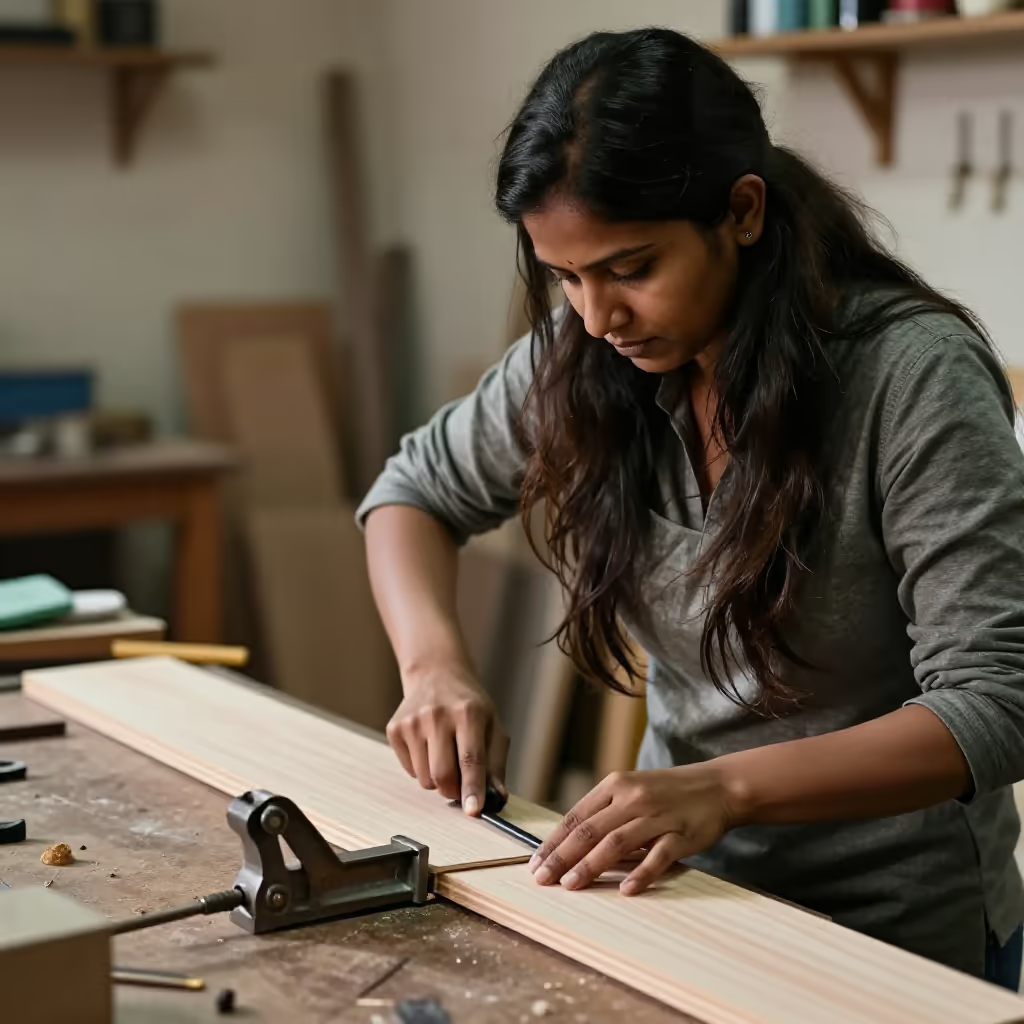
To attach something firmly in a place by wedging it in or pinning it there.
Er klemmte den Zettel unter den Scheibenwischer.
He wedged the note under the windshield wiper.

to be tight
Colloquial for a difficult situation, especially when money or resources are lacking.
Diesen Monat klemmt es finanziell ein bisschen.
Money is a bit tight this month.

to get stuck into
Colloquial for applying oneself intensively and with a lot of commitment to a task or goal.
Wenn du die Prüfung schaffen willst, musst du dich jetzt richtig dahinterklemmen.
If you want to pass the exam, you really have to get stuck into it now.

to steal
Colloquial for stealing; to secretly take something for oneself.
Angeblich hat er im Supermarkt eine Tafel Schokolade geklemmt.
Apparently he stole a bar of chocolate from the supermarket.
In this meaning, the thing that is not working is the subject of the sentence. The verb is used intransitively here, meaning without an accusative object.
Der Reißverschluss meiner Jacke klemmt schon wieder.
The zipper on my jacket is jammed again.
When you pinch or trap a body part, a dative construction is used: the person is in the dative (mir, dir), and the body part is in the accusative (den Finger). This shows whom the mishap happens to.
Ich habe mir beim Schließen des Fensters den Finger geklemmt.
I pinched my finger while closing the window.
In this meaning, 'klemmen' (to wedge/clip) always needs an accusative object (what?) and an indication of place or direction (where to?). Typical prepositions are 'unter' (under), 'hinter' (behind), 'zwischen' (between), or 'an' (on/at).
Sie klemmte sich eine Blume ins Haar.
She tucked a flower into her hair.
This meaning is usually used impersonally with 'es' as the subject and is colloquial. You can add the area in which there are problems with 'bei' or with an adverbial phrase.
Bei uns klemmt es gerade mit dem Geld.
Money is tight for us at the moment.
The expression 'sich hinter etwas klemmen' (to get stuck into something) is colloquial and a fixed unit. The 'etwas' is in the accusative and refers to the task one is making an effort on.
Er muss sich hinter seine Hausaufgaben klemmen, wenn er fertig werden will.
He has to get stuck into his homework if he wants to finish.
In the meaning 'stehlen' (to steal), 'klemmen' (to steal) is purely colloquial. You normally would not use it in a formal context or in written language.
Er hat sich im Laden einen Kaugummi geklemmt.
He swiped a piece of gum from the store.
to steal / claw
Klauen and klemmen can be used colloquially to mean secretly stealing something. Klauen is generally understood. Klemmen has this meaning only in certain regions and may therefore be misunderstood elsewhere.

Bei uns sagt man, jemand habe mir auf dem Fest den Regenschirm geklemmt.
Where I come from, people say that someone stole my umbrella at the festival.
Jemand hat mir auf dem Fest den Regenschirm geklaut.
Someone stole my umbrella at the festival.