

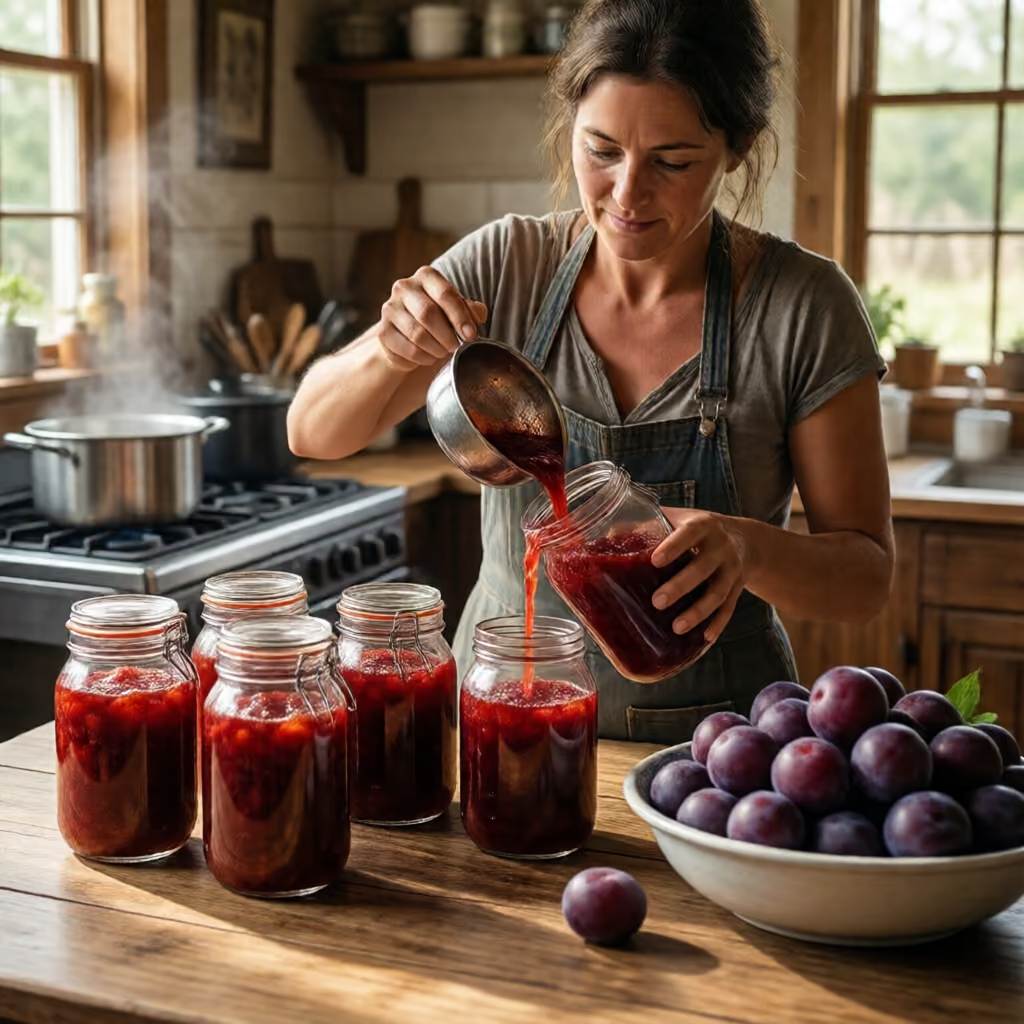
einkochen
to preserve
To preserve food by heating it and usually storing it in jars.
EXAMPLE
Im Sommer wollen wir die reifen Pflaumen einkochen.
In summer, we want to preserve the ripe plums.
to preserve / to reduce
einkochen – kochte ein – hat eingekocht
Loading your saved state.
to preserve
To preserve food by heating it and usually storing it in jars.
Im Sommer wollen wir die reifen Pflaumen einkochen.
In summer, we want to preserve the ripe plums.
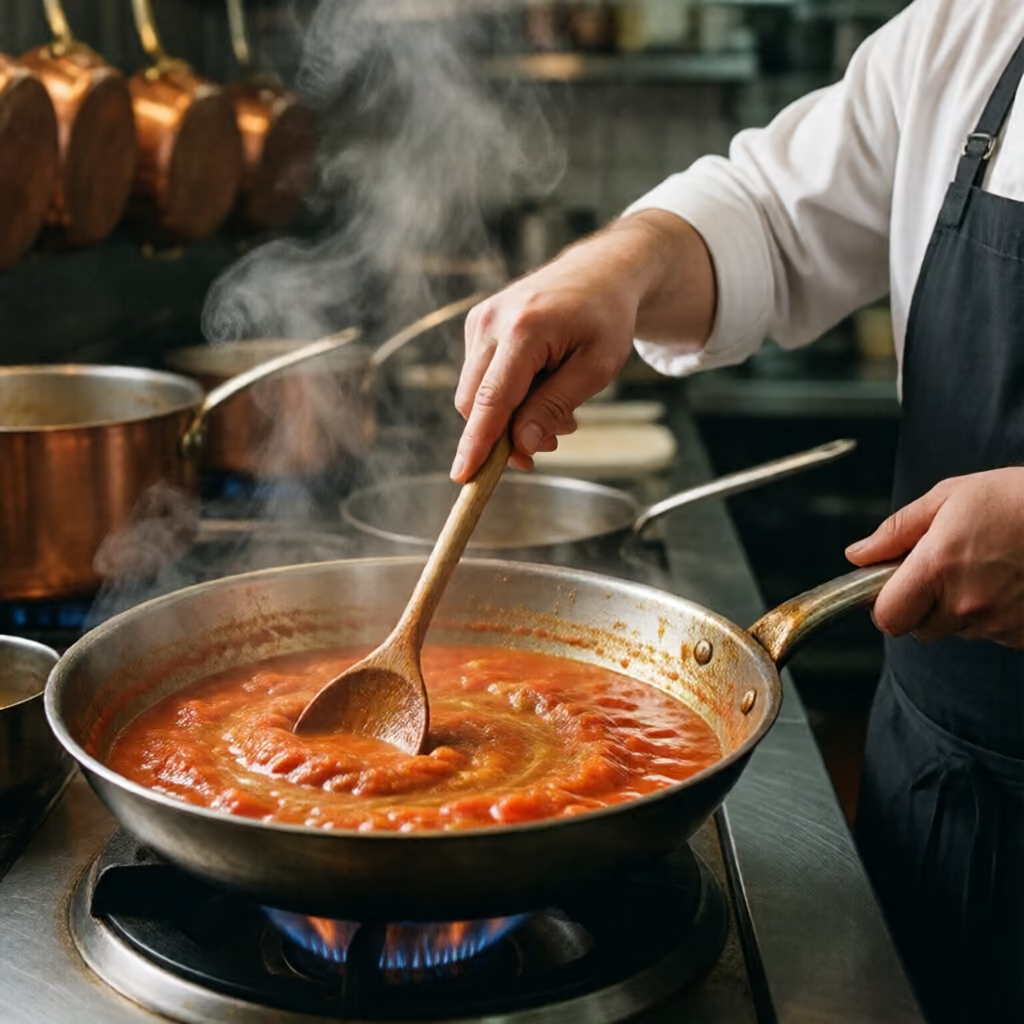
to reduce
To reduce a liquid by boiling it so that there is less of it and it usually becomes thicker or more concentrated.
Lass die Soße noch zehn Minuten einkochen.
Let the sauce reduce for another ten minutes.
| ich | koche ein |
|---|---|
| du | kochst ein |
| er/sie/es | kocht ein |
| wir | kochen ein |
| ihr | kocht ein |
| sie | kochen ein |
| ich | kochte ein |
|---|---|
| du | kochtest ein |
| er/sie/es | kochte ein |
| wir | kochten ein |
| ihr | kochtet ein |
| sie | kochten ein |
| ich | habe eingekocht |
|---|---|
| du | hast eingekocht |
| er/sie/es | hat eingekocht |
| wir | haben eingekocht |
| ihr | habt eingekocht |
| sie | haben eingekocht |
| du | koche ein! koch ein! |
|---|---|
| ihr | kocht ein! |
| Sie | kochen Sie ein! |
| ich | hatte eingekocht |
|---|---|
| du | hattest eingekocht |
| er/sie/es | hatte eingekocht |
| wir | hatten eingekocht |
| ihr | hattet eingekocht |
| sie | hatten eingekocht |
| ich | werde einkochen |
|---|---|
| du | wirst einkochen |
| er/sie/es | wird einkochen |
| wir | werden einkochen |
| ihr | werdet einkochen |
| sie | werden einkochen |
| ich | koche ein |
|---|---|
| du | kochest ein |
| er/sie/es | koche ein |
| wir | kochen ein |
| ihr | kochet ein |
| sie | kochen ein |
Used for reported speech.
| ich | kochte ein |
|---|---|
| du | kochtest ein |
| er/sie/es | kochte ein |
| wir | kochten ein |
| ihr | kochtet ein |
| sie | kochten ein |
Used for wishes and “would”.
| infinitive | einkochen |
|---|---|
| with zu | einzukochen |
| present participle | einkochend |
| past participle | eingekocht |
'Einkochen' (to preserve / to reduce) is a separable verb. In a main clause, 'ein' usually appears at the end of the sentence; in a subordinate clause, the verb stays together. In the infinitive with 'zu', 'zu' appears between the prefix and the verb.
Wir kochen heute die Birnen ein.
We're preserving the pears today.
Sie sagt, dass sie die Birnen einkocht.
She says that she is preserving the pears.
Es macht Spaß, frisches Gemüse einzukochen.
It's fun to preserve fresh vegetables.
The accompanying words often reveal the meaning: fruit, vegetables, jars, and shelf life point to preservation; sauce, stock, liquid, and concentration point to reduction during cooking.
Meine Großmutter kocht jedes Jahr viele Kirschen ein.
My grandmother preserves lots of cherries every year.
Die Köchin lässt die Brühe einkochen, bis sie kräftiger schmeckt.
The cook lets the stock reduce until it has a richer flavor.
In the meaning of preserving food, 'einkochen' (to preserve) is often used with fruit, vegetables, or jam. Storing the food in jars is also often part of this context.
Im Herbst kochen wir Äpfel und Birnen für den Winter ein.
In the fall, we preserve apples and pears for the winter.
When referring to liquids, 'einkochen' (to reduce) is often used with 'lassen' (to let): You let a sauce, stock, or liquid reduce until it is more concentrated. The verb can also be used without 'lassen'; in that case, the liquid itself is the subject.
Wir lassen den Rotwein auf die Hälfte einkochen.
We let the red wine reduce to half its volume.
Die Brühe kocht noch ein, während wir den Tisch decken.
The stock is still reducing while we set the table.