

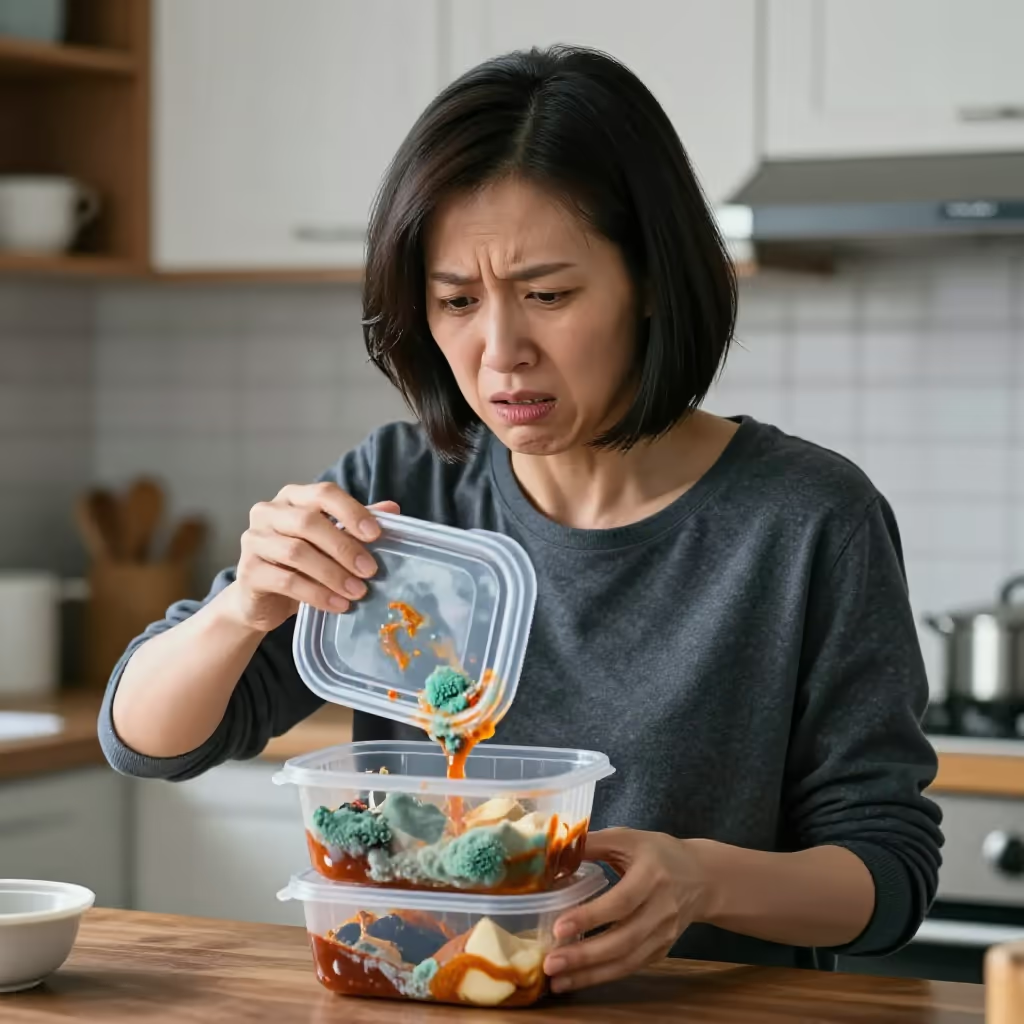
eklig
disgusting
Something that causes a strong feeling of disgust, revulsion, or nausea, for example because of its appearance, smell, or taste.
EXAMPLE
Ich finde Spinnen total eklig.
I find spiders totally disgusting.
disgusting / nasty
Loading your saved state.
disgusting
Something that causes a strong feeling of disgust, revulsion, or nausea, for example because of its appearance, smell, or taste.
Ich finde Spinnen total eklig.
I find spiders totally disgusting.

nasty
Colloquial for a person, action, or situation that is perceived as very unpleasant, mean, or unfair.
Es war wirklich eklig von ihm, dich vor allen Leuten so zu kritisieren.
It was really nasty of him to criticize you like that in front of everyone.
'Eklig' (disgusting) is the adjective related to the noun 'der Ekel' (disgust), which means 'Abscheu' (revulsion) or 'Widerwille' (aversion). Something 'Ekliges' (disgusting) therefore causes disgust.
Der Geruch in dem Zimmer war einfach nur eklig.
The smell in the room was simply disgusting.
The meaning depends strongly on the context. If the word refers to senses such as taste, smell, or sight, it means 'widerlich' (disgusting). If it refers to people's behavior, it means 'gemein' (mean) or 'unangenehm' (unpleasant).
Diese alte Milch schmeckt eklig.
This old milk tastes disgusting.
Using 'eklig' (nasty) to describe unfair or mean behavior is typical of colloquial language.
Das war eine eklige Lüge, um sich einen Vorteil zu verschaffen.
That was a nasty lie to gain an advantage.
mean / common
Gemein deliberately describes an action as malicious, unfair, or hurtful. Eklig can colloquially judge such behavior as highly repulsive and unpleasant. Gemein therefore focuses more on the nature of the behavior, while eklig focuses more on the negative reaction to it.

Sein ekliger Kommentar über Paul stieß alle anderen ab.
His nasty comment about Paul disgusted everyone else.
Sein gemeiner Kommentar sollte Paul vor allen anderen verletzen.
His mean comment was intended to hurt Paul in front of everyone else.