


ekelhaft
disgusting
Causing disgust or revulsion, usually referring to smell, taste, or appearance; repulsive.
EXAMPLE
Der Geruch von verfaultem Essen ist einfach ekelhaft.
The smell of rotten food is simply disgusting.
disgusting
Loading your saved state.
disgusting
Causing disgust or revulsion, usually referring to smell, taste, or appearance; repulsive.
Der Geruch von verfaultem Essen ist einfach ekelhaft.
The smell of rotten food is simply disgusting.

disgusting
Morally repulsive, mean, or vile in behavior.
Es ist ekelhaft, wie er über seine Kollegen spricht.
It's disgusting how he talks about his colleagues.
The adjective 'ekelhaft' (disgusting) is derived from the noun 'der Ekel' (disgust, revulsion). The ending '-haft' means 'of the nature of' or 'full of'. So something that is 'ekelhaft' causes disgust.
Ich empfinde einen großen Ekel vor Spinnen.
I feel great disgust toward spiders.
You can recognize the meaning by what is being described. If 'ekelhaft' refers to food, smells, or dirt, the literal meaning is intended. If it refers to behavior, statements, or a person, the moral meaning is intended.
Diese Suppe schmeckt ekelhaft.
This soup tastes disgusting.
'Ekelhaft' can also be used as an adverb to describe an action. In this case, it remains unchanged after the verb.
Das Badezimmer stinkt ekelhaft.
The bathroom smells disgusting.
nauseous / bad
Übel and ekelhaft can describe an unpleasant smell or taste. Übel mainly evaluates the strong unpleasant sensory impression. Ekelhaft emphasizes more clearly that this impression causes disgust or strong revulsion.
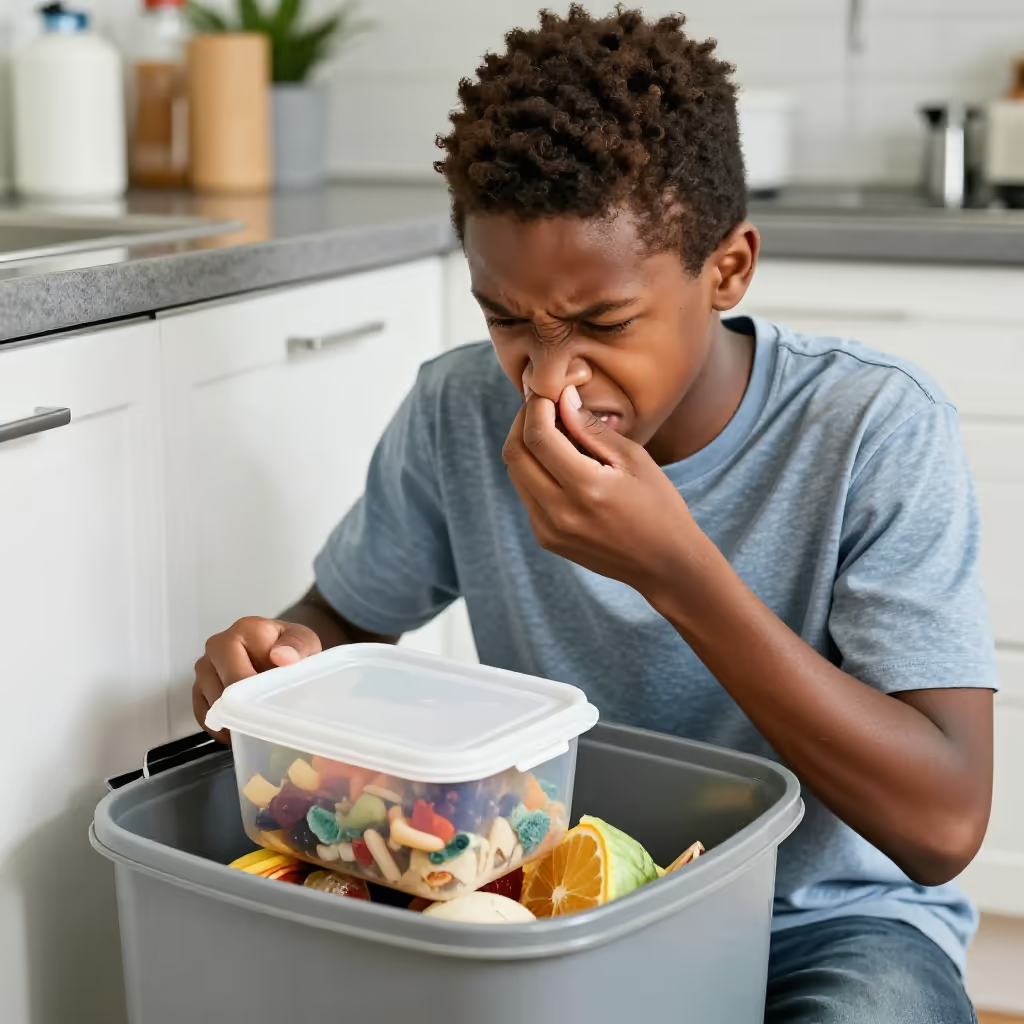
Die verdorbene Milch riecht so ekelhaft, dass ich sie sofort wegschütte.
The spoiled milk smells so disgusting that I throw it away immediately.
Die alte Milch riecht übel.
The old milk smells foul.