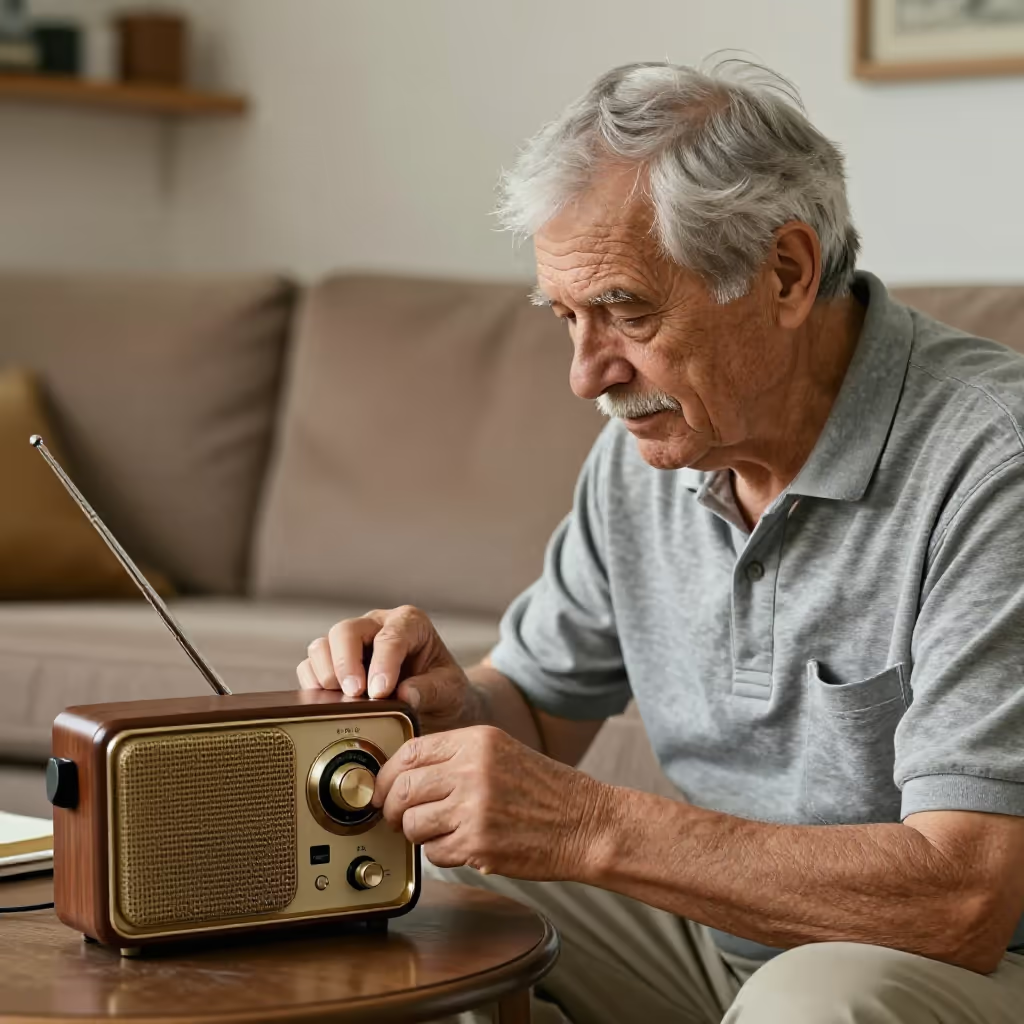
A person or institution that receives something, for example a letter, a package, a message, or a payment.
example
Der Empfänger des Pakets muss den Erhalt mit seiner Unterschrift bestätigen.
The recipient of the package must confirm receipt with their signature.
Usage tips
Word structure
'Der Empfänger' (recipient/receiver) is derived from the verb 'empfangen' (to receive). The ending '-er' forms a masculine noun that refers to the person or thing that performs the action. The recipient/receiver is therefore the one who receives something.
EXAMPLE
Wer ist der Empfänger dieser E-Mail?
Who is the recipient of this email?
Context clue
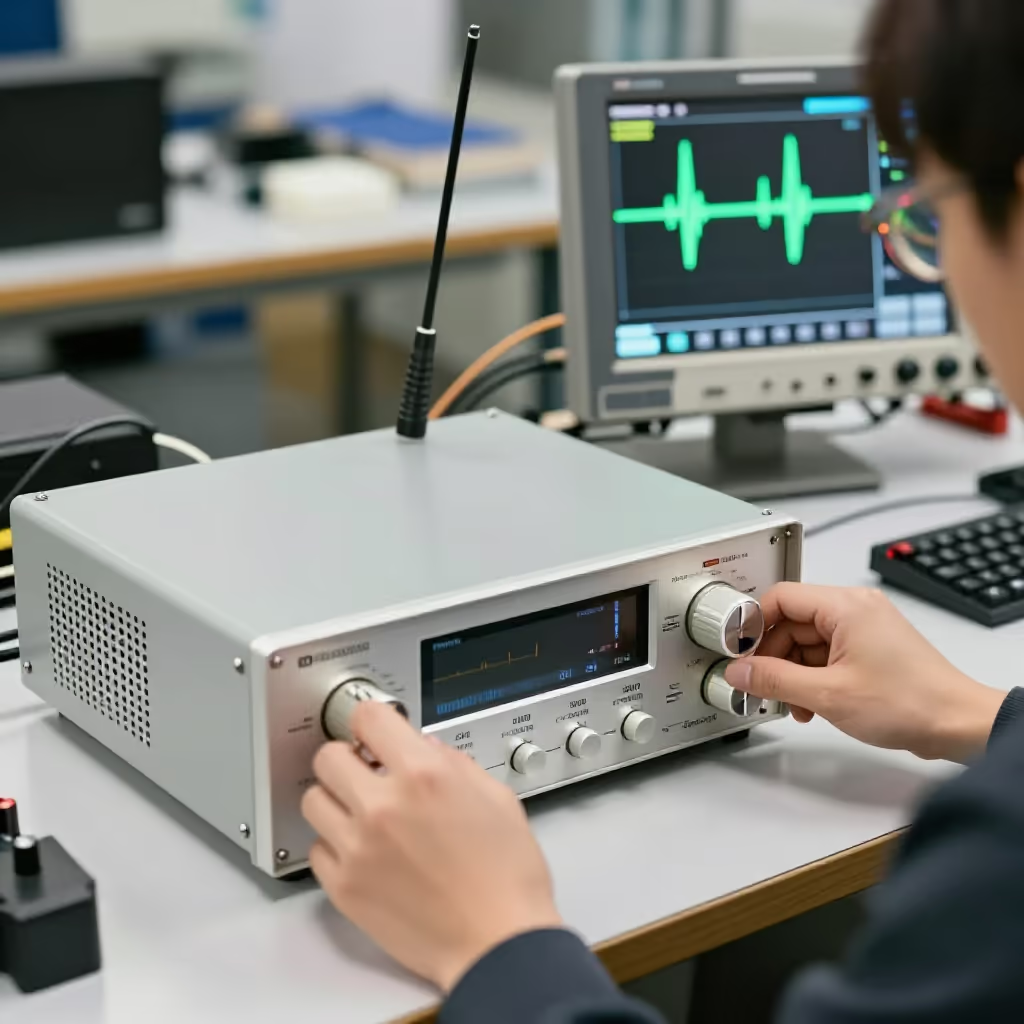
The exact meaning of 'Empfänger' (recipient/receiver) becomes clear from the context. If it is about mail or money, it refers to a person. If it is about technology and signals, it refers to a device. In a medical context, it is a person who receives an organ or blood.
EXAMPLE
Bitte schreiben Sie die Adresse des Empfängers deutlich auf den Umschlag.
Please write the recipient's address clearly on the envelope.
Typical collocations
In postal communication, the combination 'Absender und Empfänger' (sender and recipient) is a fixed pair. A common note on letters that cannot be delivered is 'Empfänger unbekannt verzogen' (recipient moved, address unknown).
EXAMPLE
Der Brief kam zurück mit dem Vermerk: „Empfänger unbekannt“.
The letter came back with the note: 'recipient unknown'.
Use in compounds
In the technical meaning, 'Empfänger' (receiver) is often the second part of a compound noun. The first part describes what is being received, for example 'Satellitenempfänger' (satellite receiver) or 'Funkempfänger' (radio receiver).
EXAMPLE
Für den Fernseher brauchen wir einen neuen Satellitenempfänger.
We need a new satellite receiver for the TV.
Compare with
antonym · confusable
Empfänger vs Sender
station / sender
'der Sender' and 'der Empfänger' belong to the same situation, but they are on different sides. 'der Sender' sends something off or transmits a signal. 'der Empfänger' receives something or picks up a signal. This can refer to letters, packages, messages, or technology. Learners may confuse the words because they are often mentioned together. A simple question helps: Who sends or transmits? That is the 'Sender'. Who gets or receives? That is the 'Empfänger'.
Empfänger
Der Empfänger der E-Mail ist heute nicht im Büro.
The recipient of the email is not in the office today.
Sender
Auf dem Paket steht der Sender oben links.
On the package, the sender is listed in the upper left.