

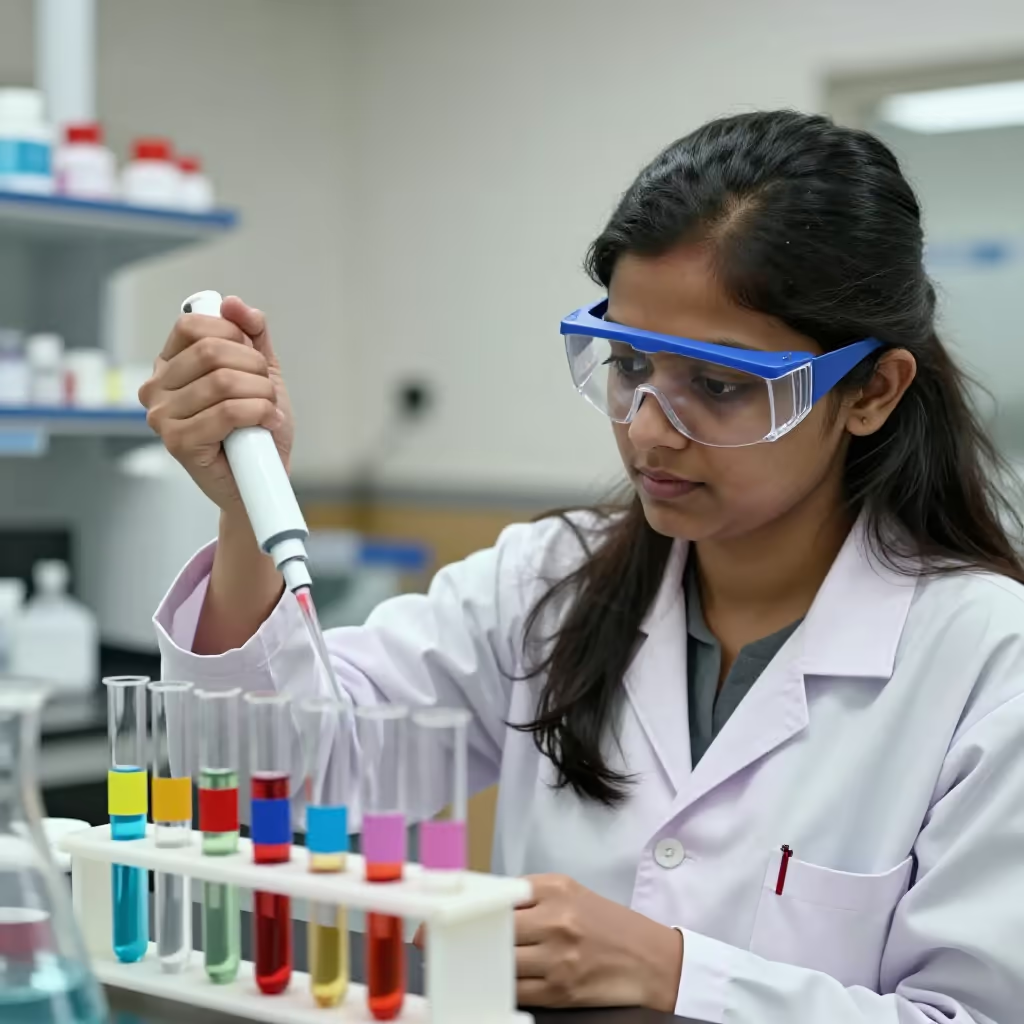
das Experiment
experiment
A scientific test under controlled conditions to test a hypothesis or make an observation.
Im Physikunterricht haben wir ein Experiment zur Schwerkraft durchgeführt.
In physics class, we conducted an experiment on gravity.

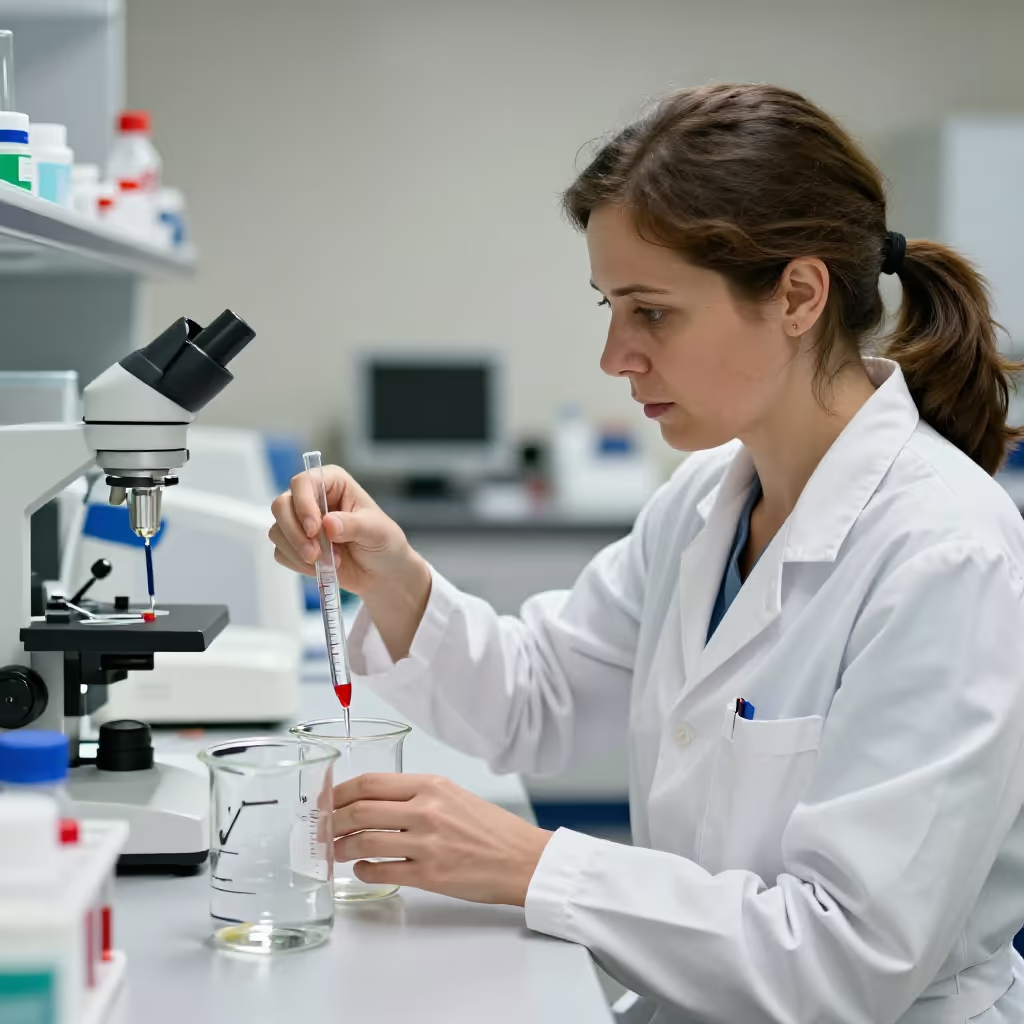
experiment
Loading your saved state.
experiment
A scientific test under controlled conditions to test a hypothesis or make an observation.
Im Physikunterricht haben wir ein Experiment zur Schwerkraft durchgeführt.
In physics class, we conducted an experiment on gravity.

The prepositions used with 'Experiment' (experiment) provide precise information. You do an experiment 'mit' (with) something (the material or topic) or 'an' (on) something/someone (often living beings, which can have an ethical dimension).
Die Schüler machten ein Experiment mit Magneten.
The students did an experiment with magnets.
The context reveals whether the scientific or the everyday meaning is intended. Words like 'Labor' (laboratory), 'Hypothese' (hypothesis), or 'wissenschaftlich' (scientific) point to research. Words like 'mutig' (bold), 'gewagt' (daring), or 'neues Rezept' (new recipe) point to an attempt in everyday life.
Für das wissenschaftliche Experiment wurde ein steriles Labor benötigt.
A sterile laboratory was needed for the scientific experiment.
In a scientific context, 'Experiment' (experiment) is often combined with the verb 'durchführen' (to conduct/carry out). A more general and less formal alternative is 'machen' (to do/make).
Die Forscher führen ein Experiment zur Zellteilung durch.
The researchers are conducting an experiment on cell division.
attempt / experiment
'der Versuch' and 'das Experiment' are very close in meaning. In science, both can mean a planned test under certain conditions. 'Experiment' often sounds a bit more technical and emphasizes the method or the new observation. 'Versuch' is more general: it can also simply mean that you try something without being sure whether it will work. Outside science, 'Experiment' can also be a bold attempt to try something new. The risk of confusion is high because a scientific 'Versuch' is often an 'Experiment'. In everyday language, 'Versuch' is often more natural; in research and the laboratory, 'Experiment' is more precise.

Im Labor beobachtet Hannes ein Experiment mit Pflanzen und Licht.
In the lab, Hannes observes an experiment with plants and light.
Felix braucht beim Backen einen zweiten Versuch, weil der erste Kuchen verbrannt ist.
Felix needs a second attempt at baking because the first cake burned.