

entflammen
to ignite
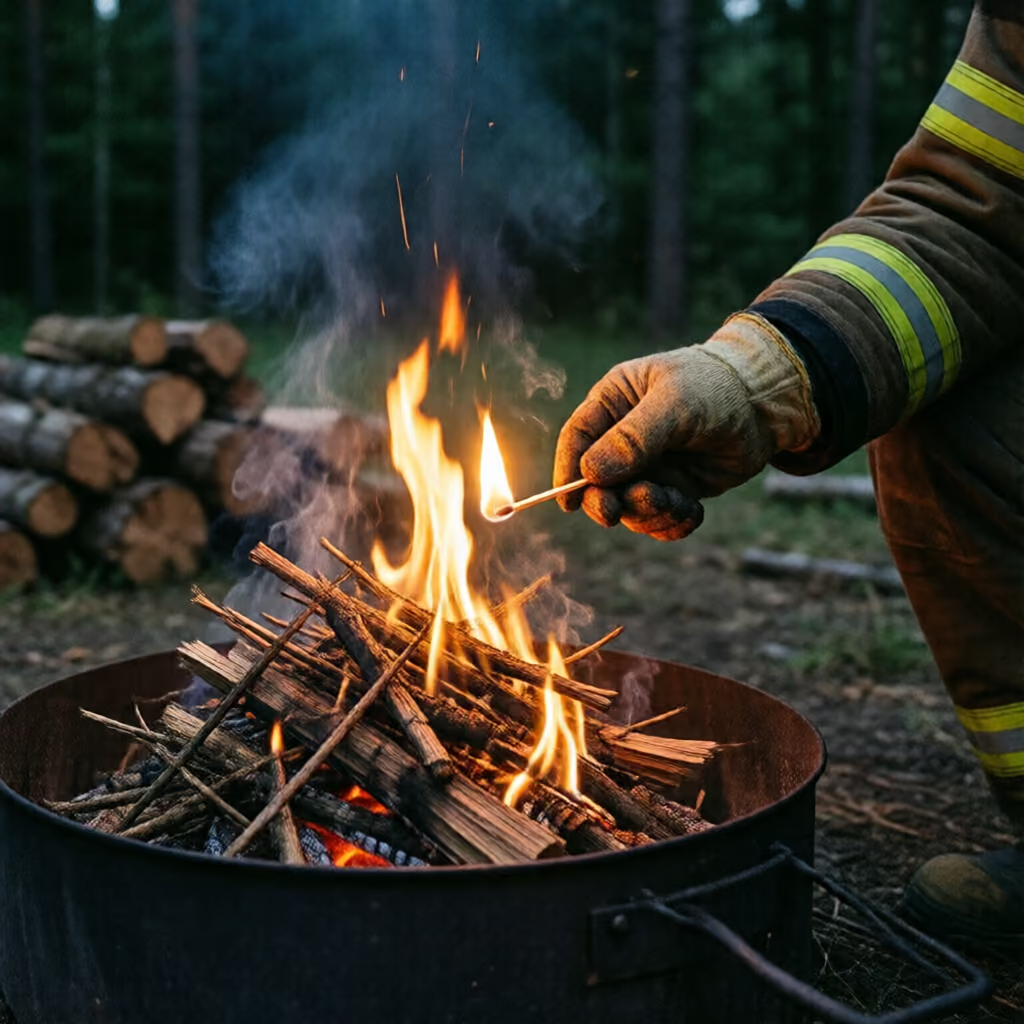
To set something alight or ignite it so that it burns.
EXAMPLE
Der Funke entflammte das trockene Holz.
The spark ignited the dry wood.
to ignite / inflame
entflammen – entflammte – hat entflammt
Loading your saved state.
to ignite
To set something alight or ignite it so that it burns.
Der Funke entflammte das trockene Holz.
The spark ignited the dry wood.

to inflame
To awaken a strong feeling in someone, especially enthusiasm or passion.
Die Rede entflammte die Zuhörer für die gemeinsame Sache.
The speech inflamed the audience's enthusiasm for the cause they shared.

to catch fire
To begin to burn or catch fire.
Das Benzin entflammte sofort.
The gasoline caught fire immediately.

to become passionate about someone or something
To develop enthusiasm or passion for someone or something.
Schon nach dem ersten Konzert war sie für die Musik des jungen Komponisten entflammt.
After the very first concert, she became passionate about the young composer's music.

to flare up
To break out suddenly and violently, especially referring to an argument, a fight, or a strong feeling.
Nach der Abstimmung entflammte im Parlament ein heftiger Streit.
A heated argument flared up in parliament after the vote.
| ich | entflamme |
|---|---|
| du | entflammst |
| er/sie/es | entflammt |
| wir | entflammen |
| ihr | entflammt |
| sie | entflammen |
| ich | entflammte |
|---|---|
| du | entflammtest |
| er/sie/es | entflammte |
| wir | entflammten |
| ihr | entflammtet |
| sie | entflammten |
| ich | habe entflammt bin entflammt |
|---|---|
| du | hast entflammt bist entflammt |
| er/sie/es | hat entflammt ist entflammt |
| wir | haben entflammt sind entflammt |
| ihr | habt entflammt seid entflammt |
| sie | haben entflammt sind entflammt |
| du | entflamm! entflamme! |
|---|---|
| ihr | entflammt! |
| Sie | entflammen Sie! |
| ich | hatte entflammt war entflammt |
|---|---|
| du | hattest entflammt warst entflammt |
| er/sie/es | hatte entflammt war entflammt |
| wir | hatten entflammt waren entflammt |
| ihr | hattet entflammt wart entflammt |
| sie | hatten entflammt waren entflammt |
| ich | werde entflammen |
|---|---|
| du | wirst entflammen |
| er/sie/es | wird entflammen |
| wir | werden entflammen |
| ihr | werdet entflammen |
| sie | werden entflammen |
| ich | entflamme |
|---|---|
| du | entflammest |
| er/sie/es | entflamme |
| wir | entflammen |
| ihr | entflammet |
| sie | entflammen |
Used for reported speech.
| ich | entflammte |
|---|---|
| du | entflammtest |
| er/sie/es | entflammte |
| wir | entflammten |
| ihr | entflammtet |
| sie | entflammten |
Used for wishes and “would”.
| infinitive | entflammen |
|---|---|
| with zu | zu entflammen |
| present participle | entflammend |
| past participle | entflammt |
'Entflammen' (to ignite / inflame) is made up of 'ent-' and 'flammen' (to flame). The element 'flammen' is reminiscent of 'Flamme' (flame) and makes the verb's fire-related meanings easier to recognize.
Schon ein kleiner Funke kann trockenes Laub entflammen.
Even a small spark can ignite dry leaves.
'Entflammen' (to ignite / inflame) is an inseparable verb. The prefix 'ent-' remains firmly attached to the verb in main clauses, subordinate clauses, and the infinitive with 'zu'.
Ihre Begeisterung entflammte schnell auch die anderen.
Her enthusiasm quickly fired up the others as well.
Die Feuerwehr kam, weil das Dach zu entflammen drohte.
The fire department came because the roof threatened to catch fire.
In the meaning 'anzünden' (to set alight), what begins to burn usually appears as an accusative object. Common subjects are sparks, flames, or other sources of ignition.
Eine umgefallene Kerze entflammte den Vorhang.
A fallen candle ignited the curtain.
In its figurative meaning, 'entflammen' (to inflame) is often used with 'Begeisterung' (enthusiasm), 'Leidenschaft' (passion), or 'Eifer' (zeal). A person can also be 'für eine Sache entflammt' (inflamed with enthusiasm for a cause).
Der Film entflammte bei den Jugendlichen große Begeisterung für Astronomie.
The film sparked great enthusiasm for astronomy among the teenagers.
When something itself begins to burn, 'entflammen' (to catch fire) can be used without an accusative object. The flammable material or substance is then the subject of the sentence.
Die trockene Grasfläche entflammte nach dem Blitzeinschlag sofort.
The dry grass caught fire immediately after the lightning strike.
In this meaning, 'entflammen' (to become passionate) is used with 'für' (for) and the accusative, usually without a reflexive pronoun. The form 'für jemanden oder etwas entflammt sein' (to be passionate about someone or something) is common; it describes strong enthusiasm or romantic infatuation.
Er war sofort für die neue Nachbarin entflammt.
He immediately became infatuated with the new neighbor.