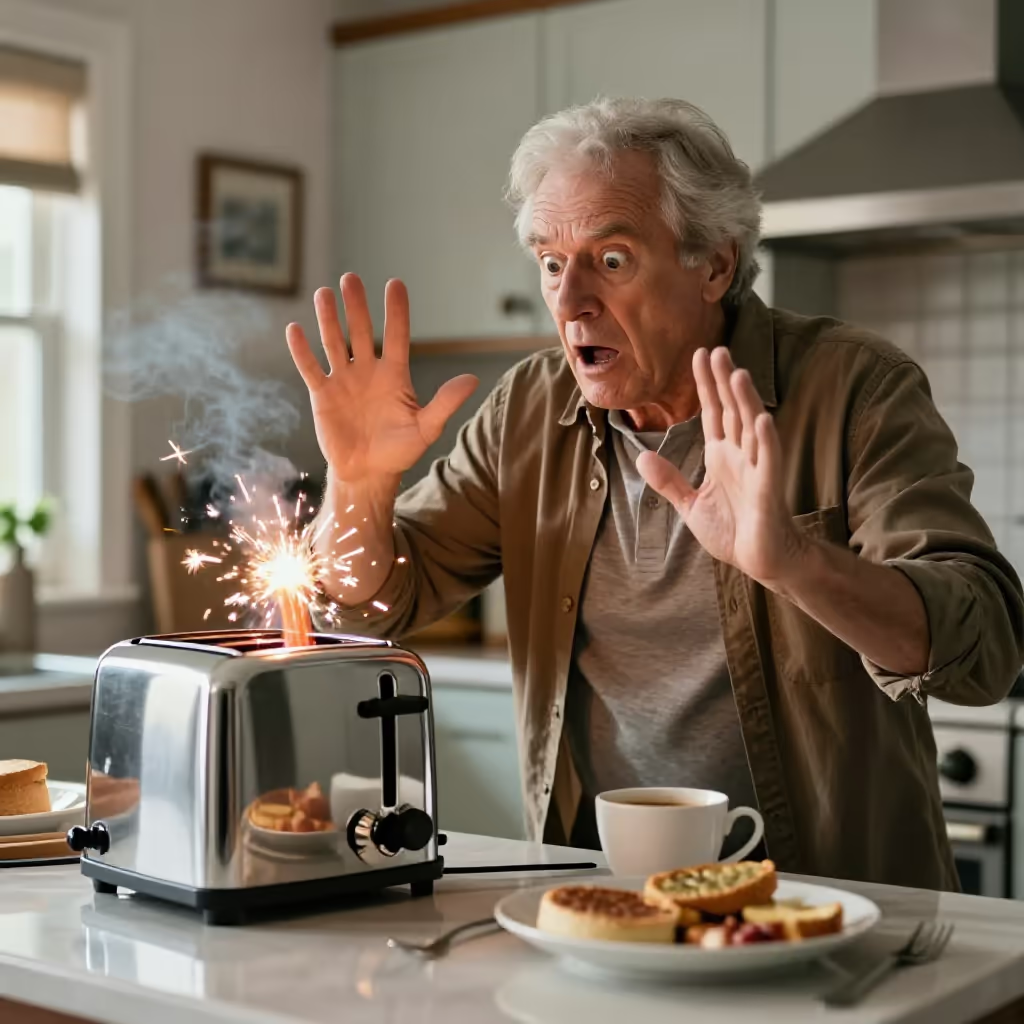
To get a sudden fright; to become afraid because of something unexpected or threatening. This verb is intransitive and is conjugated irregularly (erschrecken, erschrickt, erschrak, ist erschrocken).
example
Ich bin furchtbar erschrocken, als du plötzlich hinter der Tür standest.
I was terribly startled when you suddenly stood behind the door.

Usage tips
Two versions
This verb has two variants that must not be confused. A weak, transitive form means 'jemanden erschrecken' (to frighten someone) with 'haben' (to have). A strong, intransitive form means 'selbst erschrecken' (to be startled oneself) with 'sein' (to be).
EXAMPLE
Der laute Knall hat mich erschreckt.
The loud bang frightened me.
Being startled oneself
When a person gets a fright themselves, the verb is strong and intransitive. The perfect tense is always formed with 'sein' (to be). The cause of the fright often appears with the preposition 'vor' + dative.
EXAMPLE
Sie erschrickt bei jedem lauten Geräusch.
She is startled by every loud noise.
Frightening someone
When one person frightens another person, the verb is weak and transitive. It needs an accusative object (wen? — whom?) and the perfect tense is formed with 'haben' (to have).
EXAMPLE
Hör auf, deine kleine Schwester zu erschrecken!
Stop frightening your little sister!
Compare with
near_synonym
erschrecken vs fahren
to drive / ride
'fahren' and 'erschrecken' are similar here only in the fixed expression 'jemandem in die Glieder fahren' (to give someone a sudden shock). This expression describes a sudden, strong fright. 'erschrecken' is the normal verb for this: someone is startled, or something frightens someone. The expression with 'fahren' sounds more figurative and somewhat stronger, because the fright feels like a jolt through the body. For most everyday situations, 'erschrecken' is simpler and more natural.
erschrecken
Sie erschrickt jedes Mal, wenn das Telefon mitten in der Nacht klingelt.
She is startled every time the phone rings in the middle of the night.
fahren
Als die Tür plötzlich zuschlug, fuhr der Schreck allen in die Glieder.
When the door suddenly slammed shut, everyone got a shock.