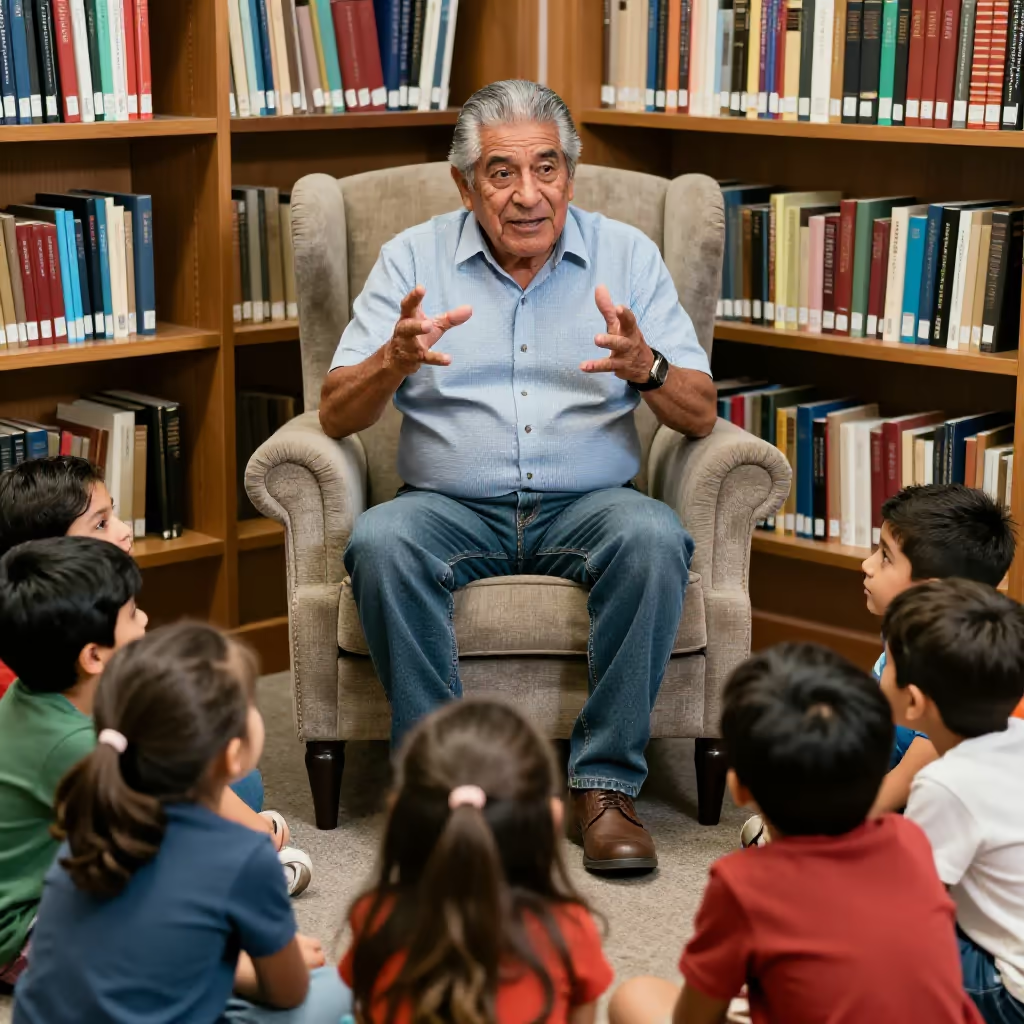
A male person who recounts a story or event orally or in writing.
example
Der Großvater war ein begnadeter Erzähler, dessen Geschichten die ganze Familie fesselten.
The grandfather was a gifted storyteller whose stories captivated the whole family.

Usage tips
Word family
'Der Erzähler' (the narrator/storyteller) is derived directly from the verb 'erzählen' (to tell). The ending '-er' turns the activity (telling) into the person who performs it.
EXAMPLE
Er kann sehr gut Witze erzählen.
He can tell jokes very well.
Context clue
The context shows whether a real person or a literary figure is meant. If it involves a novel or an analysis, the literary entity is usually meant.
EXAMPLE
Der Erzähler der Gutenachtgeschichte hatte eine sehr beruhigende Stimme.
The storyteller of the bedtime story had a very soothing voice.
Literary terminology
In literary analysis, 'Erzähler' (narrator) is an important technical term. Different types are distinguished, for example the 'Ich-Erzähler' (first-person narrator), who is part of the story himself, or the 'allwissender Erzähler' (omniscient narrator), who knows everything.
EXAMPLE
Der Ich-Erzähler beschreibt die Ereignisse aus seiner sehr persönlichen Sicht.
The first-person narrator describes the events from his very personal point of view.
Compare with
confusable
Erzähler vs Autor
author
'der Autor' and 'der Erzähler' can both have to do with a story, but they are not the same thing. The author is the real person who wrote the text. The narrator is the voice that tells the story; in a literary text, this can be a fictional character or perspective. In addition, 'Erzähler' can also mean a person who tells a story orally. Learners often confuse the words because both appear in books. Remember: the author writes the work, while the narrator tells the story within the work.
Erzähler
Im Roman weiß der Erzähler mehr als die anderen Figuren.
In the novel, the narrator knows more than the other characters.
Autor
Die Autorin hat den Roman während einer langen Reise geschrieben.