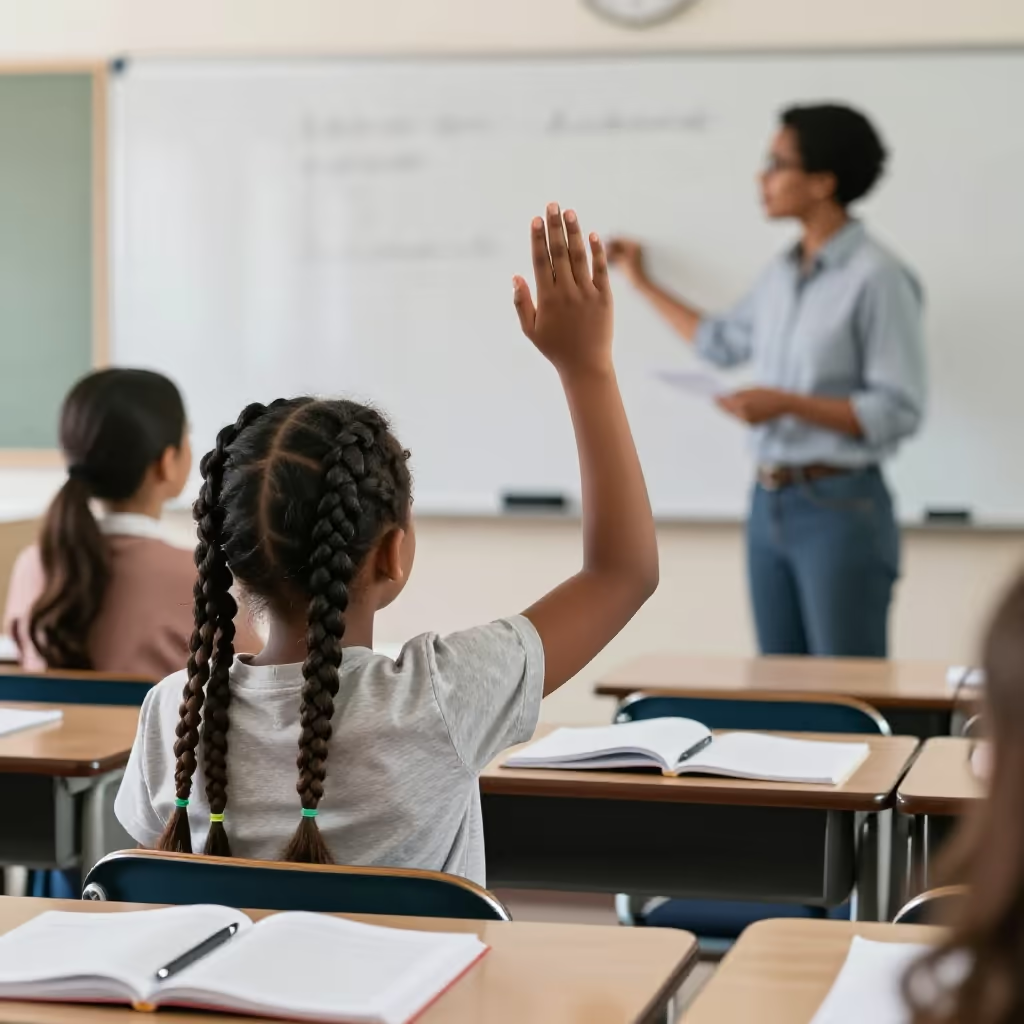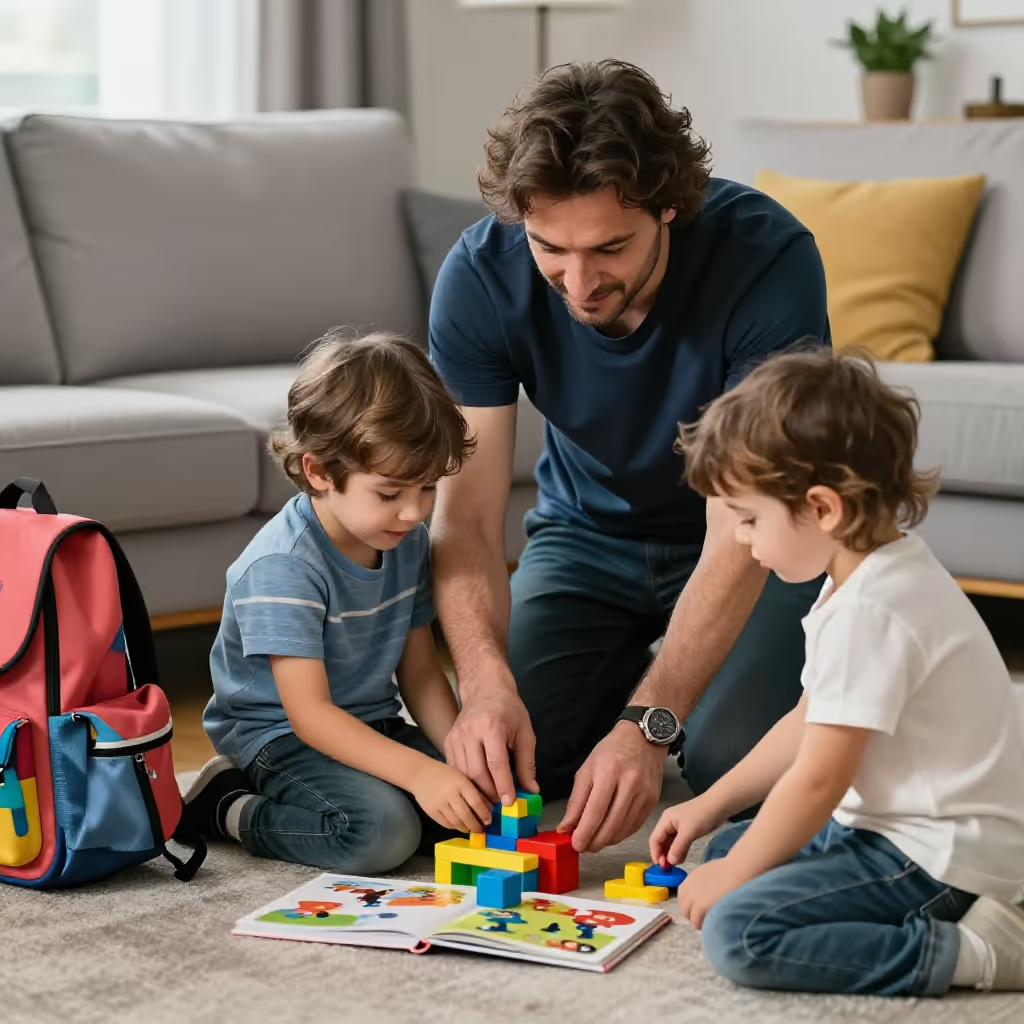
The process by which children and young people are educated and supported in their development, especially through the teaching of values, knowledge, and social behavior.
example
Die Erziehung von Kindern ist eine verantwortungsvolle Aufgabe für Eltern und Gesellschaft.
The upbringing of children is a responsible task for parents and society.

Usage tips
Word structure
'Die Erziehung' (upbringing/education) comes from the verb 'erziehen' (to raise/educate). This is made up of 'er-' and 'ziehen' (to pull). The literal idea is to 'pull someone up' or raise them, meaning to support them in their development.
EXAMPLE
Es ist nicht immer einfach, Kinder zu erziehen.
It is not always easy to raise children.
Correct preposition
When naming the goal or value of the upbringing, German uses the preposition 'zu' with the dative. The corresponding verb is 'jemanden zu etwas erziehen' (to raise/educate someone to be/do something).
EXAMPLE
Die Erziehung zur Selbstständigkeit ist den Eltern sehr wichtig.
Education toward independence is very important to the parents.
Typical collocations
When referring to the process of upbringing or education, the word is often combined with adjectives that specify the area. Common examples are 'elterliche Erziehung' (parental upbringing), 'schulische Erziehung' (school education), or 'musikalische Erziehung' (musical education).
EXAMPLE
Die musikalische Erziehung fördert die Kreativität von Kindern.
Musical education promotes children's creativity.
Fixed expressions
To describe the result of a person's upbringing, fixed expressions such as 'eine gute Erziehung haben' (to have a good upbringing) or, somewhat more formally, 'eine gute Erziehung genossen haben' (to have enjoyed/received a good upbringing) are used. The opposite is 'eine schlechte Erziehung haben' (to have a bad upbringing).
EXAMPLE
Man merkt an seinem Verhalten, dass er eine gute Erziehung genossen hat.
You can tell from his behavior that he had a good upbringing.
Compare with
near_synonym · confusable
Erziehung vs Ausbildung
training / education
'die Ausbildung' and 'die Erziehung' both have to do with learning and development. 'Ausbildung' mainly means learning for a profession, or the specialist knowledge and skills a person has. 'Erziehung' is more about how children and young people learn values, rules, and behavior. So it is more strongly connected with manners, responsibility, and how to deal with others. The words can be confused because in both cases someone is learning something. For professions and skills, 'Ausbildung' is usually the right choice; for children, values, and behavior, 'Erziehung' is more appropriate.
Erziehung
In der Erziehung ihrer Kinder achten die Eltern auf Respekt und Geduld.
In raising their children, the parents pay attention to respect and patience.
Ausbildung
Mein Nachbar macht eine Ausbildung zum Elektriker.
My neighbor is doing vocational training to become an electrician.