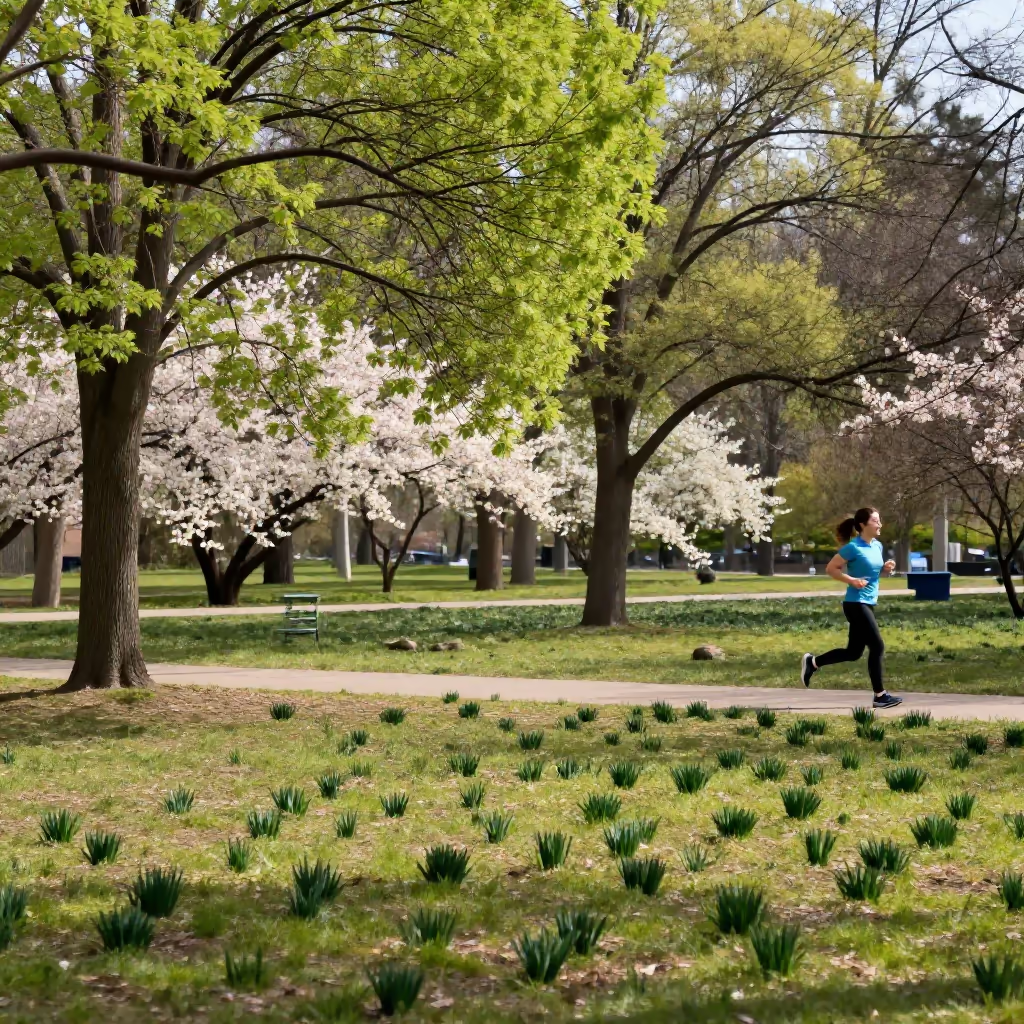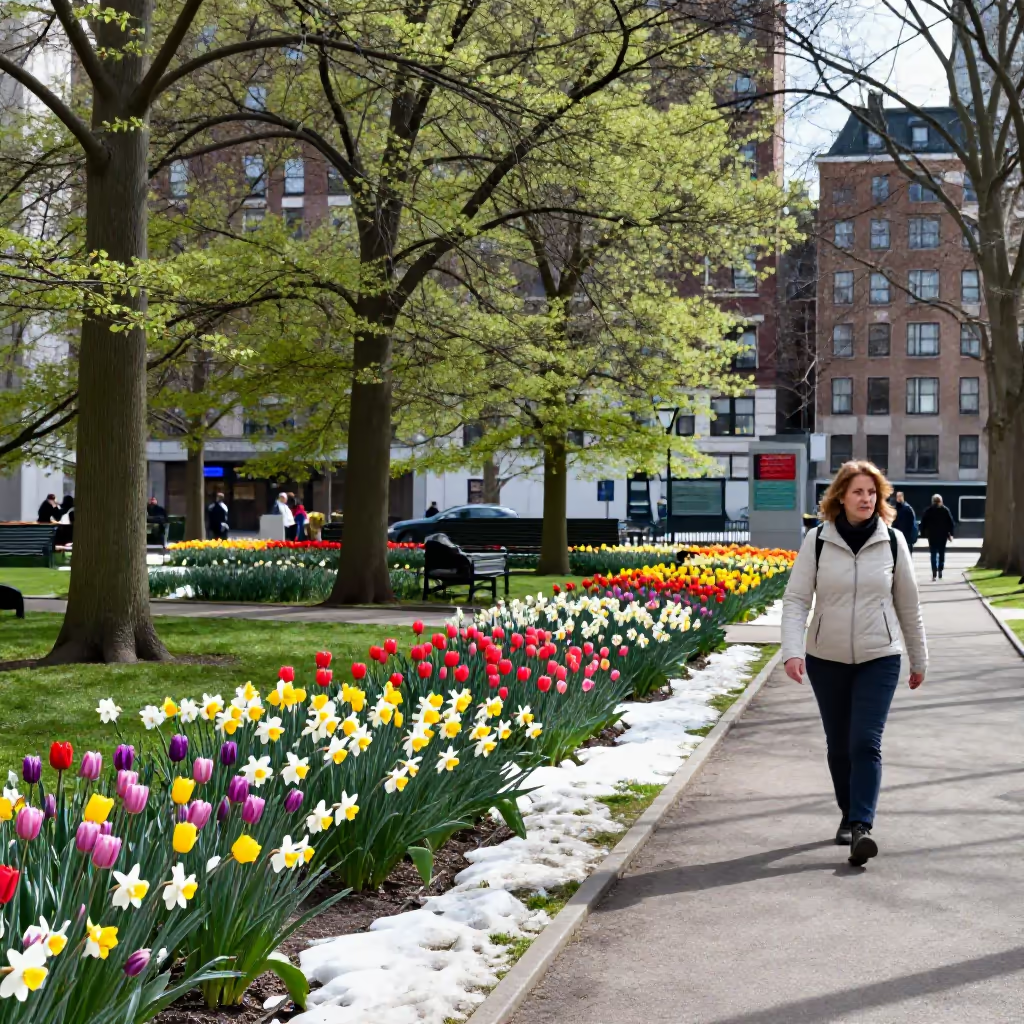
The season between winter and summer, when nature awakens, temperatures rise, and plants begin to grow and bloom.
example
Im Frühling werden die Tage wieder länger und die Vögel beginnen zu zwitschern.
In spring, the days get longer again and the birds begin to chirp.

Usage tips
Word structure
The word 'Frühling' (spring) is related to the adjective 'früh' (early). It refers to the 'early' part of the year, when nature awakens again. The ending '-ling' is also found in other nouns such as 'Lehrling' (apprentice).
EXAMPLE
Dieses Jahr hat der Frühling sehr früh begonnen.
This year, spring began very early.
Correct preposition
As with all seasons, German uses the preposition 'in' with the dative for spring, so 'im Frühling' (in spring).
EXAMPLE
Im Frühling machen wir gerne lange Spaziergänge im Park.
In spring, we like to take long walks in the park.
Typical collocations
Common words combined with 'Frühling' (spring) are 'Frühlingsanfang' (beginning of spring), 'Frühlingstag' (spring day), or 'Frühlingsgefühle' (spring fever). Typical verbs are 'der Frühling kommt' (spring is coming), 'beginnt' (begins), or 'erwacht' (awakens).
EXAMPLE
Wenn die ersten warmen Sonnenstrahlen kommen, bekommen viele Menschen Frühlingsgefühle.
When the first warm rays of sunshine arrive, many people get spring fever.
Figurative meaning
The figurative meaning is poetic and is often signaled by a genitive construction. The phrase 'der Frühling des Lebens' (the spring of life) is a well-known example referring to youth.
EXAMPLE
Die 1920er Jahre gelten als der Frühling der modernen Kunst.
The 1920s are considered the spring of modern art.
Compare with
antonym
Frühling vs Winter
winter
'der Winter' and 'der Frühling' stand in clear contrast as seasons. Winter is the cold period after autumn, often associated with darkness, snow, or rest in nature. Spring comes afterward: it gets warmer, plants grow again, and many things begin anew. They also form a contrast in a figurative sense. 'Winter' can stand for stagnation or old age, while 'Frühling' is more associated with beginnings, life, and new strength.
Frühling
Im Frühling sitzen die Nachbarn wieder draußen im Garten.
In spring, the neighbors sit outside in the garden again.
Winter
Im Winter fährt Lisa morgens im Dunkeln zur Arbeit.
In winter, Lisa drives to work in the dark in the morning.