


ewig
ages
Used colloquially as an exaggeration to describe a period of time that feels very long.
EXAMPLE
Ich warte schon ewig auf eine Antwort von dir!
I've been waiting ages for an answer from you!
eternal / ages
Loading your saved state.
ages
Used colloquially as an exaggeration to describe a period of time that feels very long.
Ich warte schon ewig auf eine Antwort von dir!
I've been waiting ages for an answer from you!
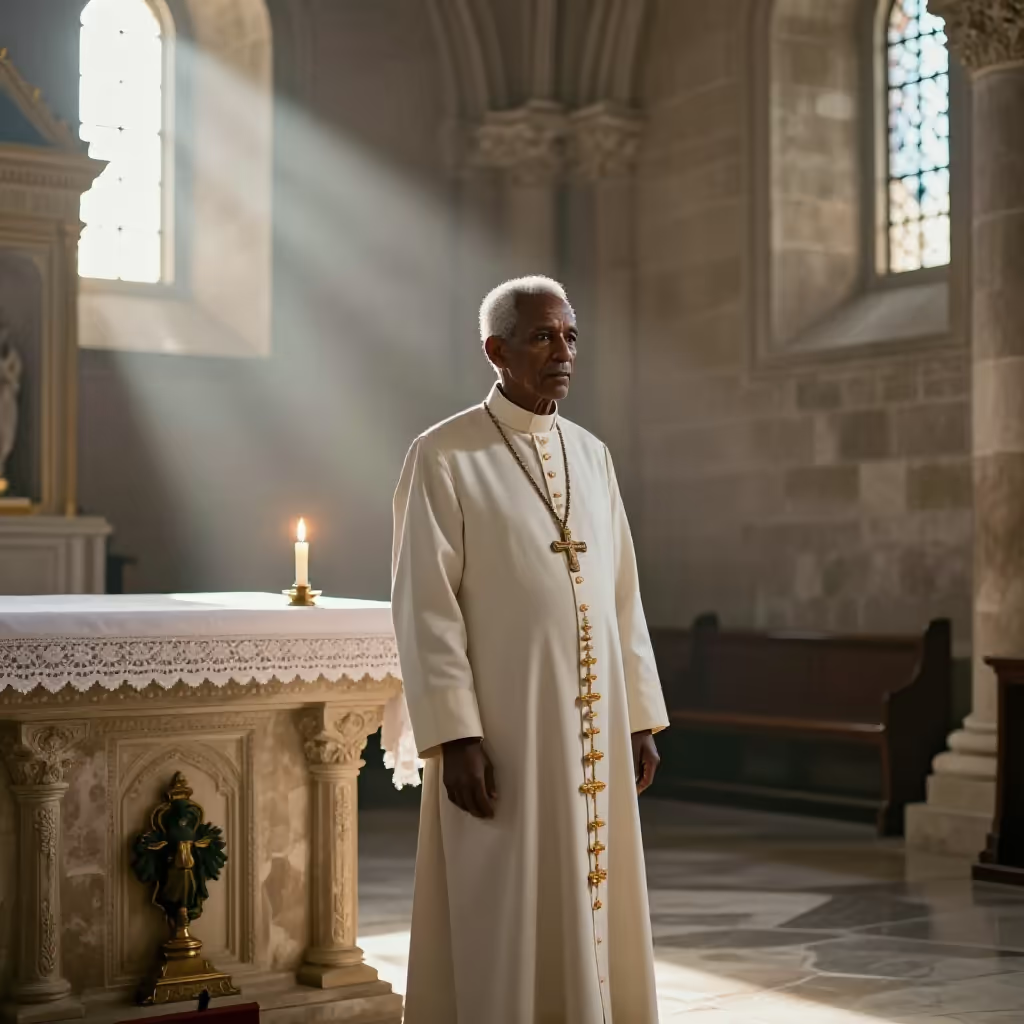
eternal
Means without an end in time, lasting forever. Often used in a philosophical or religious context.
Manche Religionen versprechen ihren Anhängern das ewige Leben.
Some religions promise their followers eternal life.

perpetual
Describes a quality or state that is perceived as constant and unchanging.
Er ist der ewige Student und beendet sein Studium einfach nicht.
He is the perpetual student and simply never finishes his degree.
'Ewig' (eternal / for ages) can stand not only as an adjective before a noun, but also as an adverb that modifies a verb. It then means 'a very long time'.
Wir haben ewig nicht mehr miteinander gesprochen.
We haven't spoken to each other in ages.
In everyday language, 'ewig' (for ages) is often used as an exaggeration (hyperbole) for a long but limited period of time. It usually expresses impatience or surprise and is often combined with 'schon' (already).
Der Bus braucht heute wieder ewig!
The bus is taking ages again today!
The literal meaning 'für immer' (forever) is mostly used in philosophical, poetic, or religious contexts. Typical combinations are 'ewige Liebe' (eternal love), 'ewiger Frieden' (eternal peace), or 'ewige Dunkelheit' (eternal darkness).
Sie schlossen einen Bund für die ewige Freundschaft.
They formed a bond of eternal friendship.
In this meaning, 'ewig' (perpetual) describes an unchanging quality of a person, often seen as slightly negative or ironic. It is then placed directly before a noun that describes the person.
Er ist der ewige Optimist, selbst wenn alles schiefgeht.
He is the perpetual optimist, even when everything goes wrong.
permanent / lasting
Ewig refers to a duration without an end in time. Dauerhaft means that something remains in place for a long time and stably, rather than being merely temporary; it does not rule out an eventual end. Ewig fits an unlimited duration, while dauerhaft fits a long-term practical effect.

Im Märchen soll der Zauber ewig wirken.
In the fairy tale, the spell is supposed to last forever.
Nach der Reparatur soll die Abdichtung dauerhaft wirken.
After the repair, the seal is supposed to remain effective for a long time.