

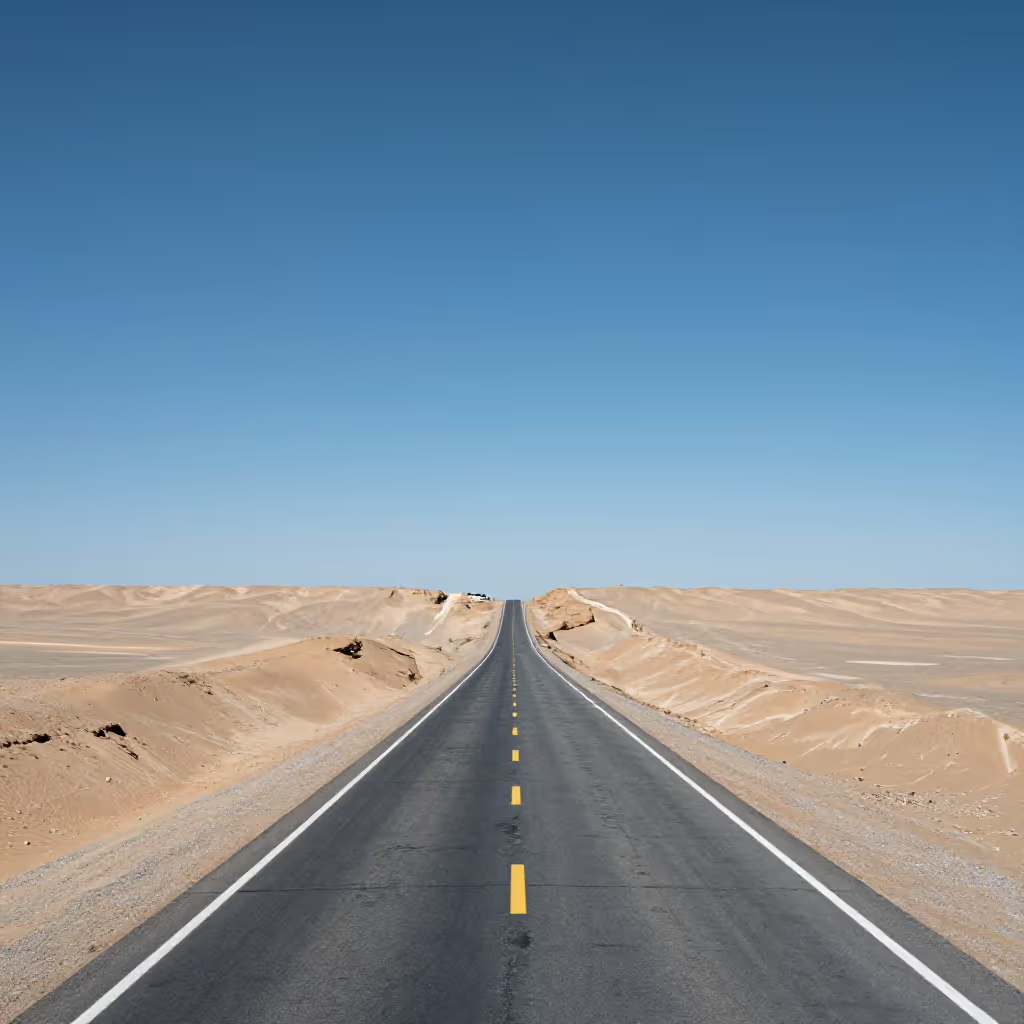
endlos
endless
Without a spatial or temporal end; infinite.
EXAMPLE
Der Blick über das weite, endlose Meer war atemberaubend.
The view over the wide, endless sea was breathtaking.
endless
Loading your saved state.
endless
Without a spatial or temporal end; infinite.
Der Blick über das weite, endlose Meer war atemberaubend.
The view over the wide, endless sea was breathtaking.

endless
Figuratively, used for something that lasts a very long time or feels that way, often with a negative connotation of boredom or effort.
Die Besprechung zog sich endlos in die Länge, ohne zu einem Ergebnis zu kommen.
The meeting dragged on endlessly without reaching a result.
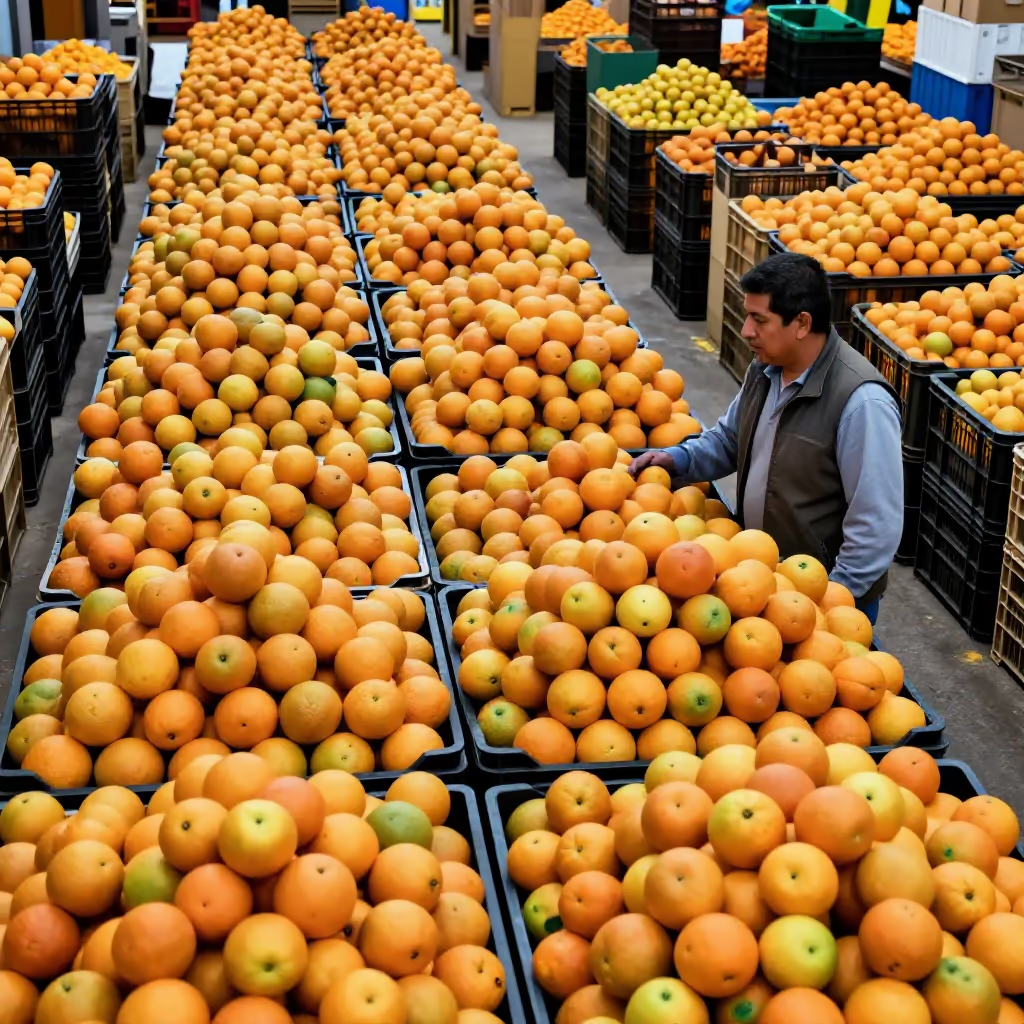
endless
Present in a very large, hardly countable number or amount.
Im Internet gibt es endlose Möglichkeiten, sich zu informieren und zu lernen.
On the internet, there are endless opportunities to find information and learn.
The word is simply built from 'Ende' (end) and the suffix '-los' (-less), which means 'without'. 'Endlos' (endless) therefore literally means 'without end'.
Die Wüste schien eine endlose Weite aus Sand zu sein.
The desert seemed to be an endless expanse of sand.
'Endlos' (endless) can stand as an adjective before a noun or as an adverb describing a verb. As an adverb, it often expresses a subjective feeling about a long duration.
Wir standen in einer endlosen Schlange vor dem Eingang.
We stood in an endless line in front of the entrance.
In its literal meaning, 'endlos' (endless) is often used to describe large, unlimited spaces or landscapes, such as 'der endlose Himmel' (the endless sky), 'das endlose Meer' (the endless sea), or 'endlose Felder' (endless fields).
Die Straße führte endlos geradeaus durch die Landschaft.
The road led endlessly straight ahead through the landscape.
When 'endlos' (endless) describes a duration, it often has a negative connotation of impatience or boredom. It is frequently found with words such as 'Diskussion' (discussion), 'Warten' (waiting), 'Suche' (search), or 'Monolog' (monologue).
Seine endlose Geschichte über den letzten Urlaub hat alle gelangweilt.
His endless story about the last vacation bored everyone.
In the meaning 'very many', 'endlos' (endless) is often combined with abstract nouns that express a large amount or variety, e.g. 'endlose Möglichkeiten' (endless possibilities), 'eine endlose Liste' (an endless list), or 'endlose Variationen' (endless variations).
Das neue Software-Update bietet endlose neue Funktionen.
The new software update offers endless new features.
eternal / ages
In colloquial use, ewig and endlos can both express that something feels very long. Ewig mainly exaggerates the duration. Endlos emphasizes more strongly that no conclusion is in sight and often sounds negative or tiresome.

Die Sitzung wirkte endlos, weil noch immer kein Abschluss absehbar war.
The meeting seemed endless because there was still no sign of a conclusion.
Wir warteten ewig auf das Ende der Sitzung.
We waited ages for the meeting to end.