


falsch
wrong
Not corresponding to the truth, a norm, or a standard; incorrect.
EXAMPLE
Die Antwort in der Prüfung war leider falsch.
Unfortunately, the answer on the exam was wrong.
wrong / false
Loading your saved state.
wrong
Not corresponding to the truth, a norm, or a standard; incorrect.
Die Antwort in der Prüfung war leider falsch.
Unfortunately, the answer on the exam was wrong.

wrong
Unsuitable or inappropriate for a particular situation or purpose.
Er trug die falsche Kleidung für die feierliche Veranstaltung.
He wore the wrong clothes for the formal event.

false
Intended to deceive or defraud; insincere or hypocritical.
Ich habe das Gefühl, er ist ein falscher Freund.
I have the feeling that he is a false friend.
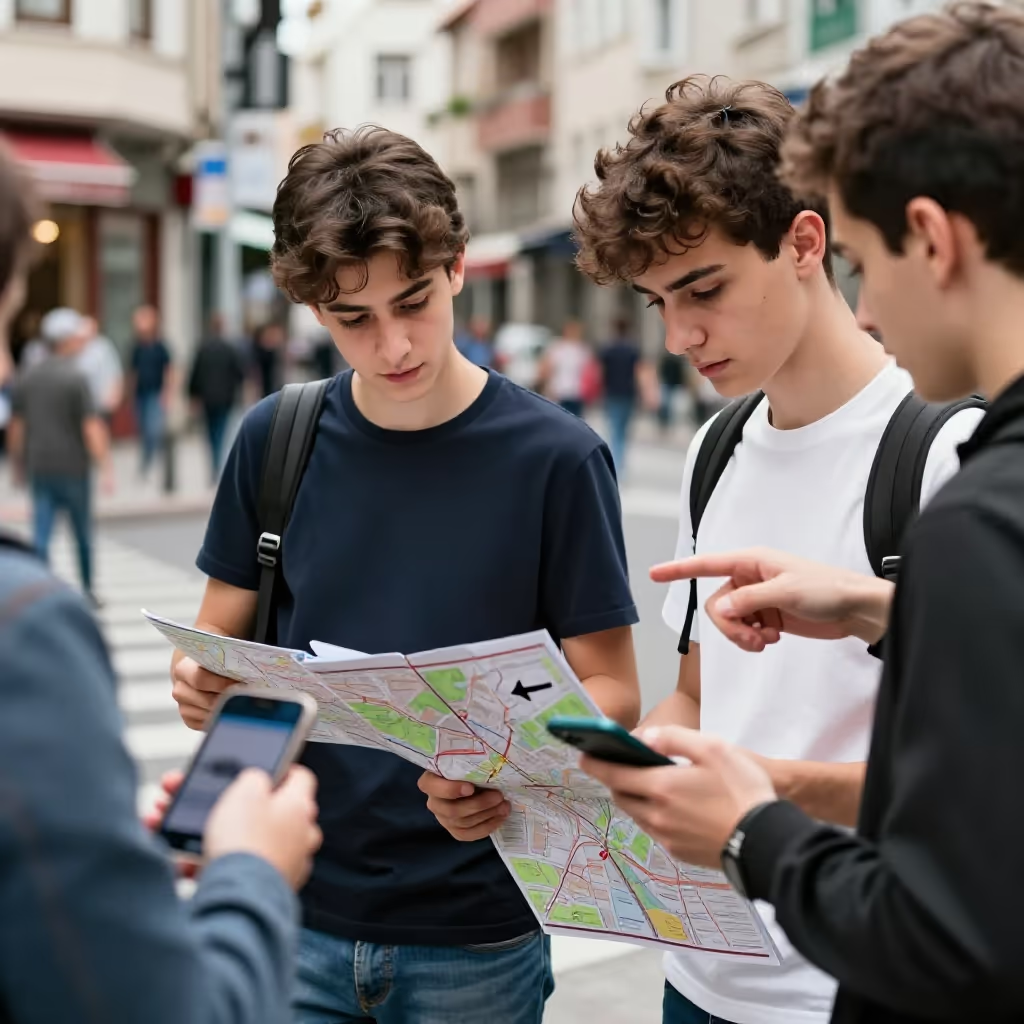
to be wrong
To be mistaken or to have an incorrect assessment.
Ich dachte, das Treffen sei morgen, aber da lag ich wohl falsch.
I thought the meeting was tomorrow, but I was probably wrong.
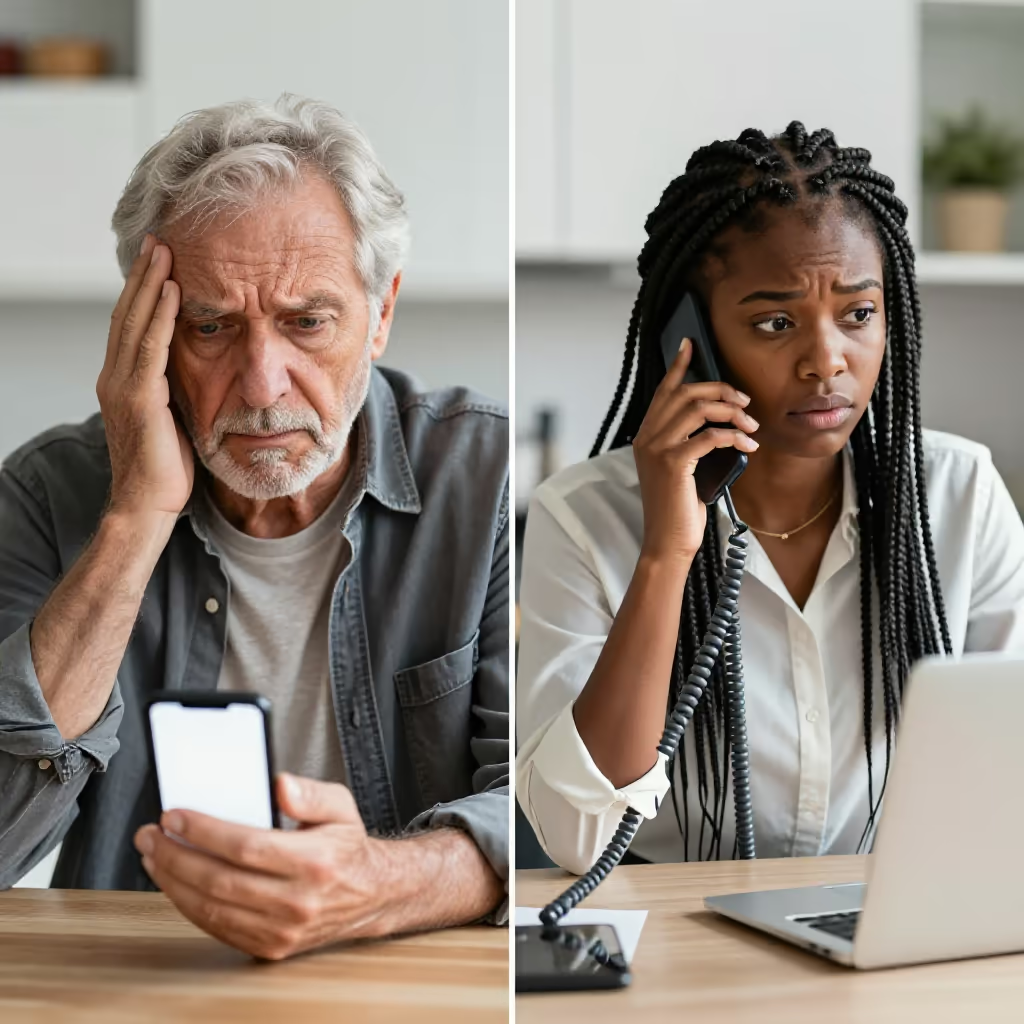
wrong number
A fixed expression on the telephone when you have accidentally dialed the wrong number.
Entschuldigung, ich bin wohl falsch verbunden.
Sorry, I think I have the wrong number.

fake
Imitated or artificial, not made of the genuine material.
Die Polizei stellte eine große Menge falscher Geldscheine sicher.
The police seized a large quantity of fake banknotes.
'Falsch' (wrong/incorrect) can also be used as an adverb to describe that an action is being carried out incorrectly. It then usually stands directly before the verb at the end of the sentence or after the conjugated verb.
Du hast die Frage falsch verstanden.
You misunderstood the question.
In the meaning 'inkorrekt' (incorrect), 'falsch' (wrong) is often combined with information, results, or routes. Typical examples are a wrong answer, a wrong address, or the wrong train.
Wir sind im falschen Zug, wir müssen sofort aussteigen!
We are on the wrong train; we have to get off immediately!
When something is 'falsch' (wrong) for a situation, it means 'unpassend' (inappropriate). It is often about a choice or decision, for example the wrong clothes, the wrong time, or the wrong decision.
Es war der falsche Moment, um über dieses Thema zu sprechen.
It was the wrong moment to talk about this topic.
When 'falsch' (false/insincere) describes a person or their behavior, it often means 'unaufrichtig' (insincere) or 'heuchlerisch' (hypocritical). It then has a strongly negative and moral meaning.
Sein Lächeln wirkte falsch und unehrlich.
His smile seemed false and dishonest.
The expression 'falsch liegen' (to be wrong) means 'sich irren' (to be mistaken). The person who is mistaken is the subject of the sentence.
Mit meiner Vermutung lag ich komplett falsch.
I was completely wrong in my assumption.
The expression 'falsch verbunden' (wrong number) is a fixed expression used almost only on the telephone. You say it when you realize that you have called the wrong person.
Entschuldigung, da bin ich wohl falsch verbunden.
Sorry, I think I have the wrong number.
In combination with objects such as money, documents, or jewelry, 'falsch' (fake/false) means that they are not genuine, but forged or counterfeit.
Er versuchte, mit falschem Geld zu bezahlen.
He tried to pay with fake money.
double
Both words can describe a dishonest person. Falsch can be used directly as a predicate and generally refers to insincerity or hypocrisy. Doppelt usually has this meaning in fixed expressions such as „doppeltes Spiel“. Therefore, use Falsch in general and Doppelt especially in such expressions.

Er ist falsch und erzählt jedem etwas anderes.
He is two-faced and tells everyone something different.
Er spielt doppeltes Spiel und verspricht beiden Seiten seine Unterstützung.
He is playing both sides and promises both sides his support.