

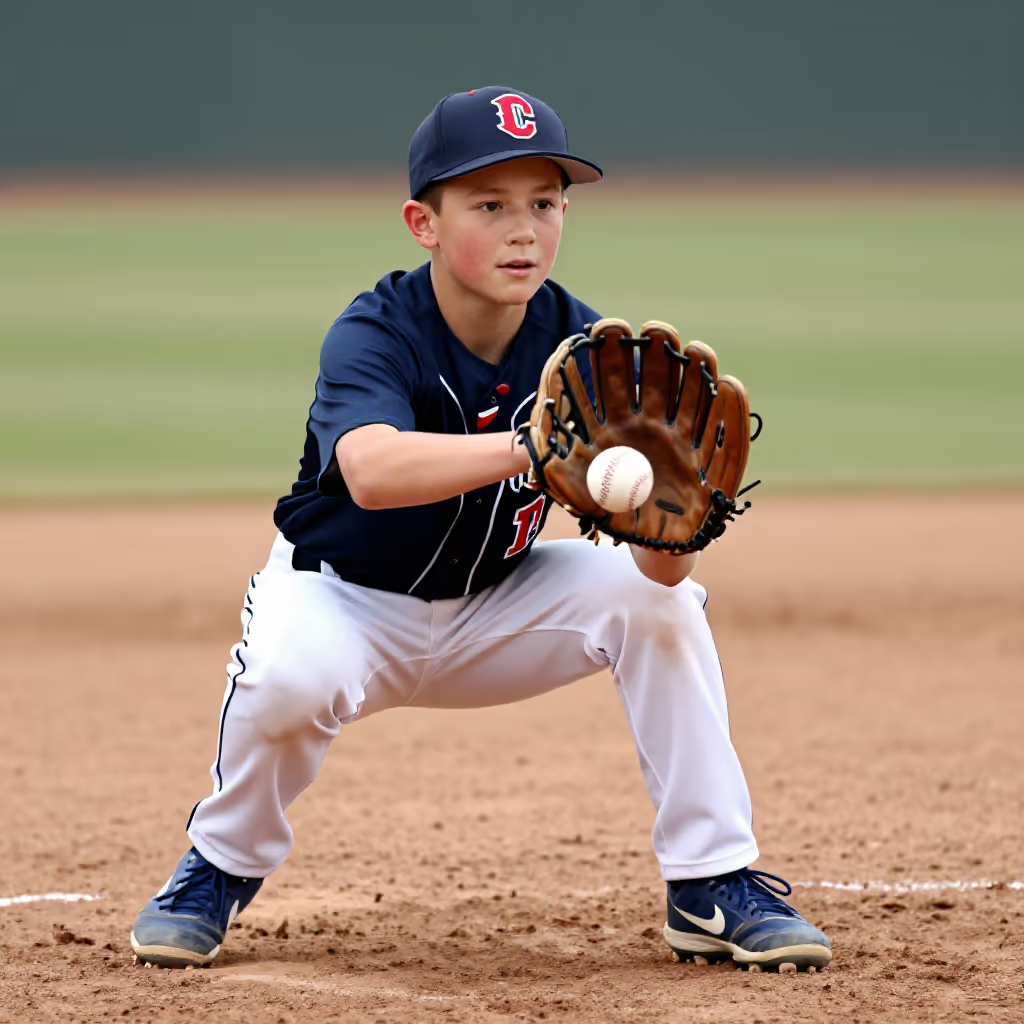
fangen
to catch
To grab and hold a moving object, often with the hands.
EXAMPLE
Der Torwart konnte den Ball sicher fangen.
The goalkeeper was able to catch the ball safely.
to catch
Loading your saved state.
to catch
To grab and hold a moving object, often with the hands.
Der Torwart konnte den Ball sicher fangen.
The goalkeeper was able to catch the ball safely.

to catch
To seize and capture a living being (animal or person) so that it can no longer escape.
Die Katze hat eine Maus gefangen.
The cat caught a mouse.
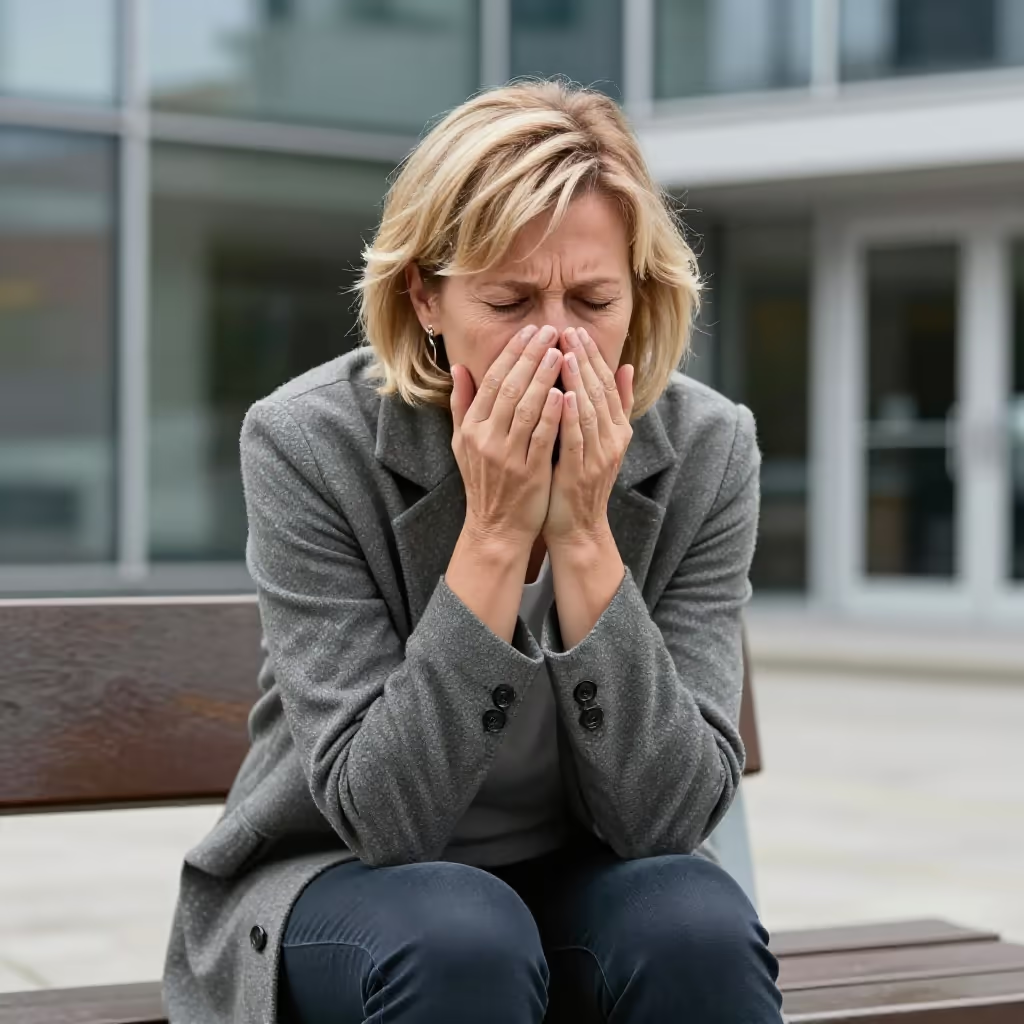
to collect oneself
To regain composure and self-control after a shock, excitement, or emotional outburst.
Nach der überraschenden Nachricht musste er sich erst einmal wieder fangen.
After the surprising news, he first had to collect himself again.
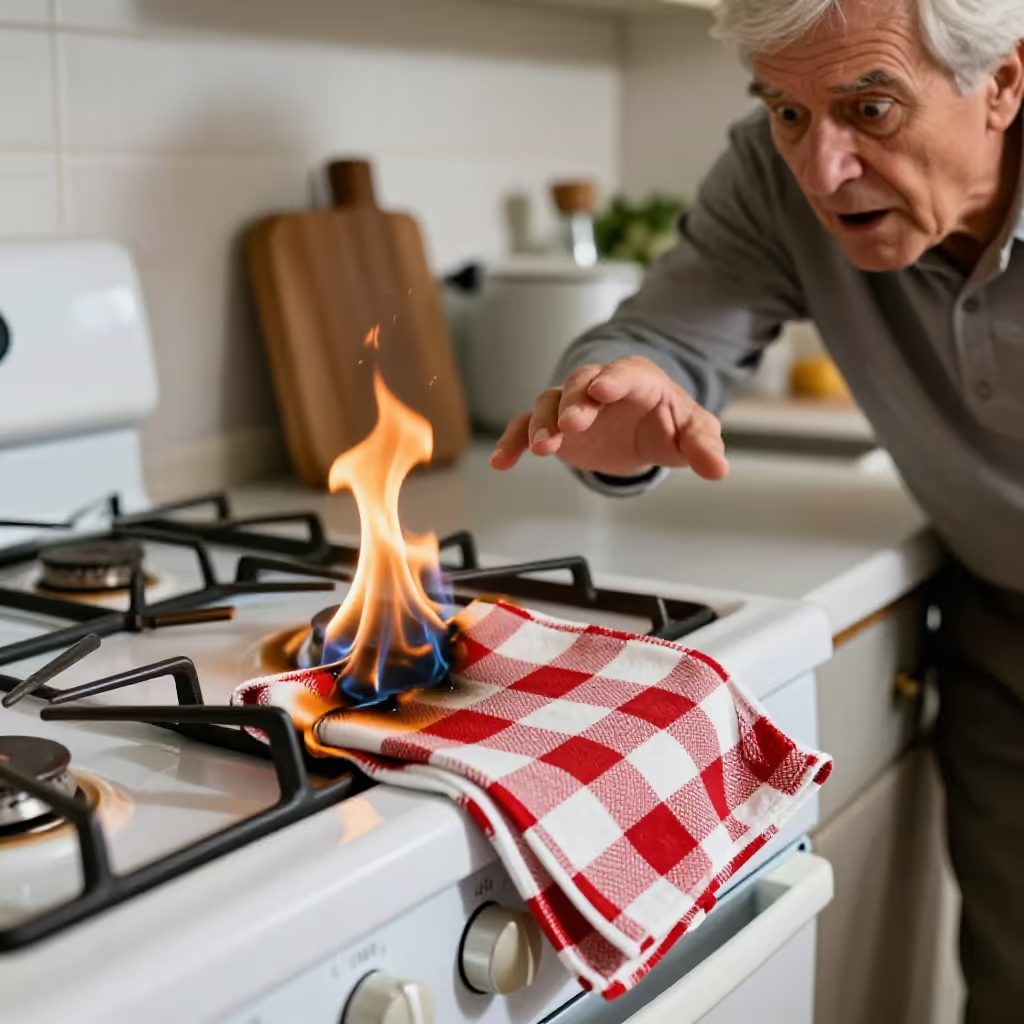
to catch fire
To begin to burn.
Das trockene Laub fing sofort Feuer.
The dry leaves caught fire immediately.

to catch something
Colloquial for becoming infected with an illness.
Bei dem Regenwetter habe ich mir eine Erkältung gefangen.
In that rainy weather, I caught a cold.
'Fangen' (to catch) is a strong, irregular verb. Pay attention to the vowel change in the present tense (ich fange, but du fängst, er fängt) and in the simple past (fing).
Fängst du den Ball?
Are you catching the ball?
The verb 'fangen' (to catch) is the base for many important verbs with prefixes. These include, for example, 'anfangen' (to begin), 'empfangen' (to receive), and 'gefangen nehmen' (to take prisoner).
Der Kurs fängt um 9 Uhr an.
The course starts at 9 o'clock.
In the meaning 'die Fassung wiedererlangen' (to regain composure), 'fangen' is always used reflexively. The structure is 'sich fangen' (to collect oneself).
Sie war so schockiert, dass sie sich kaum fangen konnte.
She was so shocked that she could hardly collect herself.
The expression 'Feuer fangen' (to catch fire) is a fixed expression. The subject of the sentence is always the thing that begins to burn.
Wegen der Trockenheit hat der Wald schnell Feuer gefangen.
Because of the dryness, the forest quickly caught fire.
To express that someone has caught an illness, German uses the colloquial structure 'sich (dative) etwas (accusative) fangen' (to catch something).
Ich habe mir bei dem Wetter wohl eine Grippe gefangen.
I probably caught the flu in this weather.
to get
„Kriegen“ and „fangen“ can mean seizing a fleeing person or animal. „Fangen“ is the neutral term, while „kriegen“ is colloquial and often sounds somewhat more forceful or determined. „Fangen“ is usually more suitable in factual situations, while „kriegen“ also works in casual conversation.

Die Helferin fängt den entlaufenen Hund vorsichtig mit einer Leine ein.
The helper carefully catches the escaped dog with a leash.
Der Junge rennt dem entlaufenen Hund hinterher und ruft: „Ich kriege ihn gleich!“
The boy runs after the escaped dog and calls out, “I’ll catch him in a moment!”